A Sioux War Party by Catlin, George
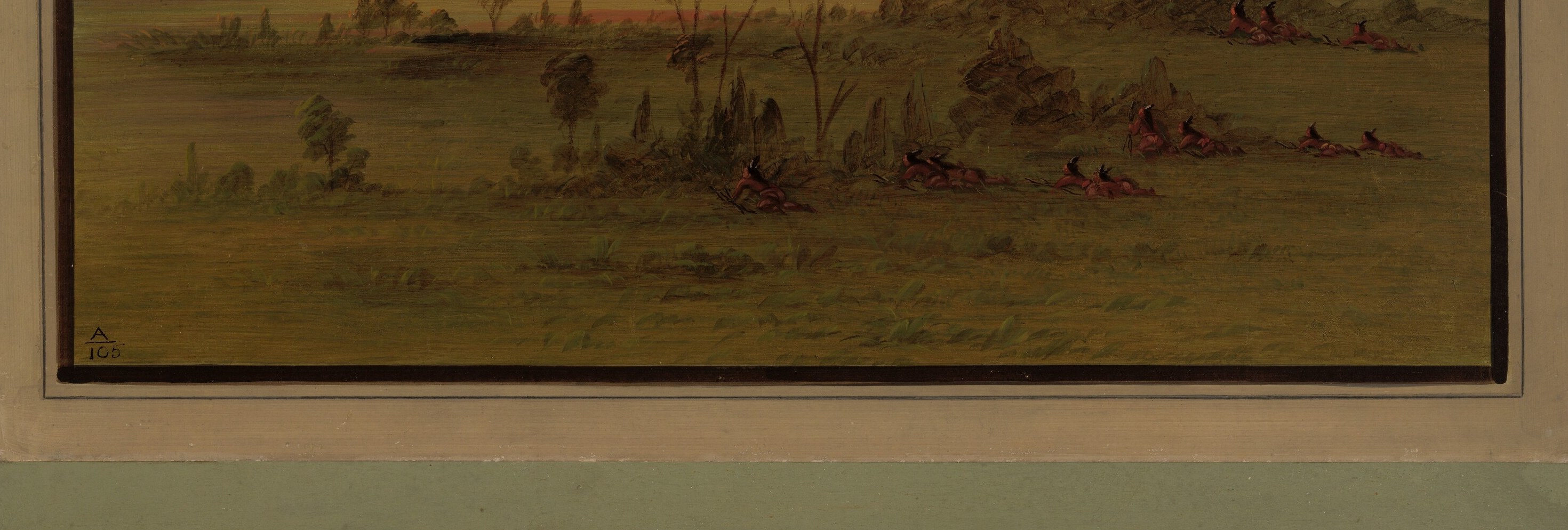
In *A Sioux War Party*, painted by George Catlin around 1861-1869, we see a powerful depiction of mounted Sioux fighters moving through a vast landscape. This oil on card, now at the Smithsonian American Art Museum, is a testament to Catlin's dedication to documenting Indigenous life during the 19th century.
Catlin, originally a lawyer, journeyed five times through the American West in the 1830s. He specialized in portraits and genre scenes, aiming to create a visual record of Plains Indians during a period of intense frontier change. His technique often involved rapid execution on thin card, which allowed him to capture scenes as he encountered them.
Take a moment to appreciate the detail in the figures and horses, contrasted with the broader brushwork of the environment. And if you look closely in the lower left, you'll find his subtle signature, a quiet mark of authorship in a grand scene.
What other hidden details do you think tell the most compelling stories in art?
Details

Transcript
This painting captures a Sioux war party, in 1860s America. The artist, George Catlin, traveled extensively to depict Native life. He painted rapidly, often on card, to document what he saw. These warriors move across a vast, painted landscape. But look closely in the foreground, at the bottom left. A small, faded signature grounds the work in history.