Judit with the Head of Holofernes by Sandro Botticelli
Judith with the Head of Holofernes by Sandro Botticelli, around 1500, at the Rijksmuseum in Amsterdam. Botticelli fell out of favor for centuries until the Pre-Raphaelites rediscovered him in the late 1800s.
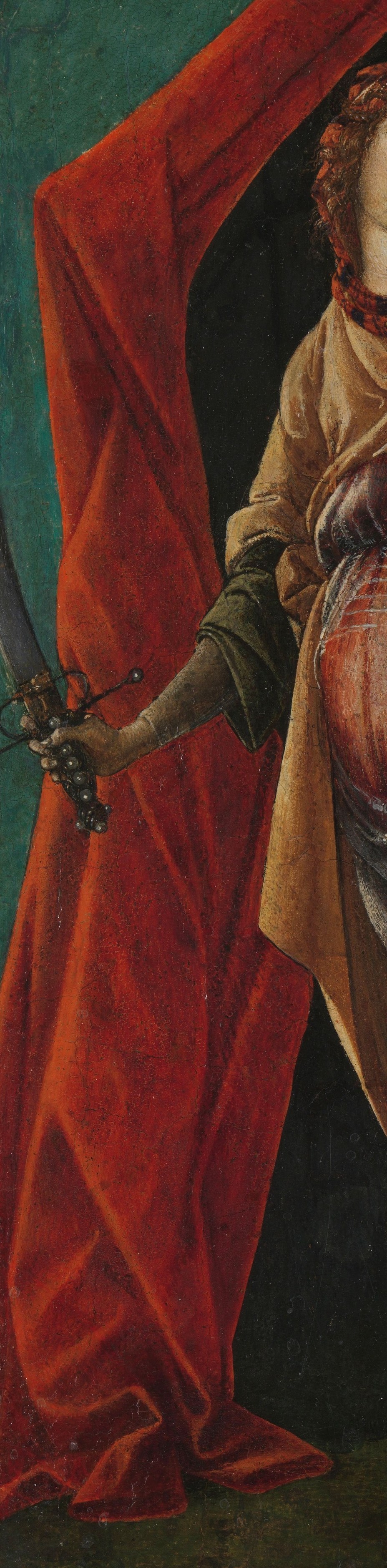
Look at how the light falls on Judith's face while the rest drops into deep shadow. The sword still catches the light. Holofernes' raised hand is frozen, and the reds in her cloak seem to glow from inside the paint.
Florence was in political turmoil when Botticelli painted this. Judith, the biblical heroine who beheaded an enemy general, became a symbol of the weak triumphing over tyranny. He painted her as a woman who has just done something terrible and necessary.
The glow in the paint comes from translucent layers of oil, built slowly until light seems to come from within. What looks effortless took a lifetime to learn, and for centuries almost nobody saw it.
Details

Transcript
Around 1500, a painter took on a biblical beheading. Judith looks down at what she has done. The blade still gleams. She has not let go. Holofernes, the Assyrian general she killed. His raised hand. Still frozen in that last gesture. The reds glow from inside. Built in translucent layers of oil.