伝俵屋宗達筆 源氏物語図「宿木」 |“Trees Encoiled in Vines of Ivy” (Yadorigi) by Tawaraya Sōtatsu (Japanese, c. 1570–c. 1640)
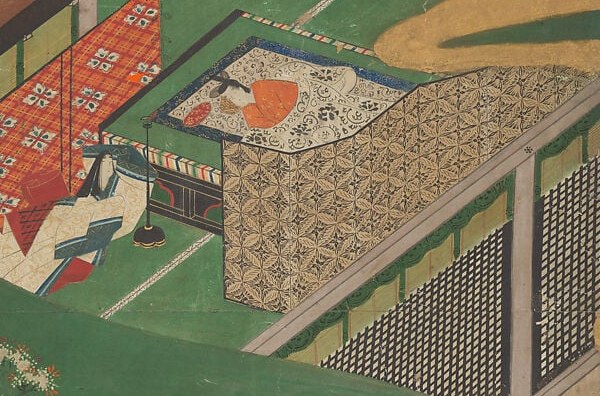
This is "Trees Encoiled in Vines of Ivy" (Yadorigi), a hanging scroll from around 1624 by the Japanese painter Tawaraya Sōtatsu. Sōtatsu co-founded the Rinpa school, and this work is a masterclass in why that matters.
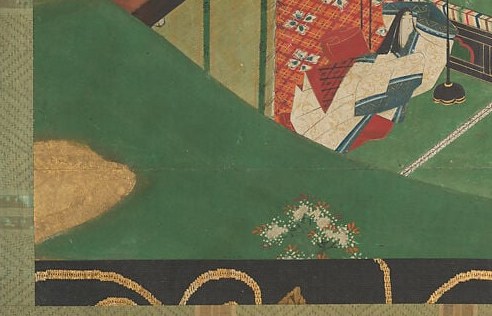
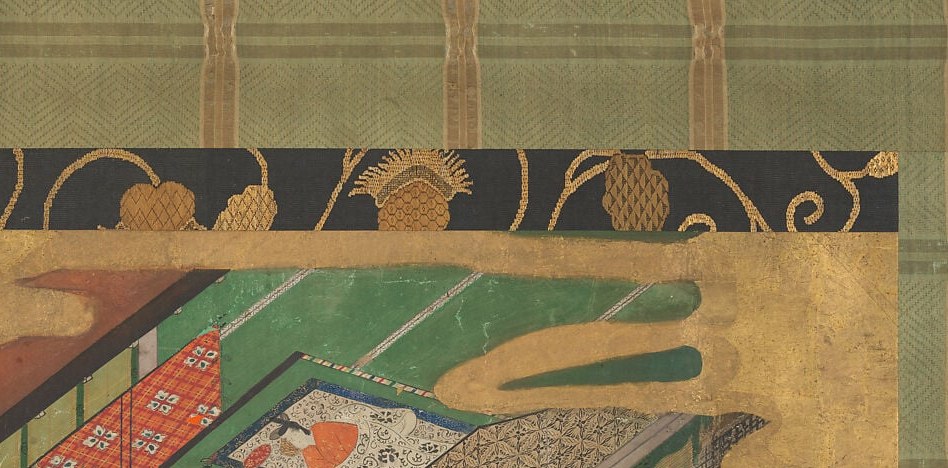
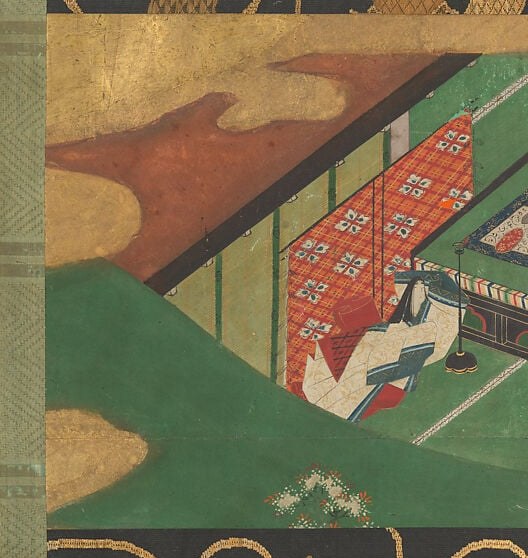
Look first at the cascade of crimson robes spilling onto the green floor. Sōtatsu layered washes of color into pigment that was still wet, a technique called tarashikomi. The pigments pooled and blurred at the edges on their own, so the fabric reads as impossibly soft silk without a single hard line. Then look up at the orange cloud wash in the upper left: the same technique, now doing atmosphere instead of drapery.
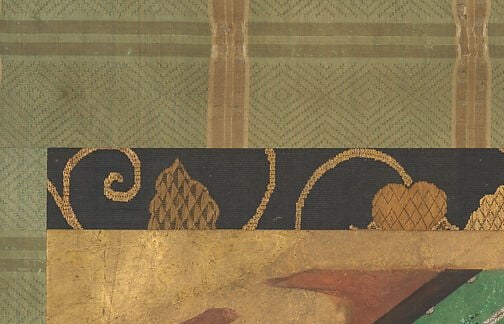
The scene comes from the "Yadorigi" chapter of The Tale of Genji, the great Heian-era novel. The woman's face is deliberately hidden, a convention borrowed from classical Genji illustration that makes absence feel more charged than presence. The gold-leaf ground flattens depth entirely, turning a private interior into a luminous, timeless space.
Sōtatsu was not famous in his lifetime. He is now the second-most recognized Japanese painter on Japan's National Treasures list, and his tarashikomi technique became a language his successors kept speaking for two centuries. Look close at the bottom hem where the robes meet the tatami and you can see the pigment still deciding its own edges.
Details
Transcript
A Japanese painter set himself an impossible task. He wanted silk to look softer than silk. He painted into paint that was still wet. So the edges would blur on their own. And he built the room from burnished gold. A space with no shadow, only presence. The technique is called tarashikomi. Sōtatsu made it the signature of the Rinpa school.