Campo Sant'Angelo by Canaletto
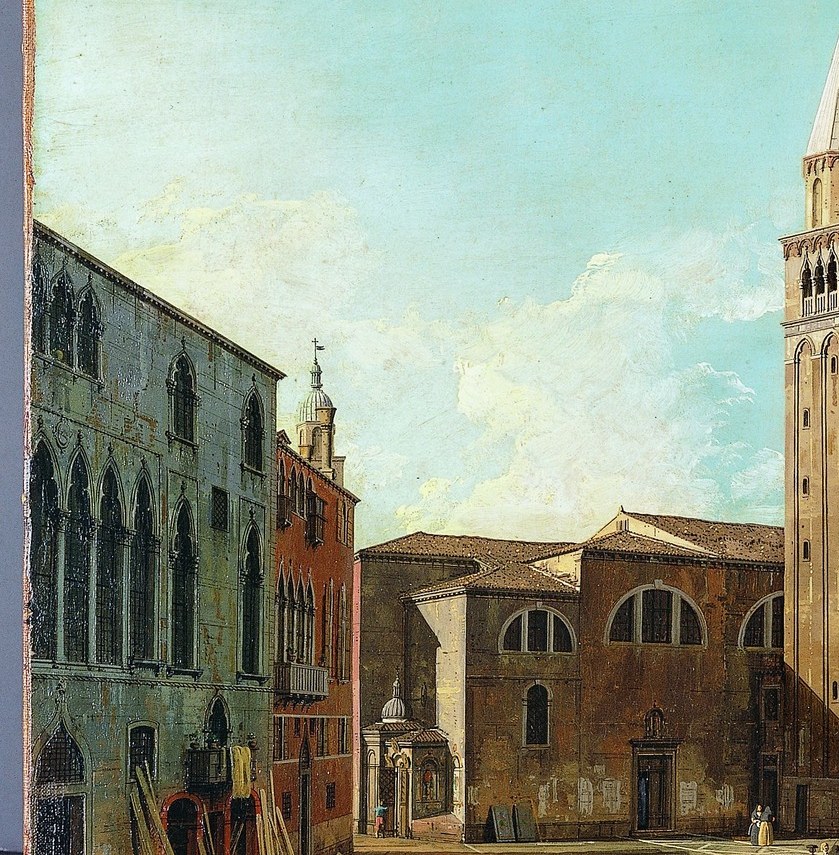
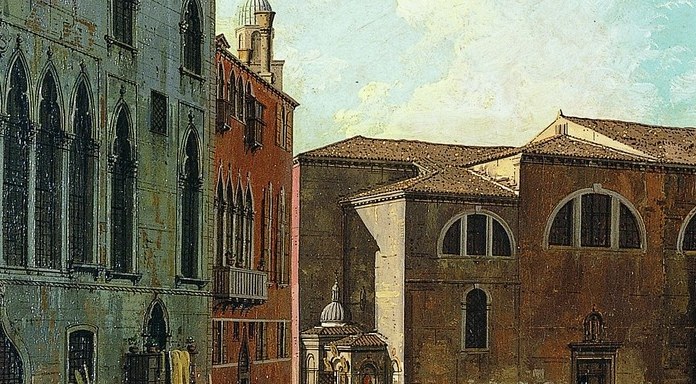
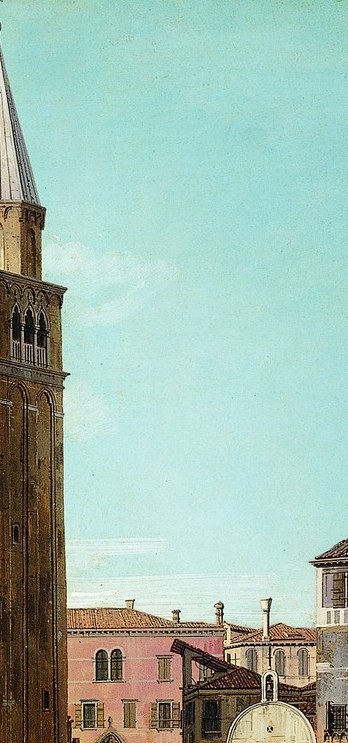
This is "Campo Sant'Angelo," painted by Canaletto around 1734. It is the only surviving painted record of this particular church facade. The Church of Sant'Angelo was demolished in 1837, and its appearance is now known almost exclusively through this single veduta.
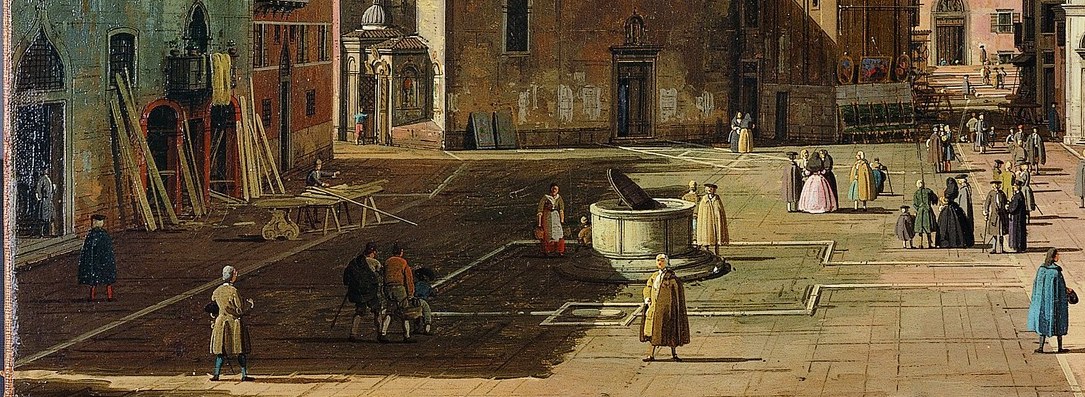
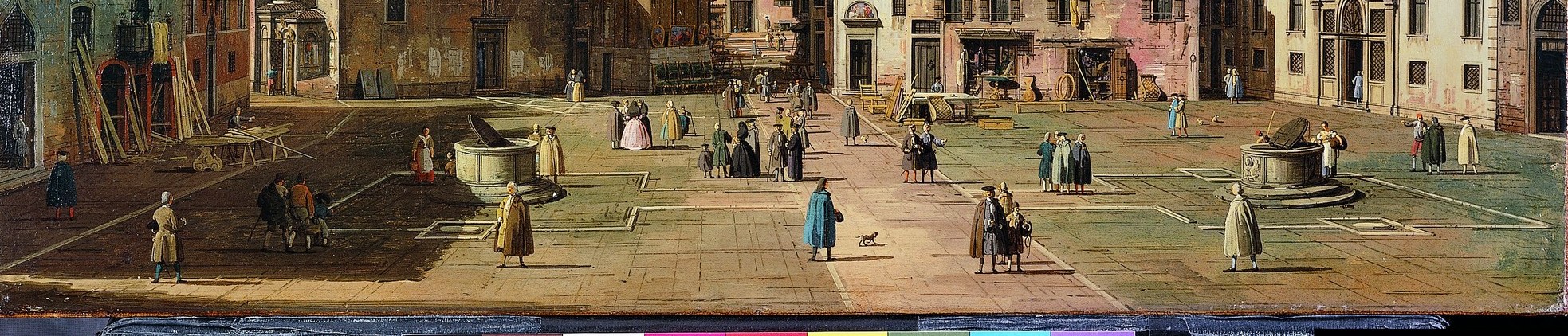
Look first at the dark church mass on the left. The rounded portals and deep shadow create the darkest anchor in the composition. Then trace the sharp diagonal shadow cutting across the sunlight pavement. Canaletto painted that shadow at an angle so geometrically precise that modern scholars can calculate the exact time of day it depicts.
That precision is not accidental. Canaletto is known to have used a camera obscura, a darkened box with a lens that projected the live scene onto his canvas. The mathematics of the shadow angle, cross-referenced with the known orientation of the campanile, provides hard evidence that he was tracing an optically projected image. He was an 18th-century painter working with 18th-century optics, a kind of proto-photographer.
The painting is in the collection of the Museum of Fine Arts, Boston. Next time you see a Canaletto, check the shadows. The clock is hidden in the geometry.
Details
Transcript
This square in Venice looks sunny and ordinary. But the church on the left is gone. Demolished in 1837. Canaletto painted this in the 1730s. It is the last record of this facade. Now look at the sharp shadow across the pavement. The angle of that shadow encodes the precise time of day. Scholars have used it to prove Canaletto traced this scene with a camera obscura.