The Spirit of War by Cropsey, Jasper Francis
View the artwork: The Spirit of War →
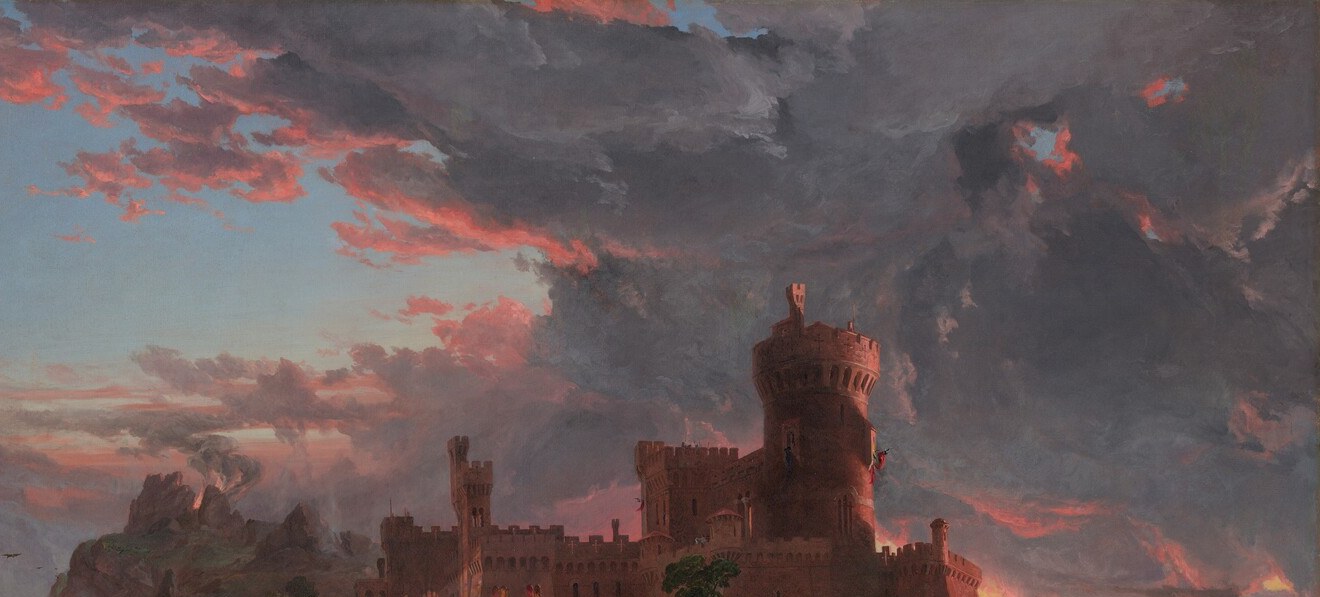
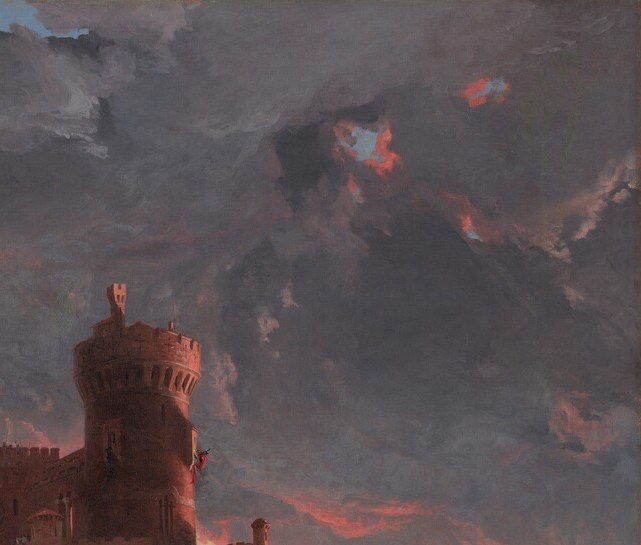
Jasper Francis Cropsey painted "The Spirit of War" in 1851, and it stopped viewers cold. He was known for glowing Hudson River autumn scenes, but this canvas is a dark, epic allegory about conflict itself, made in the anxious years right after the Mexican-American War and just as the Compromise of 1850 was papering over national divisions.
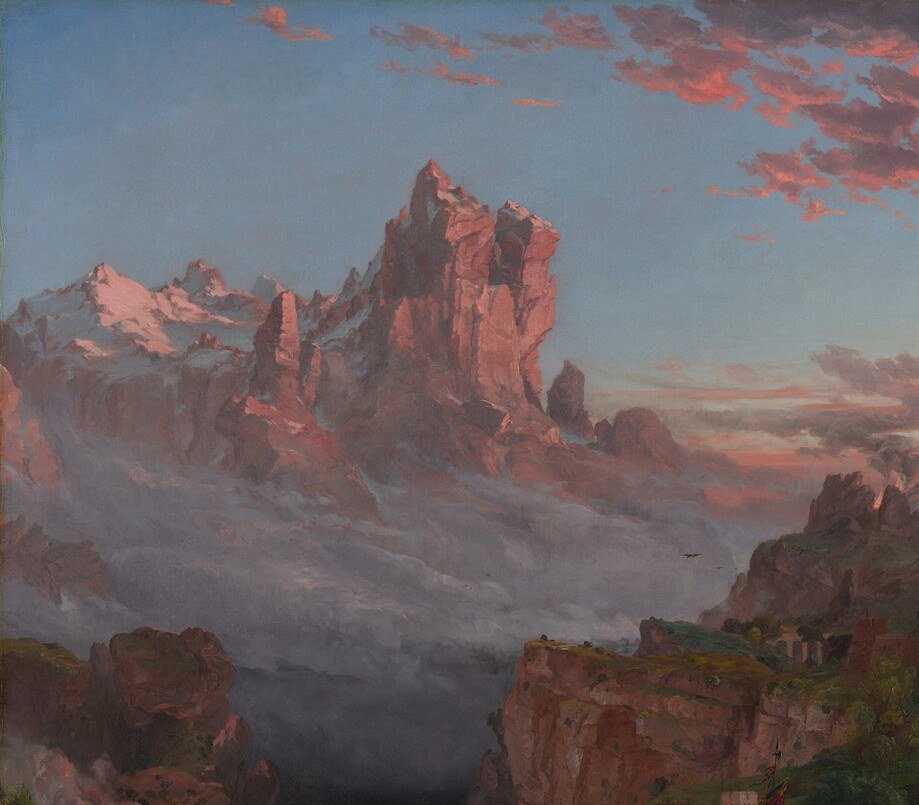
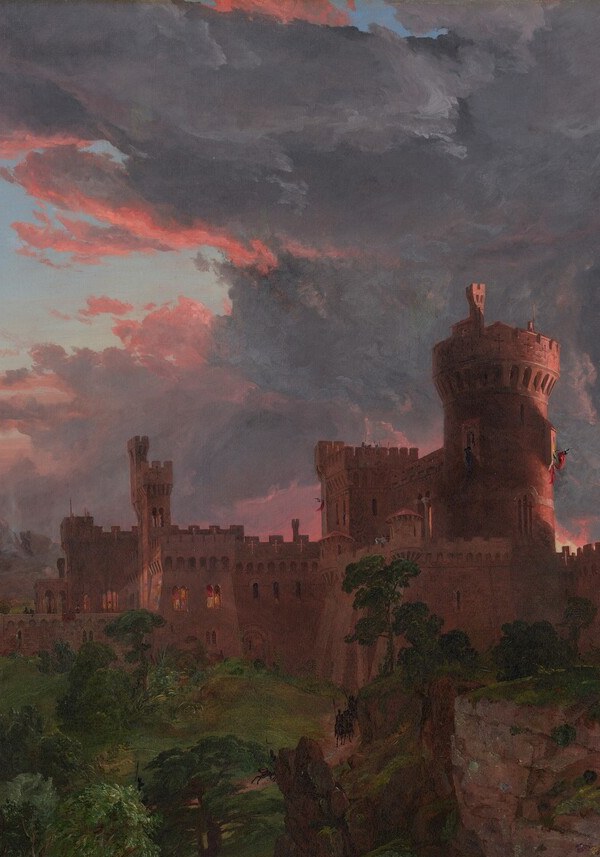
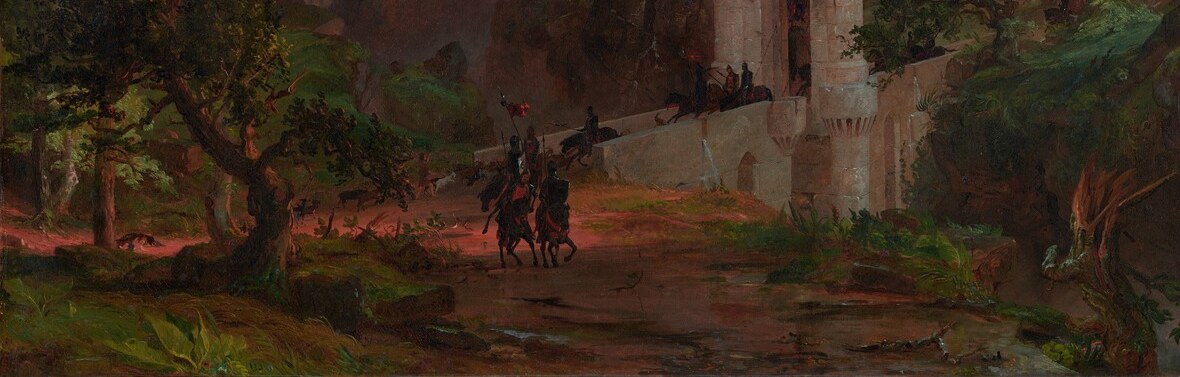
The painting is one half of a diptych; its peaceful twin now lives in Philadelphia. Everything here is built for foreboding: a stronghold on a cliff, armored horsemen, a storm-red sky. But Cropsey hid his most important subject almost in plain air.
Look into the middle ground, just under the strip of pale light between the two dark fortresses. A column of smoke rises from a burning village. It is so faint that for a long moment it reads as atmospheric haze. That tiny, almost invisible burn is the moral center of the whole eight-foot canvas.
The National Gallery of Art acquired the work in 1978 after it was discovered, remarkably, stored face to the wall in a private owner's barn. Cropsey made this a full decade before Fort Sumter, and he titled it with a certainty that feels less like a warning and more like a pronouncement.
Once you find the smoke, what else in the image seems to change?
#arthistory #hudsonriverschool #19thcenturyart
Details
Transcript
War, the artist thought, was a storm ready to break. Jasper Cropsey was famous for painting autumn in the Hudson Valley. So this 1851 canvas stunned the crowd at his big New York exhibition. A fortress clings to the crag, armored riders spilling out in columns. Everyone saw the castle, the horses, the red sky. They missed the reason. Now look into the distant valley, just under that bright strip of no-man's-land. A village is burning. The smoke is so faint, it reads as haze. Cropsey painted this a decade before the Civil War. He wasn't warning about the past.