Artwork
The Spirit of War
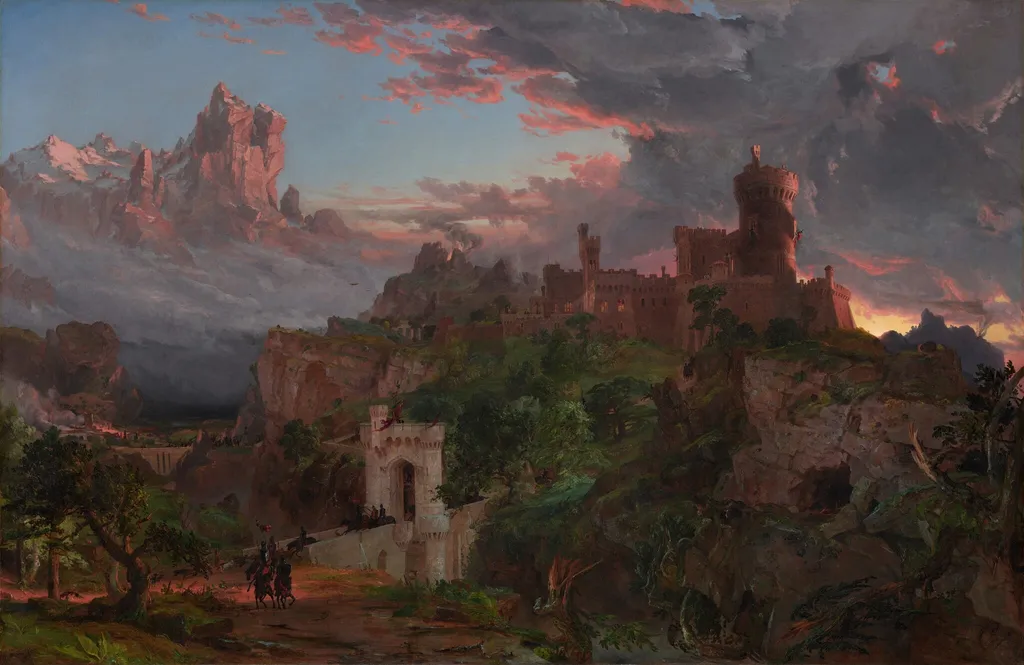
The Spirit of War is an oil painting by the Hudson River School artist Jasper Francis Cropsey. It dates from 1851 and is held in the collection of the National Gallery of Art.
- Inscription
- Inscribed:lower left: J.F. Cropsey 1851
About this work
Knights in armor ride through a mountain pass beneath a turbulent sky, a distant citadel burning behind them. Jasper Francis Cropsey painted it in 1851 as a pendant to The Spirit of Peace, an allegorical pair shaped by a nation drifting toward civil war. The National Gallery of Art acquired the canvas in 1978 after it turned up face to the wall in an Adirondacks barn.
Technique & Style
The composition includes sky, clouds, trees, mountains, a castle, and equestrian figures, reflecting the Romantic naturalism typical of the school.
The medium is oil paint on canvas support. The painting measures 110.8 cm in height and 171.6 cm in width. Classified as an allegorical landscape, it belongs to the Hudson River School movement.
The composition includes sky, clouds, trees, mountains, a castle, and equestrian figures, reflecting the Romantic naturalism typical of the school. No specific details regarding handling or condition are recorded in the available sources.
History & Provenance
Painted in 1851 by Jasper Francis Cropsey, the work was first sold in a sale of Cropsey's paintings in New York in April 1856 and was acquired by John Rutherford of New Jersey. By May of that year, it had been purchased by Joseph Harrison, Jr. of Philadelphia, and later passed to his wife Sarah Poulterer Harrison. After her death, the painting was sold at her estate sale in 1912 to Thomas E. Kinsey of Philadelphia.
Subsequent owners included Joseph T. Kinsley, Sarah Clark Goodman, Herbert Kaufman, and Adele Gardiner, and it remained in a private collection from 1929 until 1977 when it was acquired by Vose Galleries. The National Gallery of Art purchased the painting in 1978. No commission records are provided.
Overview
Jasper Francis Cropsey's oil on canvas, The Spirit of War, painted in 1851, constitutes one half of an allegorical diptych. Its companion piece, The Spirit of Peace, depicts a serene coastal scene. Both large canvases, measuring approximately 43 by 67 inches, were first publicly exhibited together in 1852.
This work presents a dramatic, imaginary landscape, contrasting with the luminous autumn scenes Cropsey is often associated with, and instead reflects the epic allegorical style of Thomas Cole.
Subject & Meaning
The painting portrays a tumultuous, fictional landscape dominated by a medieval fortress perched on rocky cliffs. Armored riders set out for combat, while smoke billows from a burning settlement in the distance under a stormy sky. Art historians interpret this imagery as a reflection of the national anxieties following the Mexican-American War and the escalating sectional tensions of 1850, which the Compromise of 1850 only temporarily alleviated.
Context
Created in 1851, The Spirit of War emerged during a period of significant national unease in the United States. The recent Mexican-American War had intensified debates over slavery and territorial expansion, leading to deep divisions. The Compromise of 1850 offered only a fragile peace.
The painting, with its imagery of conflict and destruction, is seen by some as a prescient commentary on the nation's trajectory towards the Civil War, a stark contrast to the optimism of its peaceful counterpart.
Own this work as a print
Artist & collection
Artist
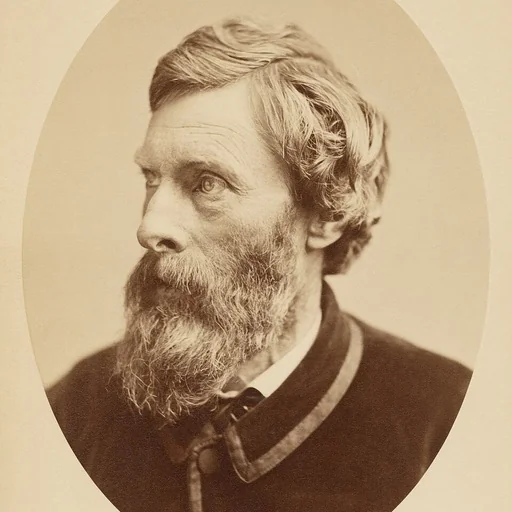
Jasper Francis Cropsey was an American architect and artist. He is best known for his Hudson River School landscape paintings.

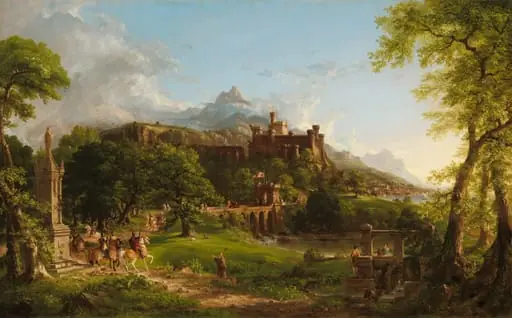
- The Departure
 Hilly Landscape with a Ruin
 Schloss Salurn in Südtirol
 Ruins of the Tenczyn Castle
 Sunset on the Rhine
 The Monastery of San Pedro (Our Lady of the Snows)
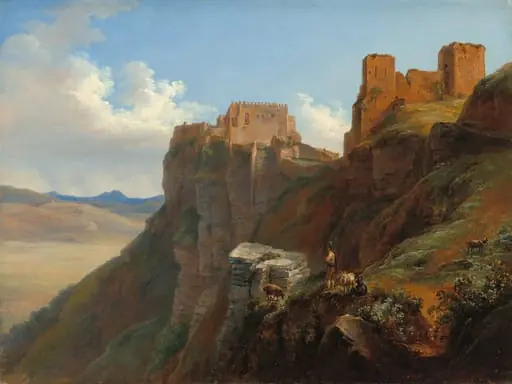 View of the Castello di San Giuliano, near Trapani, Sicily
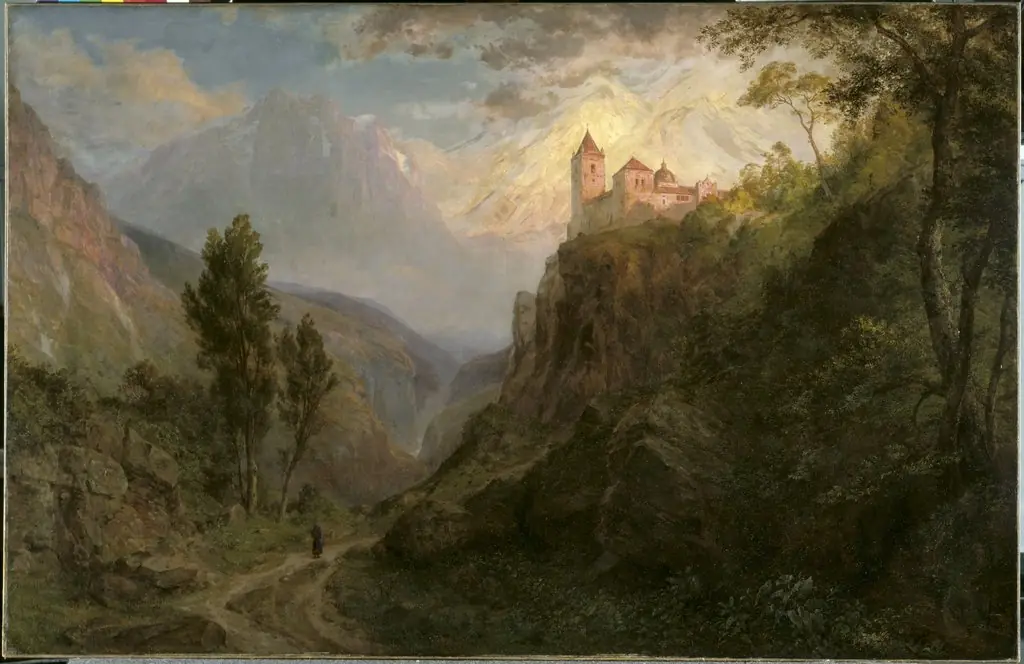 The Monastery of San Pedro (Our Lady of the Snows)
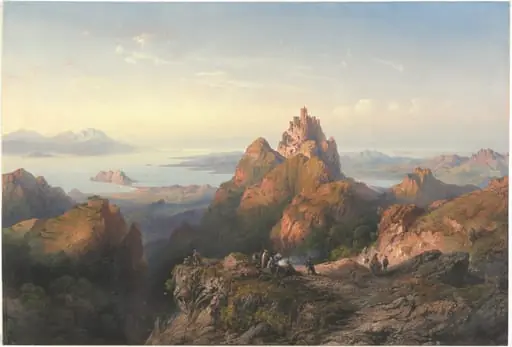 Balaklava
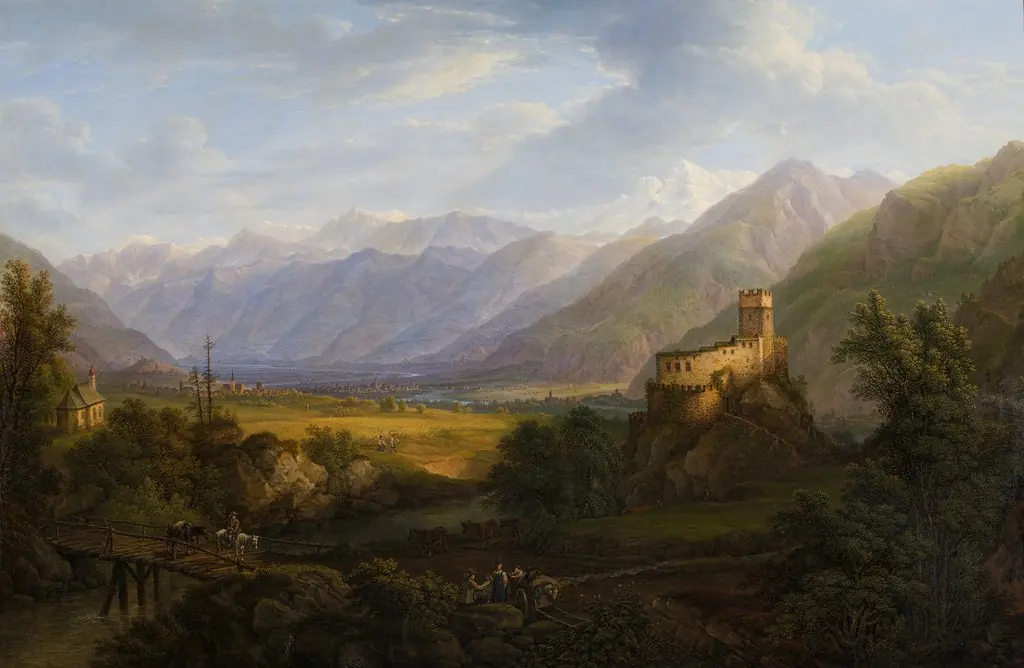 Das Glurnsertal mit der Etsch in Tirol
 Landscape with the Castle of Massa di Carrara
 Landscape