Judith en Holofernes by Jan de Bray
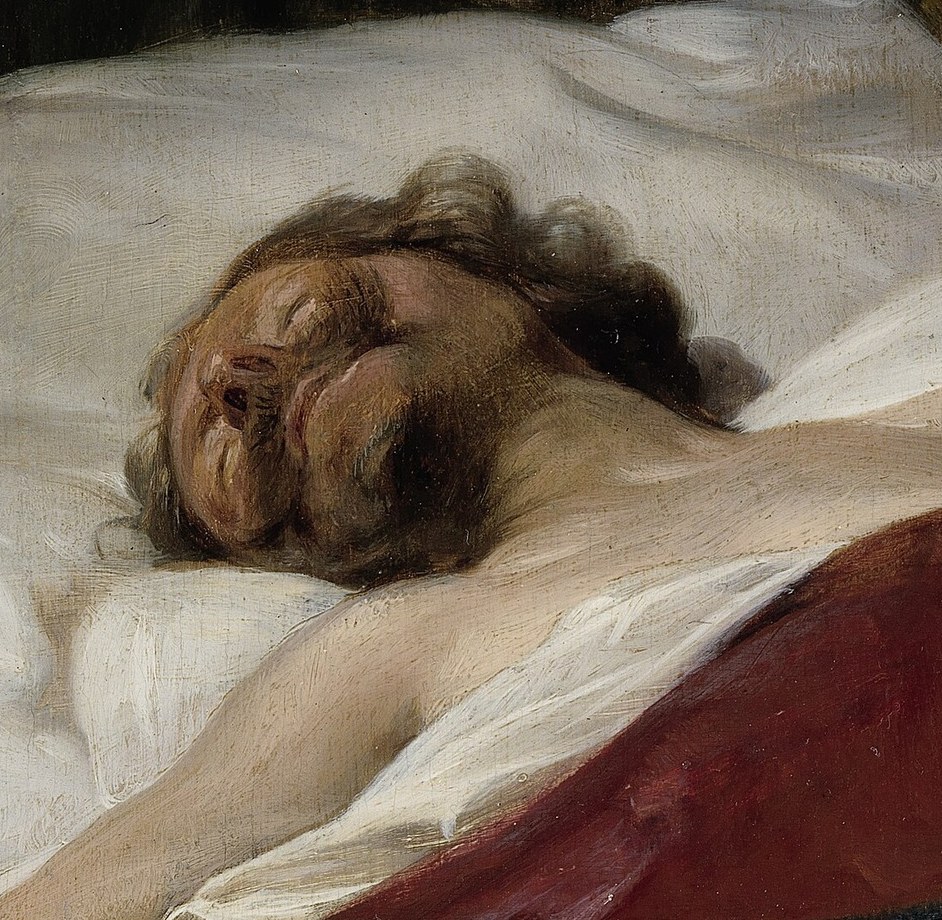
Jan de Bray's Judith en Holofernes (1659, Rijksmuseum) is not quite what it appears. Every face in this biblical beheading belonged to someone the painter knew. His family, his neighbors, dressed up as Judith, Holofernes, and the watching maidservant.
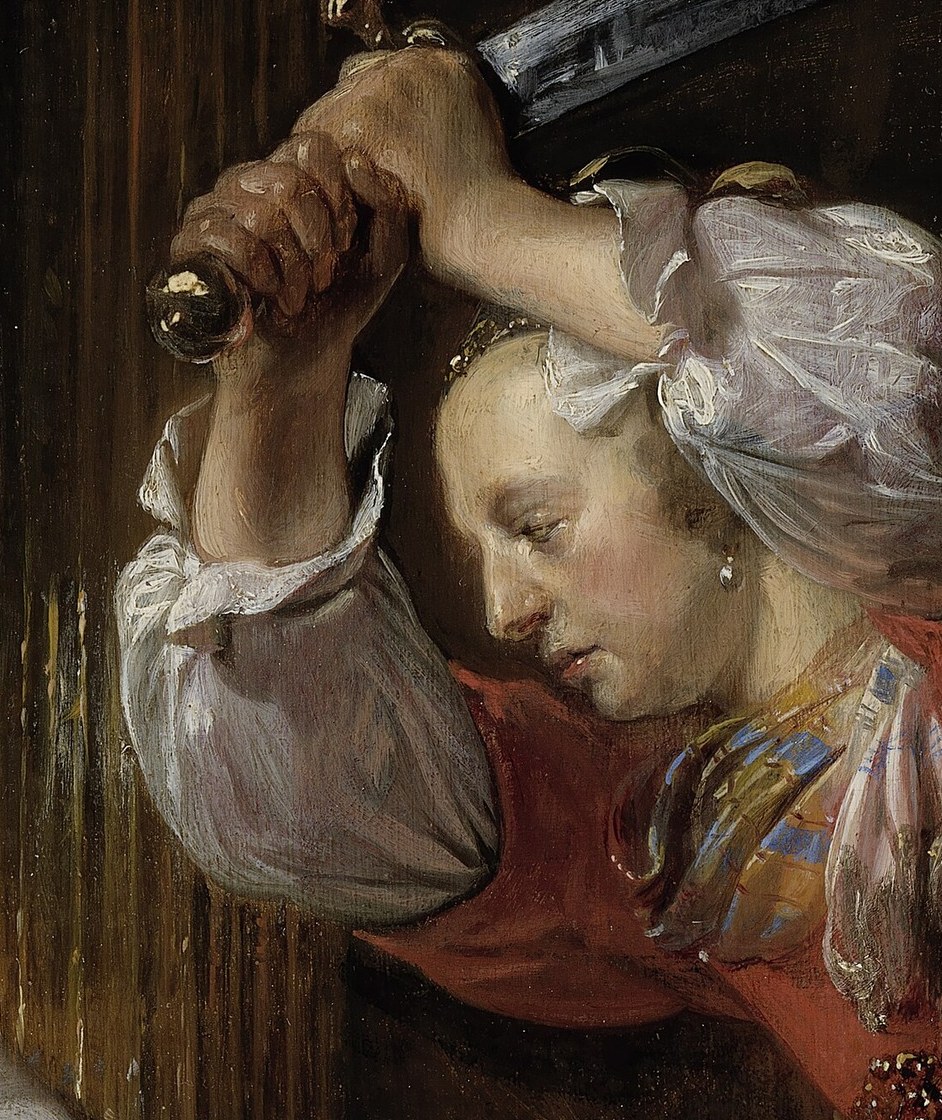
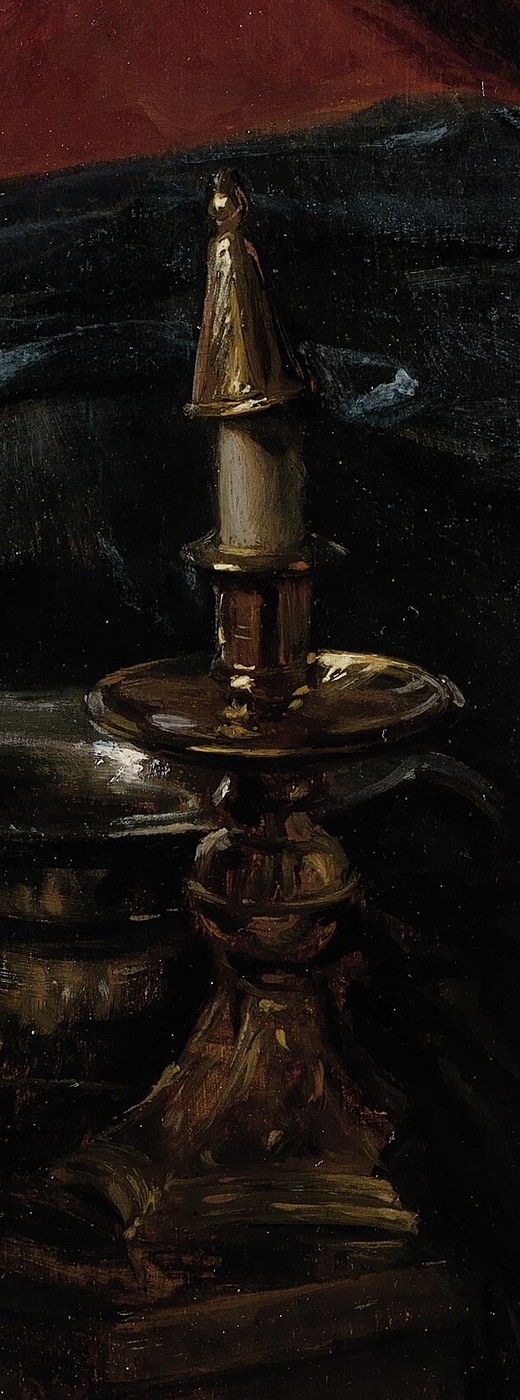
Look at Judith's face: the locked jaw, the fixed stare. Then her hand on the sword. You can count the tendons. Behind her, in the dark, the maidservant watches. A single candle lights the whole scene, the kind of dramatic lighting de Bray mastered studying under his father and Frans Hals.
This was portrait historié, a Dutch Golden Age practice of dressing your own household in biblical robes. De Bray specialized in it. The faces were real; the stories were ancient. A few years after this painting, plague swept Haarlem and took many of those same faces.
Next time you see a biblical painting in a museum, ask yourself: whose face is that, really?
Details
Transcript
1659. A Haarlem painter stages a beheading in his studio. She raises the blade. Her jaw is locked. A single candle cuts the room into light and shadow. Tendons drawn across the back of her hand. The woman watching from the dark is not a studio model. He painted his own family into the story. Judith is someone he knew.