Hare, Spoonbill, and Fish by http://www.wikidata.org/.well-known/genid/9d0433f5e2810b73ad7145a2662de2ae
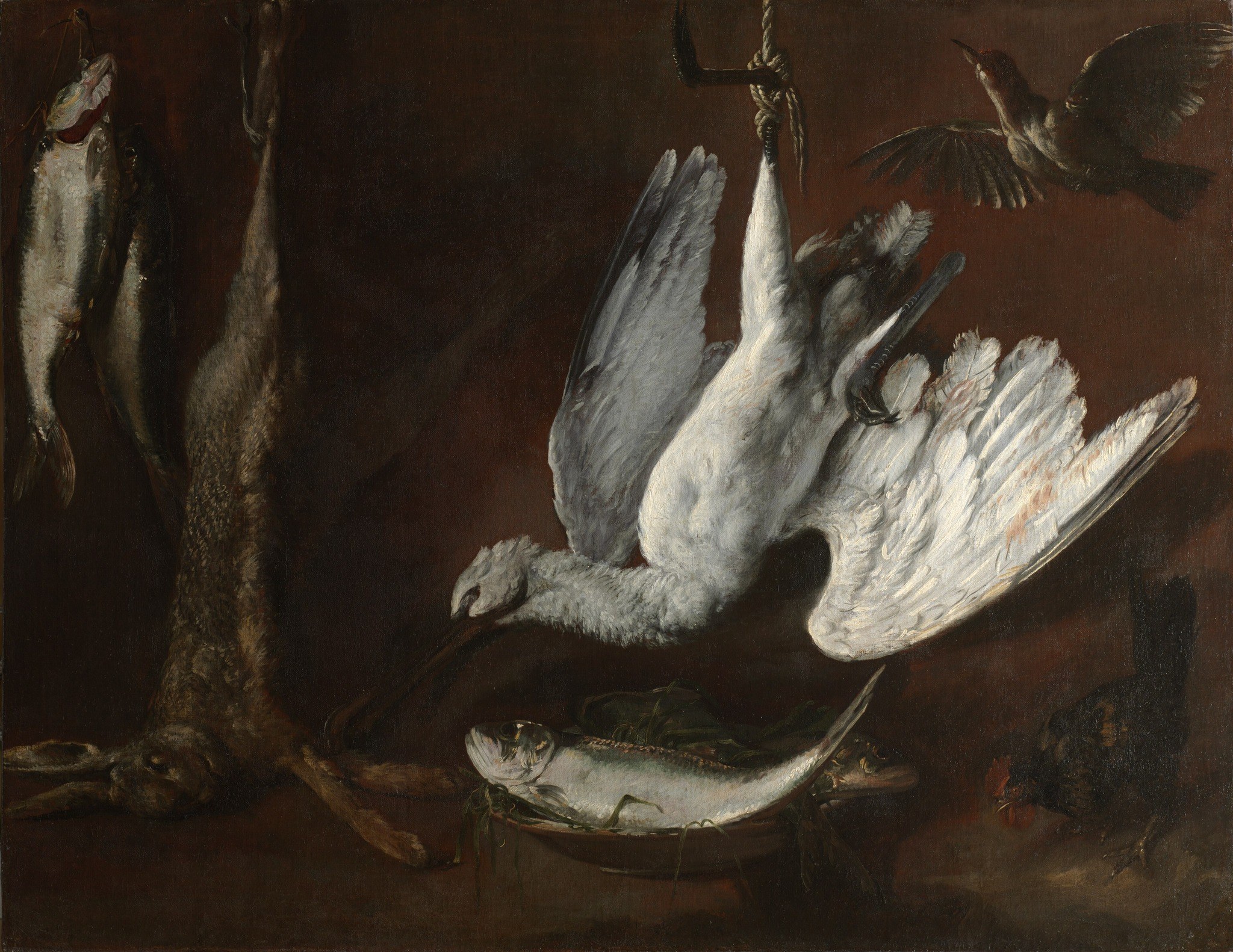
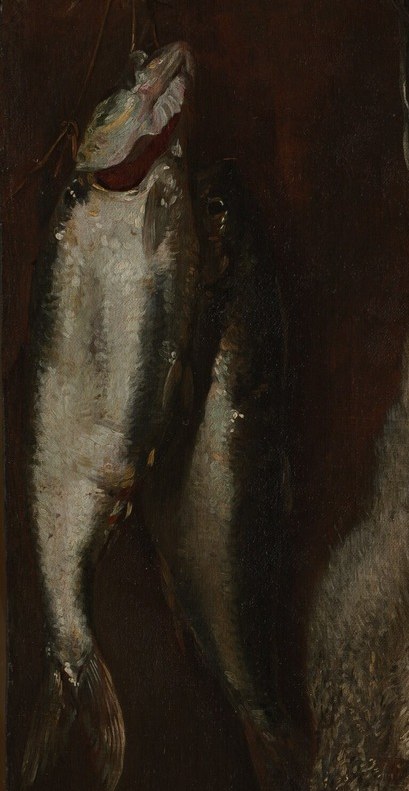
Pieter Boel's "Hare, Spoonbill, and Fish," painted around 1650, is a masterful example of a 17th-century still life, now housed in a private collection. It's a painting that quietly contemplates themes of mortality and the natural order.
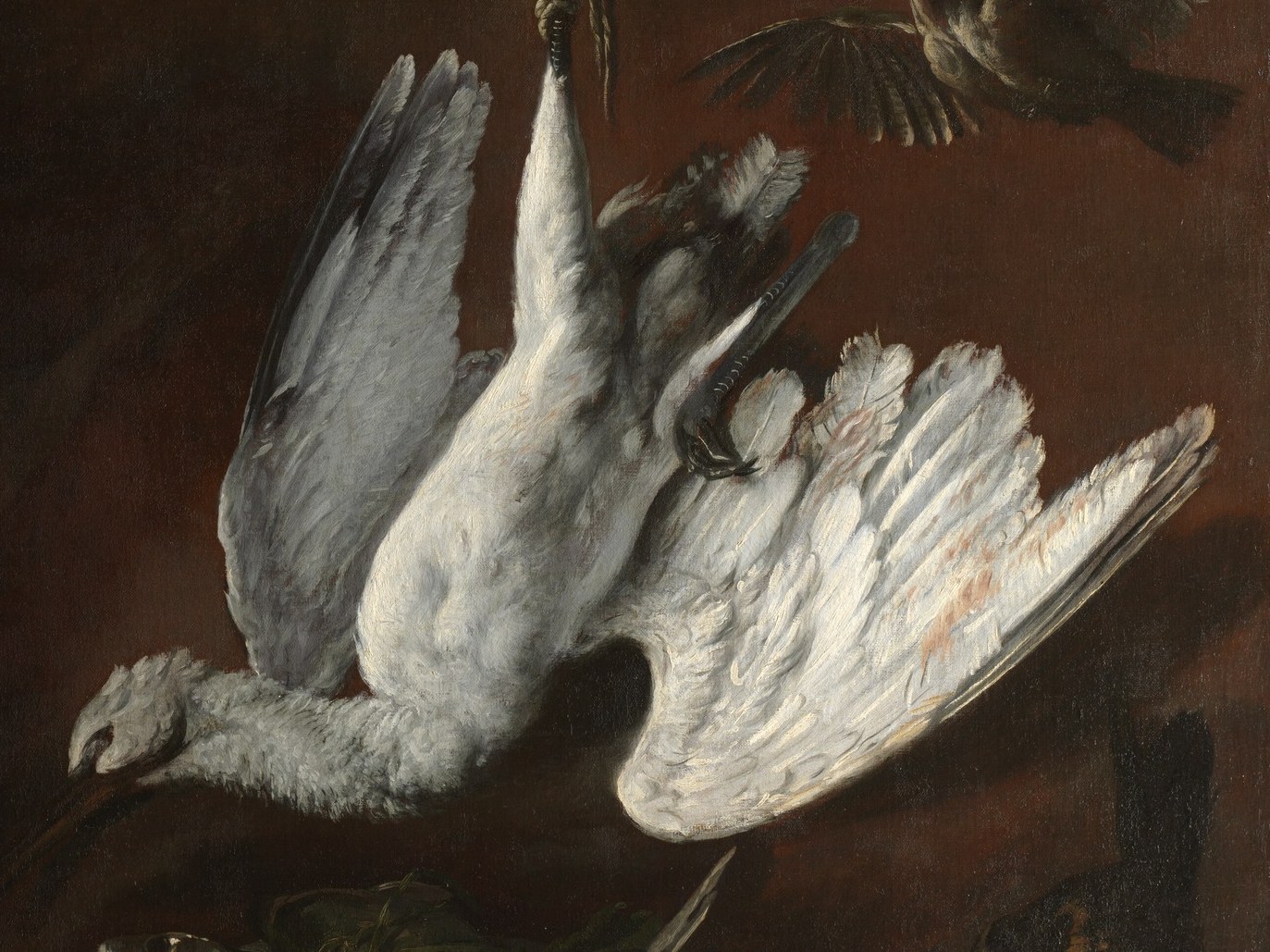
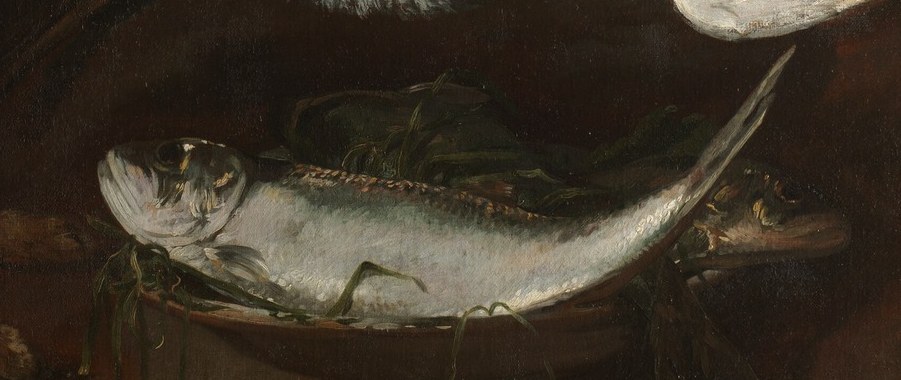
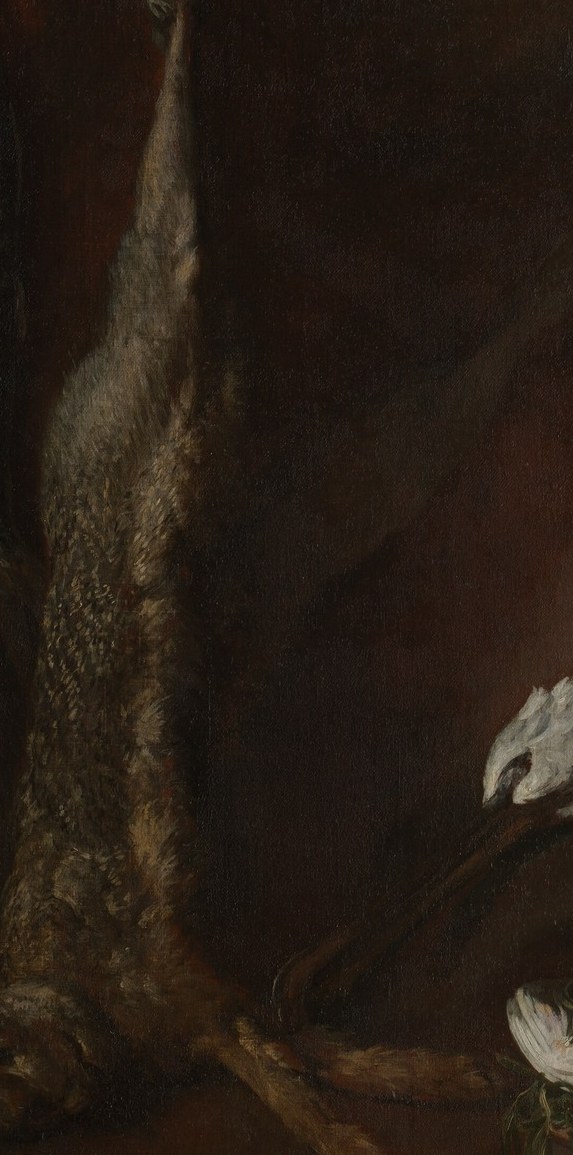
Boel's use of chiaroscuro draws your eye to the exquisite details, from the delicate plumage of the spoonbill to the glistening scales of the fish and the textured fur of the hare. These elements, though lifeless, are rendered with such precision that they almost seem to hold a lingering vitality.
The artwork aligns with a tradition of European still lifes that emphasized realism and the study of light. By grouping these distinct animal forms, Boel invites contemplation of life's transience without an overt narrative, reminiscent of vanitas motifs.
It's a powerful, subtle reminder of the quiet stillness that follows life, captured through the painter's keen observation.
Details
Transcript
This painter explored life and death through still life. Look at the delicate texture of the spoonbill's feathers. The fish on the platter still seems to glimmer. This hare hangs, rendered in precise, quiet detail. Every scale and feather captured the fleeting nature of life. It makes you think about stillness and the natural order.