Still Life with Ham by Heda, Gerret Willemsz
View the artwork: Still Life with Ham →
This painting entered the National Gallery of Art in 1985 as a work by Willem Claesz Heda, the Dutch Golden Age master of the monochrome breakfast piece. It took decades of scholarly detective work to prove it was painted by his son, Gerret, and in doing so, historians had to add a year back to a life they thought was already over.
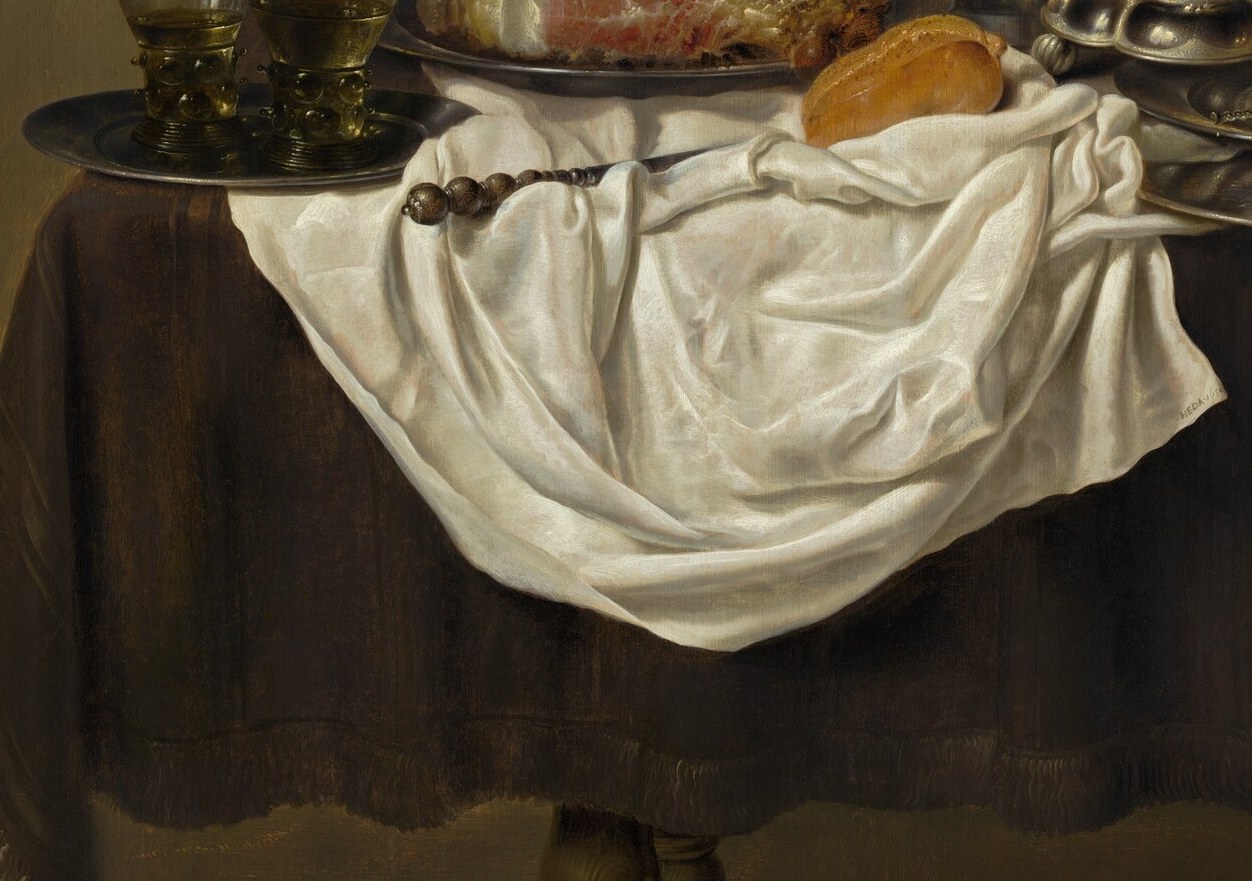
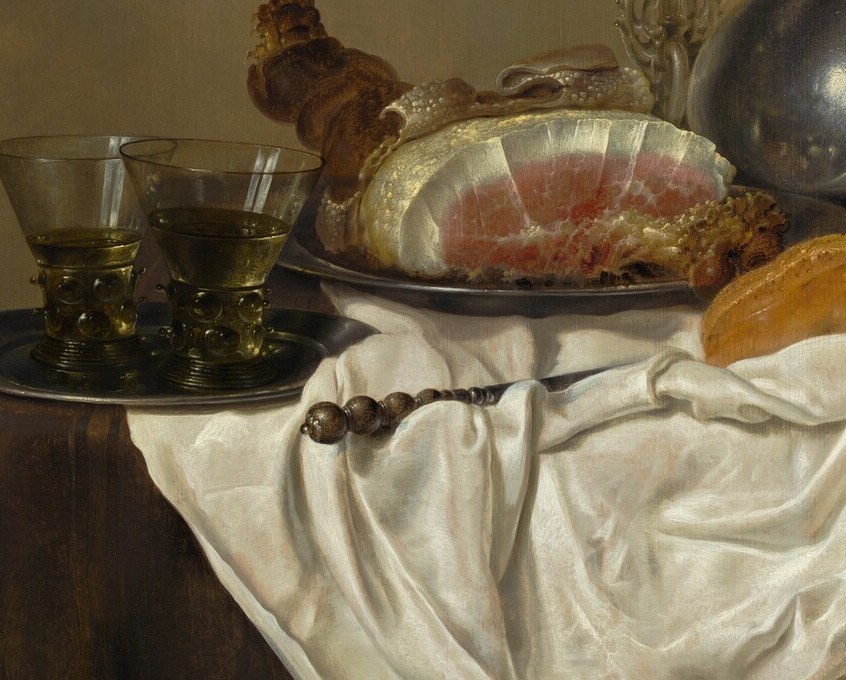
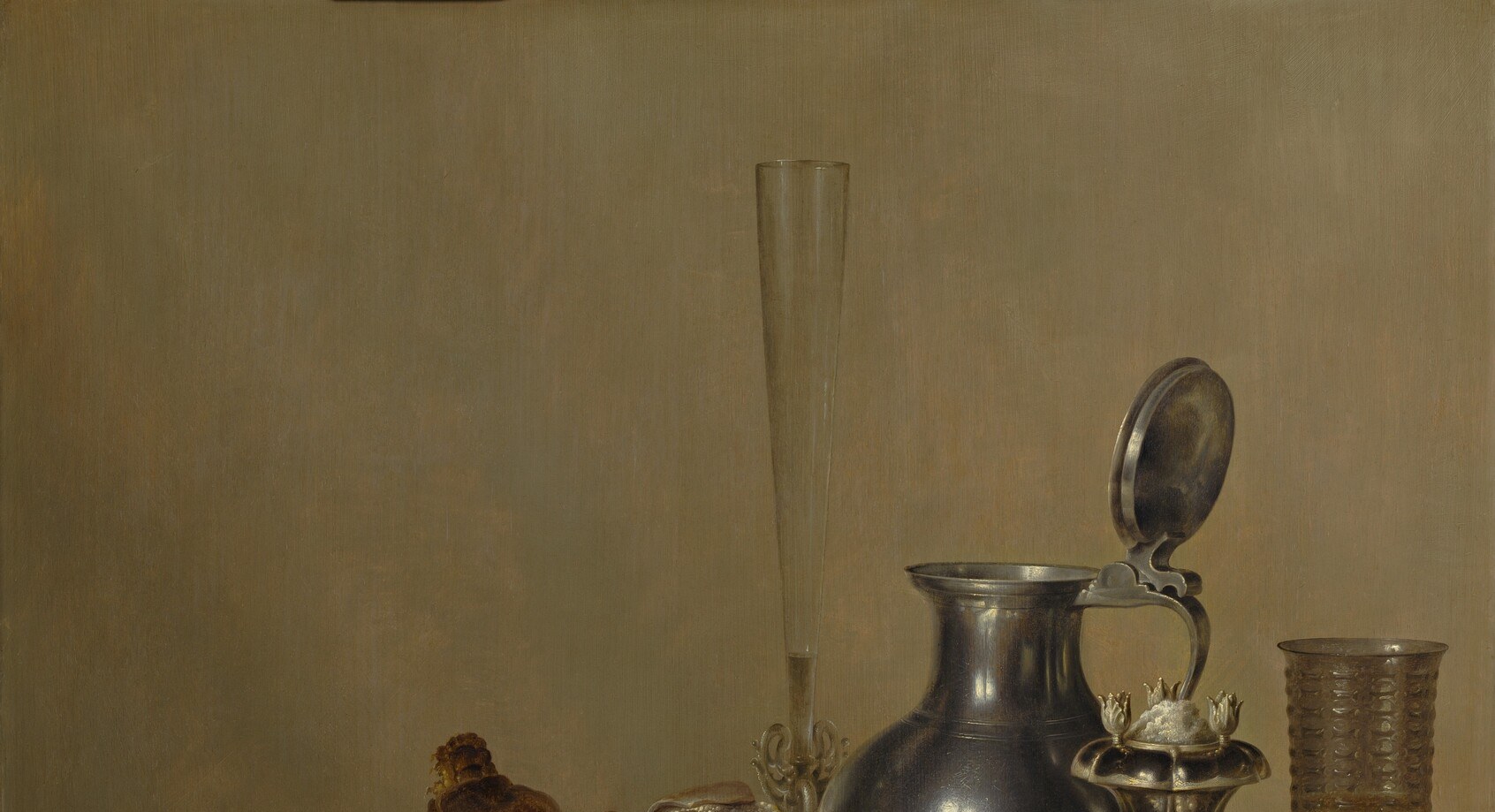
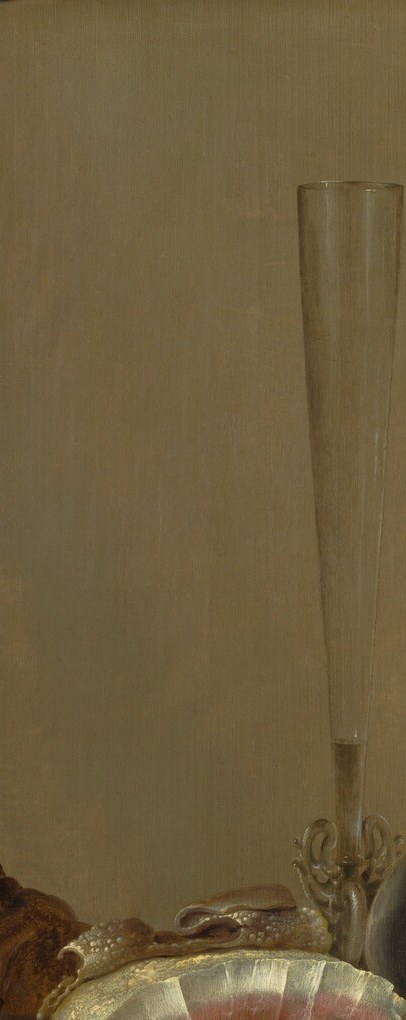
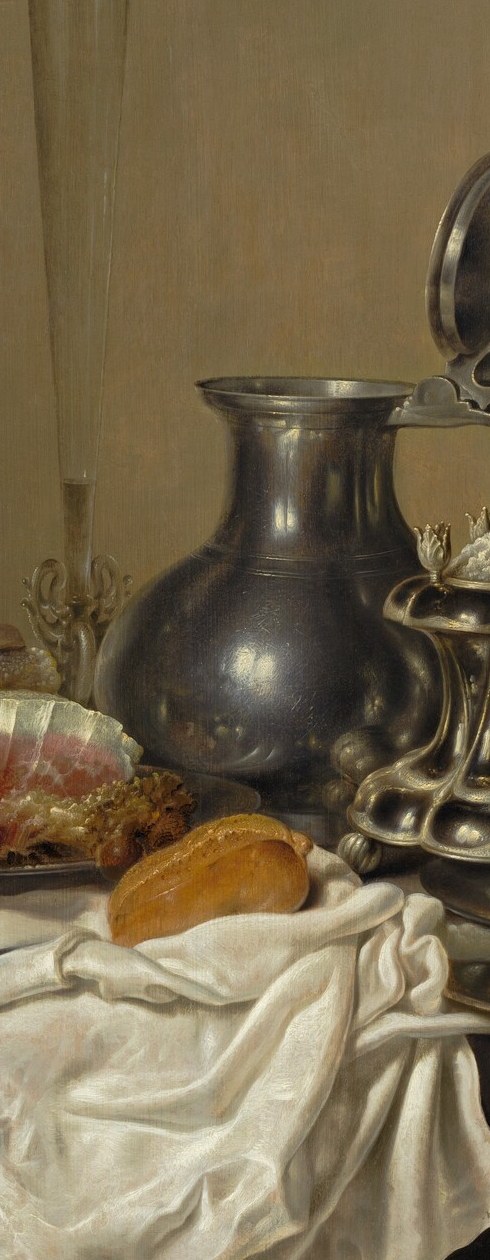
Look at the overturned vessels and the salt cellar with its lid ajar. The entire scene suggests a meal interrupted, someone left this table in a hurry. Compare the reflections in the pewter pitcher to Willem Heda’s work: Gerret’s highlights are denser, less nuanced, and the whole arrangement sits just a little more loosely than his father’s rigorous eye would have permitted.
Gerret trained in his father’s Haarlem workshop and adopted his restrained palette so completely that telling them apart has always been difficult. The breakthrough came from a close reading of the date on this panel: 1650. Earlier literature assumed Gerret died in 1649. This painting, signed clearly, proved he remained active well into the 1650s and forced a correction to the artist’s entire biography. The panel itself, three oak boards dated by dendrochronology to 1646 or later, supports the timeline.
The reattribution didn’t diminish the painting. It gave Gerret his own name, his own dates, and his own legacy, separate from the towering shadow of his father.
#arthistory #dutchgoldenage #stilllifepainting
Details
Transcript
In 1985, the National Gallery acquired a prized Willem Heda. A banquet left in haste. Overturned silver, a half-carved ham. The signature on the cloth said HEDA. But which one? Willem was the monochrome master. His son Gerret studied under him. Historians thought Gerret died in 1649. This painting is dated 1650. His reflections are denser. His arrangements, slightly looser. The evidence was always on the table. Gerret lived. This is his work.