Artwork
Still Life with Ham
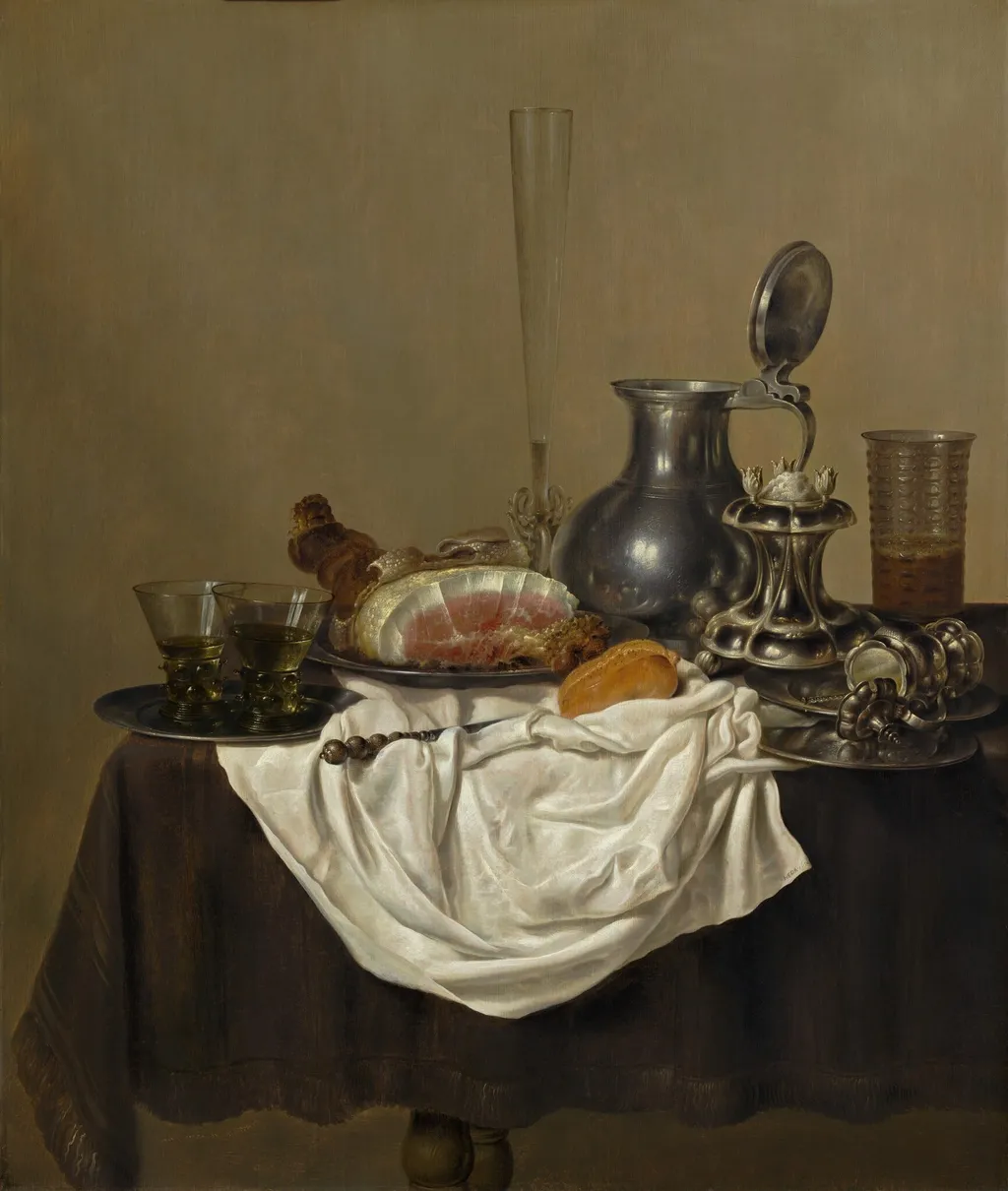
Still Life with Ham is an oil painting by the Baroque artist Gerret Willemsz. Heda. It is held in the collection of the National Gallery of Art.
- Inscription
- Inscribed:on the right edge of the tablecloth: .HEDA. 1650
About this work
Signed HEDA 1650 at the lower right of its white tablecloth, this tabletop still life by Gerret Willemsz Heda sets a crumpled linen cloth, an elaborate salt cellar, a pewter pitcher, a tall fluted glass, and a sliced ham against a muted gray ground. The leftover food suggests diners have just stepped away, the spread evoking the prosperity of the mid-century Dutch Republic.
History & Provenance
; upon Thacher's death the work was bequeathed to the National Gallery of Art in 1985, where it remains in the collection.
The painting was completed in 1650 by the Haarlem still-life specialist Gerret Willemsz Heda. No information regarding a specific commission has been documented. Its recorded ownership begins with John S. Thacher (1904–1982) of Washington, D.C.; upon Thacher's death the work was bequeathed to the National Gallery of Art in 1985, where it remains in the collection.
It has been included in the exhibition Pieter Claesz. Master of Haarlem Still Life, situating it within the tradition of Haarlem breakfast and banquet still-life painting. No inventory or accession number is recorded in the available sources.
Overview
Gerret Willemsz Heda's "Still Life with Ham," painted in 1650, presents a tabletop arrangement of luxury items and remnants of a meal. Executed in oil on panel, the upright composition features a prominent ham alongside various vessels and rumpled linen. The scene's disarray suggests a recent human presence, offering a glimpse into domestic life and the material culture of the Dutch Golden Age.
Subject & Meaning
The painting depicts a banquet scene immediately after a meal, with a partially carved ham, an ornate salt cellar, a pewter pitcher, and a tall fluted glass. Overturned vessels and crumpled linens suggest an abrupt departure, while the abundance of fine objects reflects the affluence of the Dutch Republic. This genre often invited contemplation on transience and the fleeting nature of earthly pleasures.
Technique & Style
Heda employed a refined technique, applying oil paint thinly and smoothly in successive transparent layers. Impasted highlights, created with wet-into-wet brushwork, add texture and luminosity. An underlying off-white ground subtly shows through the brushwork, contributing to the overall warm tonality of the composition. This meticulous approach characterizes the detailed realism favored in Dutch still life painting.
Context
Gerret Willemsz Heda trained under his father, Willem Claesz Heda, a prominent Haarlem painter known for his monochrome breakfast pieces. While Gerret's style closely mirrored his father's, his compositions often exhibit a slightly looser arrangement and less rigorous perspective. This work exemplifies the tradition of "banquet pieces," a popular still life genre that showcased the prosperity and material culture of the Dutch Republic in the mid-17th century.
Own this work as a print
Artist & collection
Artist
Gerret Willemsz. Heda (1620/25, in Haarlem – 1647/59, in Haarlem), was a Dutch Golden Age painter; known for fruit still lifes and vanitas paintings. He was the son and pupil of Willem Claesz. Heda, and influenced the…

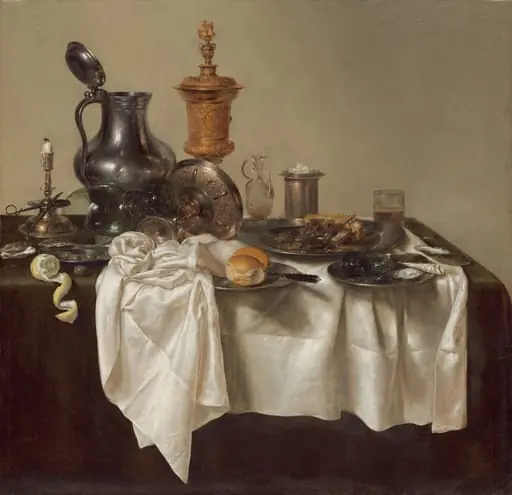 Banquet Piece with Mince Pie
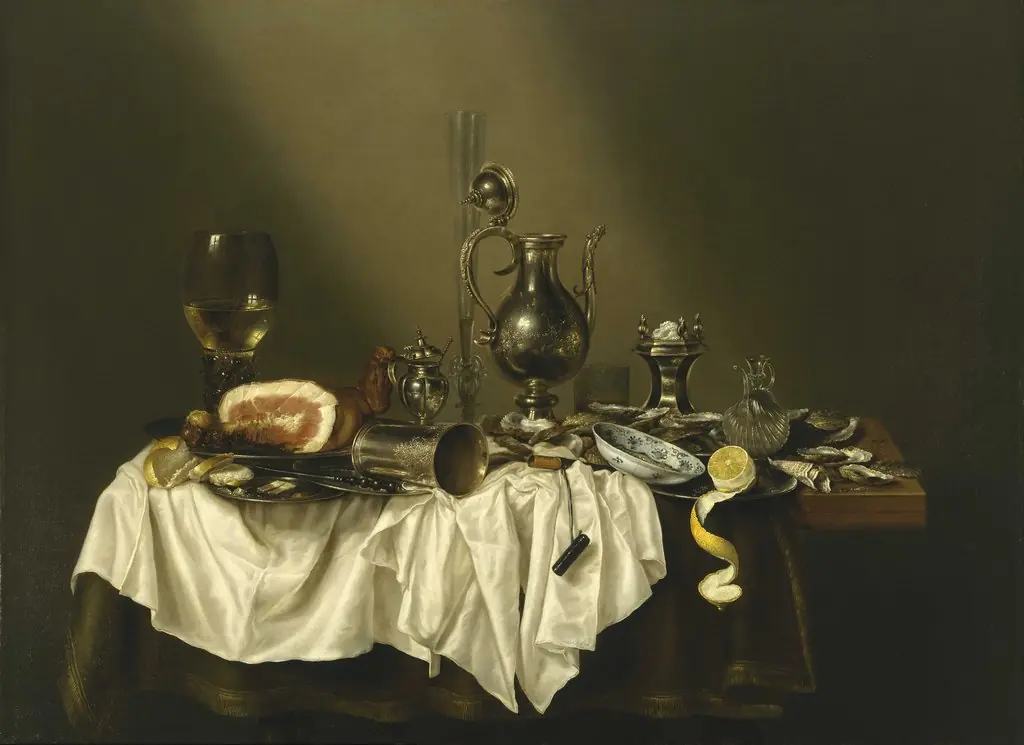 Banquet Piece with Ham
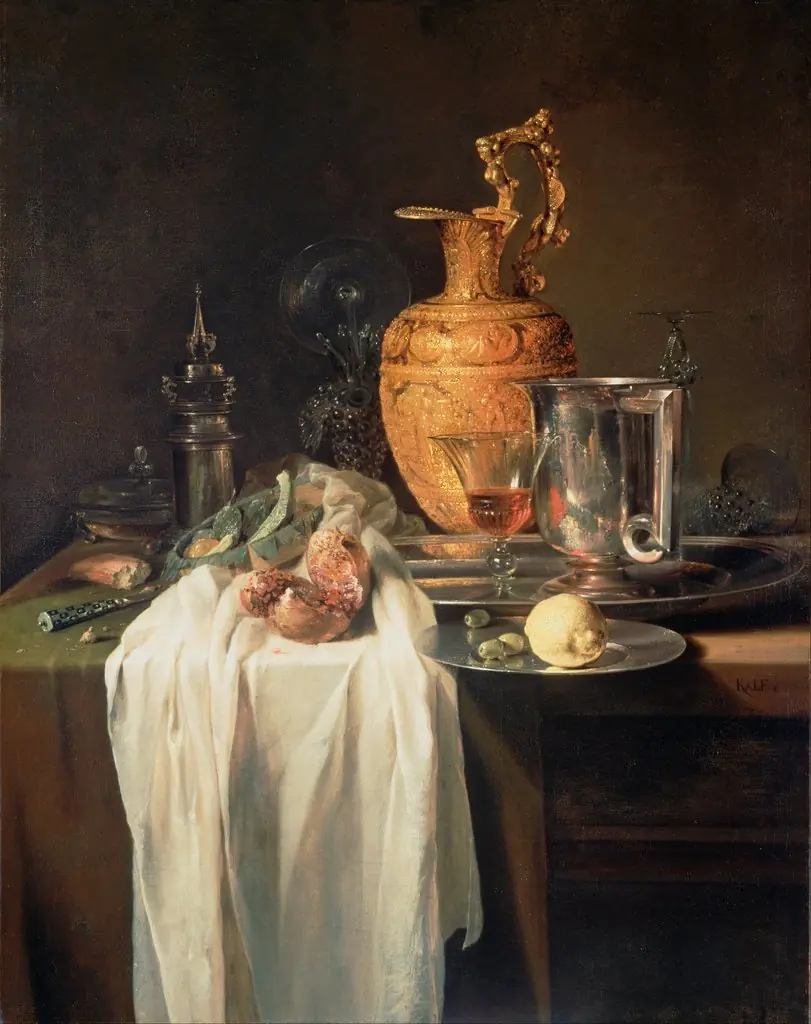 Still Life with Ewer, Vessels and Pomegranate
 Silver Wine Jug, Ham, and Fruit
 Sumptuous still life
 Still-Life
 Breakfast with Fish
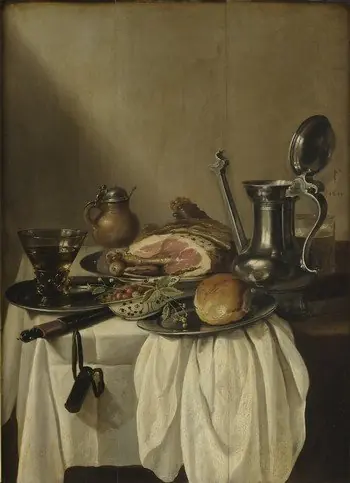 Still life of a laid table
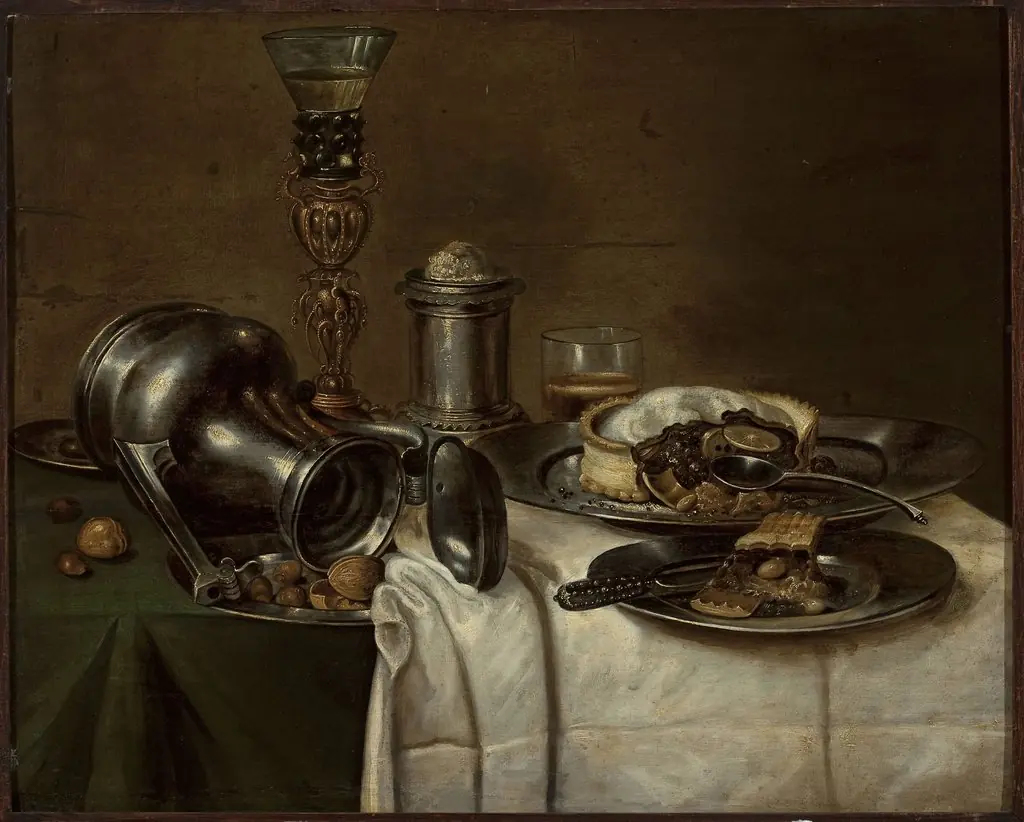 Dessert
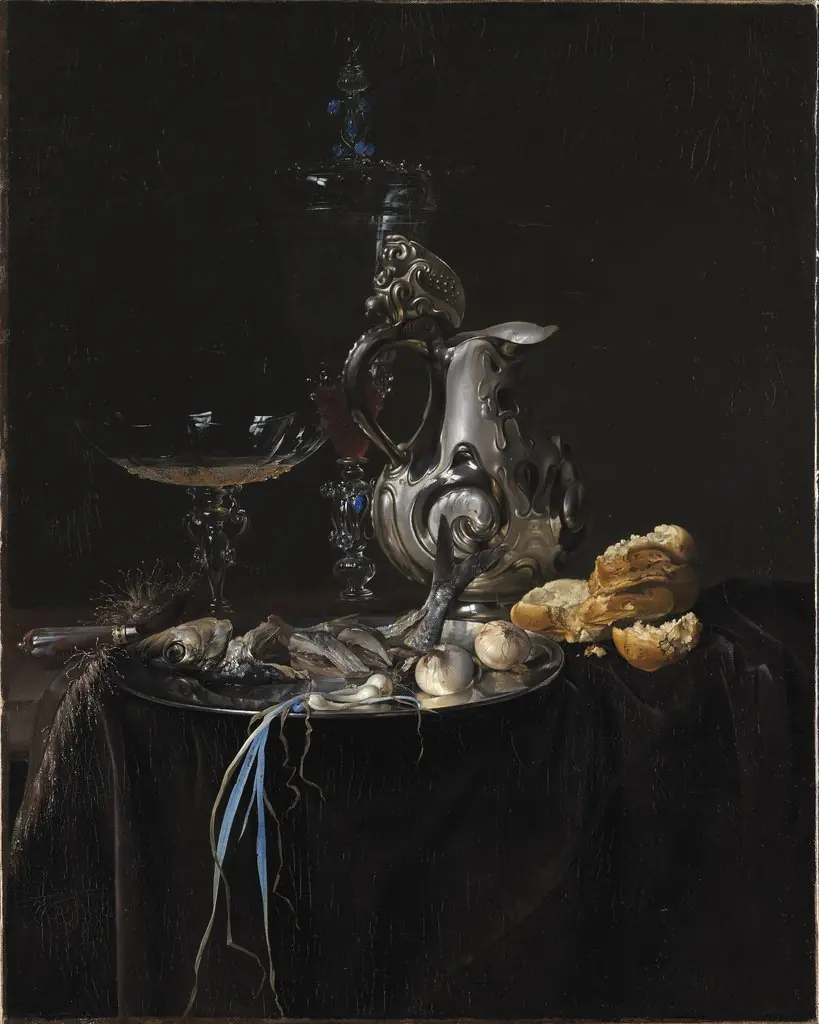 Still Life. Breakfast Piece with a Silver Jug
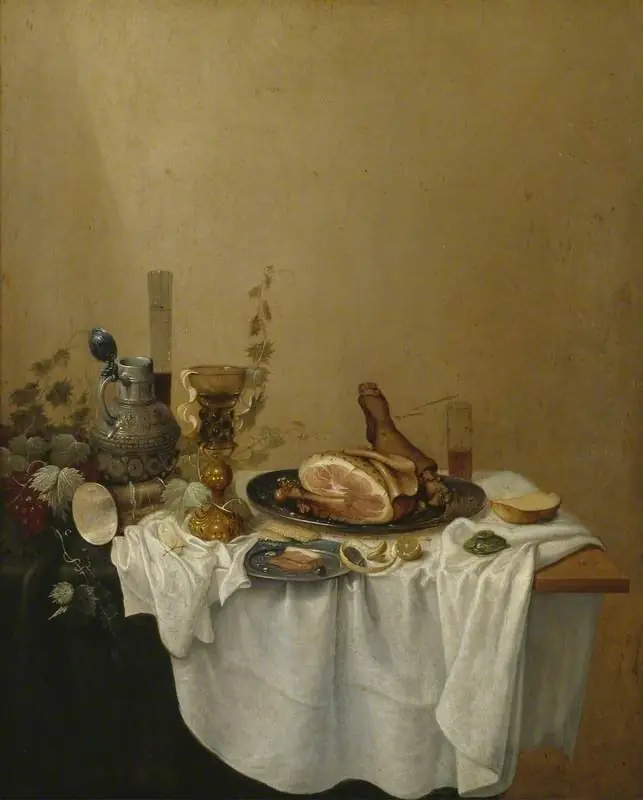 Still life with stoneware jug, bekerschroef, glassware and a leg of ham
- Still Life with a Gilt Cup