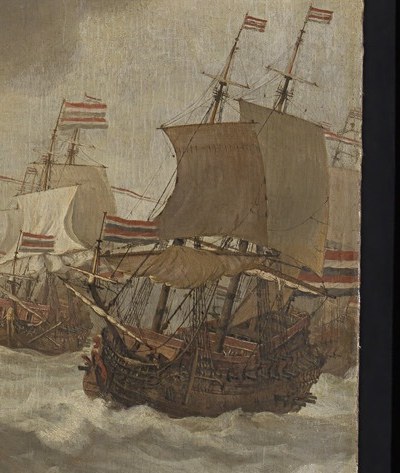
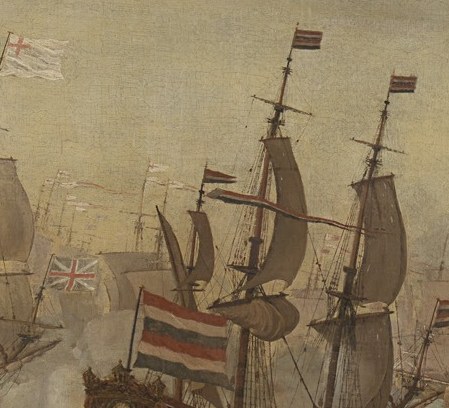
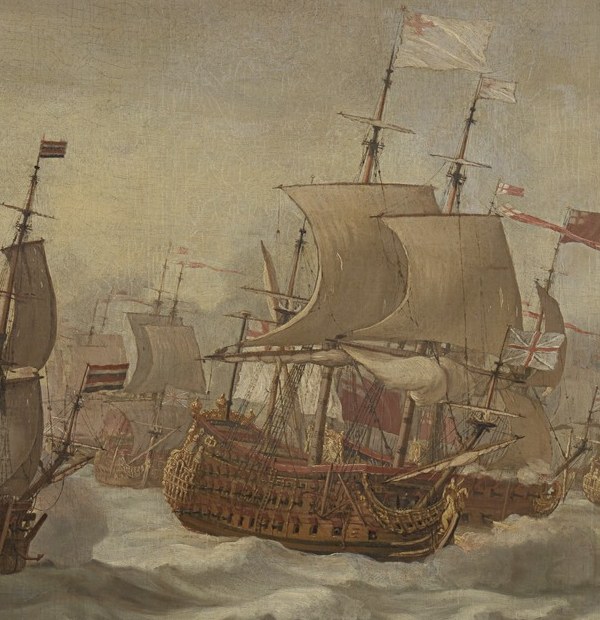
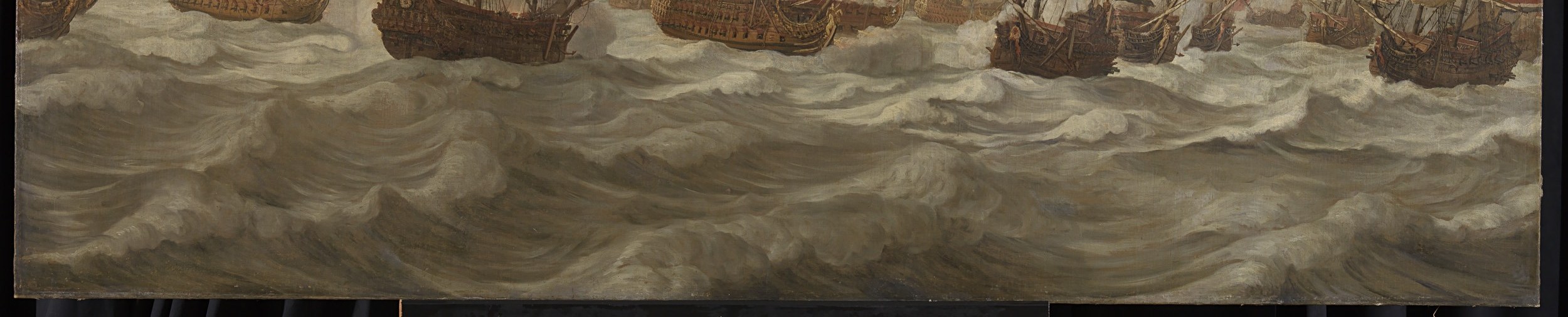
Episode from the Four Day Battle at Sea, 11-14 June 1666, in the second Anglo-Dutch War (1665-67) by Willem van de Velde the elder
Willem van de Velde the Elder painted this record of the Four Days' Battle a quarter-century after the guns fell silent. Episode from the Four Day Battle at Sea (1690) hangs in the Rijksmuseum, and it was painted by a man who grew up watching his father build ships.
Look past the burning vessel on the right and find the Dutch tricolor flying at center. Then move your eye to the rigging: every rope, every knot, every spar is drawn with the precision of someone who could have assembled the ship himself. The red and white striped flags mark a specific naval squadron, not generic warships.
The Four Days' Battle, June 1666, was among the longest and bloodiest naval engagements of the Anglo-Dutch Wars. Over a hundred ships were lost. Van de Velde specialized in accurate naval depictions, and his works were studied by shipbuilders and strategists alike. His father, a shipwright, taught him how a vessel is put together.
The painting is both art and a working document: a Dutch victory recorded by a man who understood every inch of what he painted. Next time you see a 17th-century seascape, look at the ropes. That is where the painter's life is.
Details
Transcript
June 1666. The Four Days' Battle. One of the bloodiest sea fights in European history. Everyone sees the fire first. The Dutch tricolor at center. They won this fight. The painter's father was a shipwright. He could name every knot and line in this painting.