Virgin and Child by Master of San Miniato
This is Virgin and Child, painted around 1470 by the Master of San Miniato and now held at the Rijksmuseum in Amsterdam. We do not know the painter's real name, only the Tuscan town whose style the work resembles.
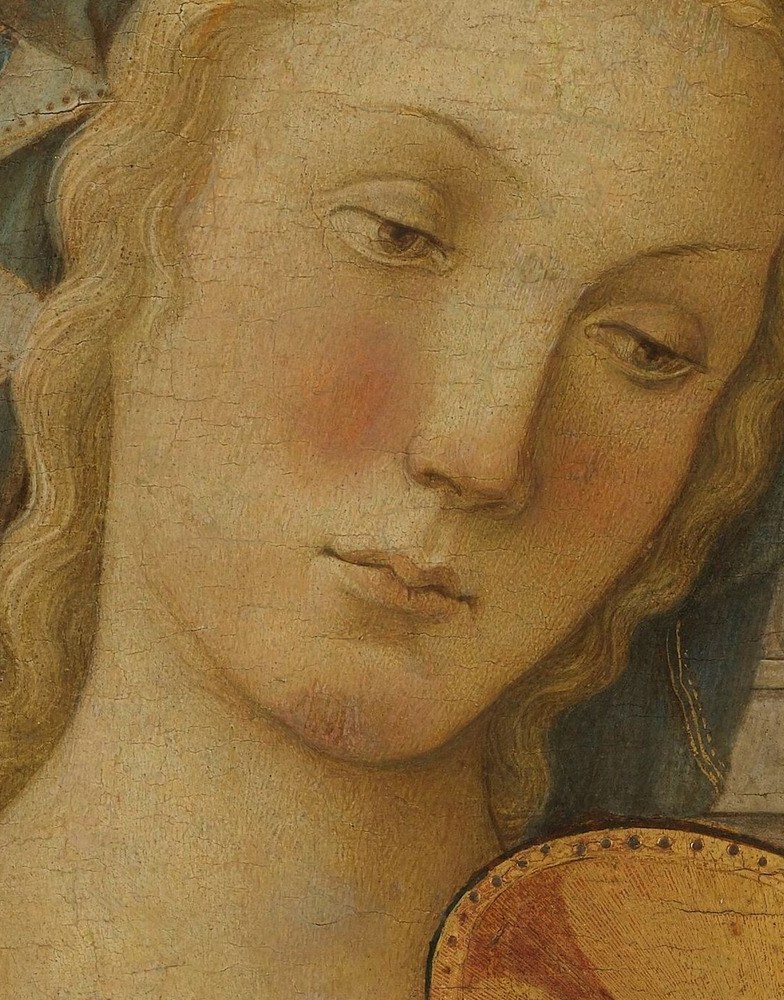
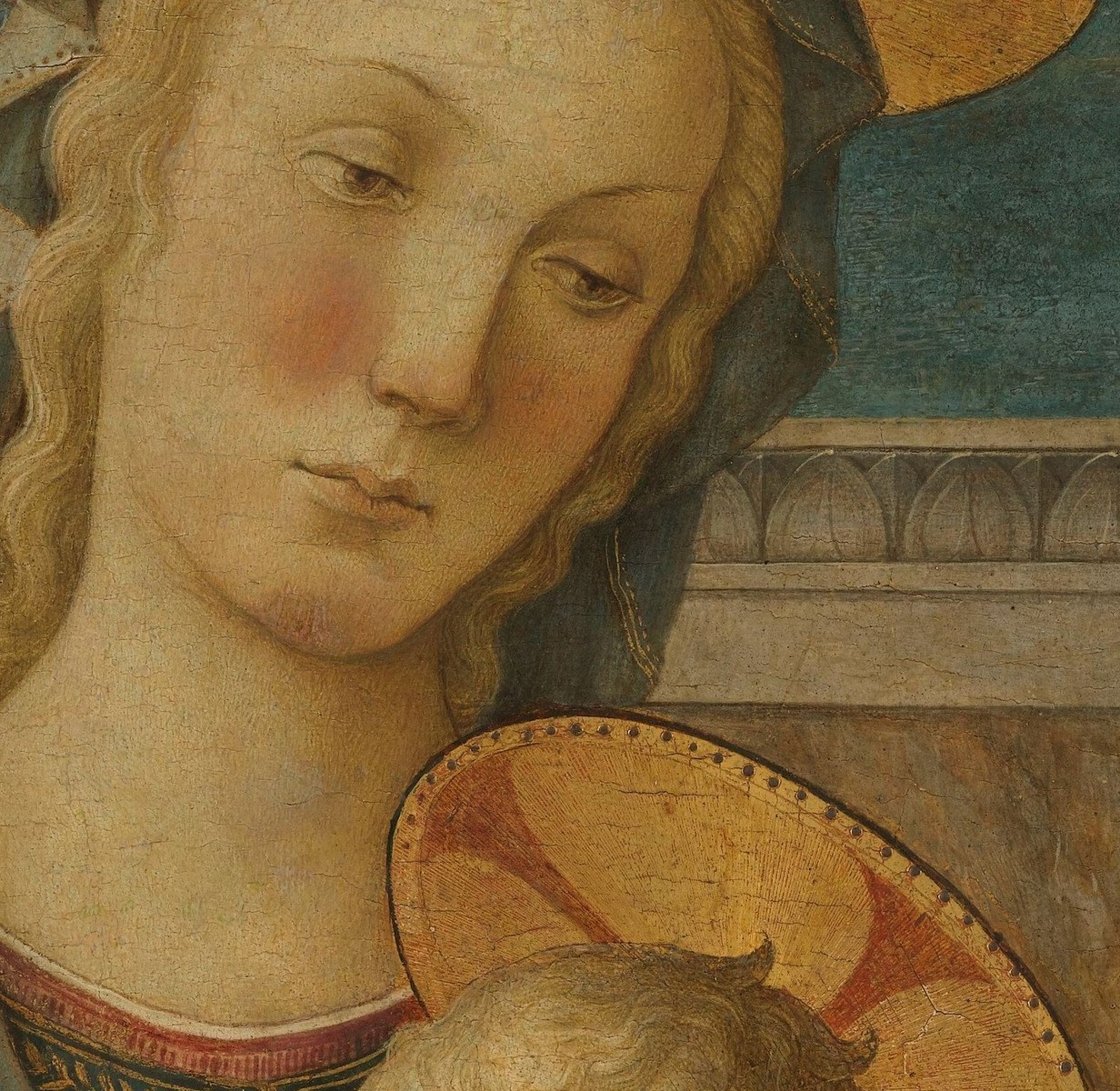
What you are looking at is a tempera painting: powdered pigment suspended in egg yolk, applied to a wooden panel. Tempera dries in seconds and cannot be blended like oil paint. To create soft shadows, translucent fabric, and fine gold detail, the artist had to work in tiny, precise strokes. A single mistake meant starting over.
The scene was a familiar one in 15th-century Florence, where devotional images of the Madonna and Child were in high demand. The bird in the child's hands was a common Christian symbol: the soul, or Christ's future sacrifice, a layer of meaning every viewer of the time would recognize at a glance.
Five hundred and fifty years later, the painter's name is lost. But the brushwork remains, fragile and exact, still holding the light.
Details
Transcript
Tempera paint dries in seconds. You cannot blend it on the panel. Her face, built one fine stroke at a time. Her white veil floats over dark blue. The colors never mix. And this star, so thin the robe's fold still shows through. He holds a bird. In Christian art, the soul. A bird no bigger than a thumb.