The Church at Gloucester by Childe Hassam
Childe Hassam's The Church at Gloucester, 1918, at The Metropolitan Museum of Art, was painted during World War I. Hassam, usually known for cityscapes and coastlines, increasingly turned to patriotic themes during this period, using his art to express national sentiment.
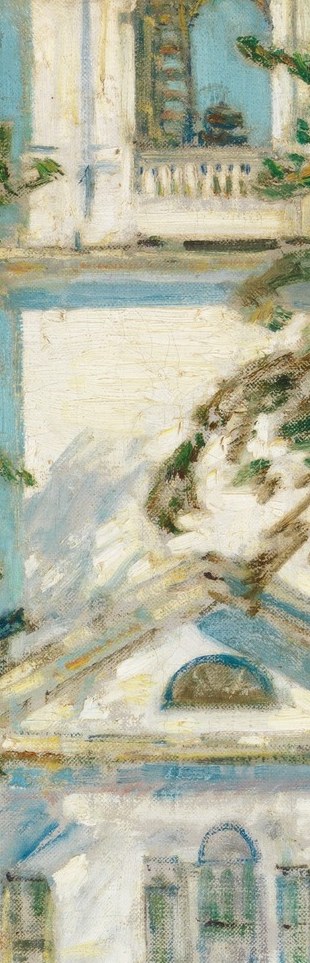
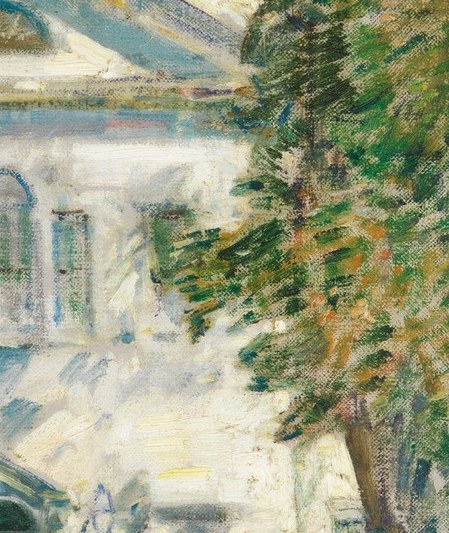
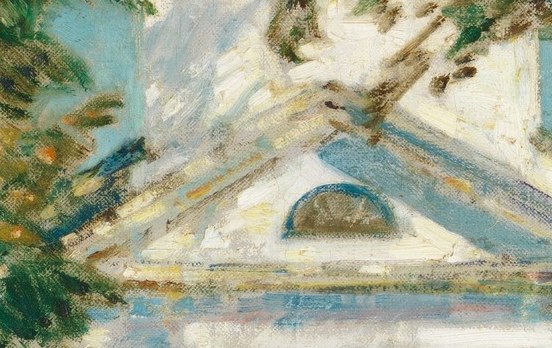
Observe the prominent white church steeple, a symbol of aspiration, and the classical pediment suggesting tradition. The dappled sunlight on the foliage and the interplay of light and shadow on the pathway showcase Hassam's Impressionist technique, capturing transient atmospheric effects.
Hassam was a key figure in bringing Impressionism to America. While this painting depicts a serene New England scene, it was created amidst a global conflict, reflecting the artist's engagement with the era's events.
This work exemplifies how even peaceful scenes can carry the weight of their historical moment.
Details
Transcript
Sunlight hits a white church steeple. It's World War I, 1918. Hassam painted this scene in Gloucester. The artist captured light on foliage. He focused on patriotic themes then. Look at the shadowed church entrance. His signature grounds the painting.