Trompe l'oeil with Palettes and Miniature by Jean François de Le Motte
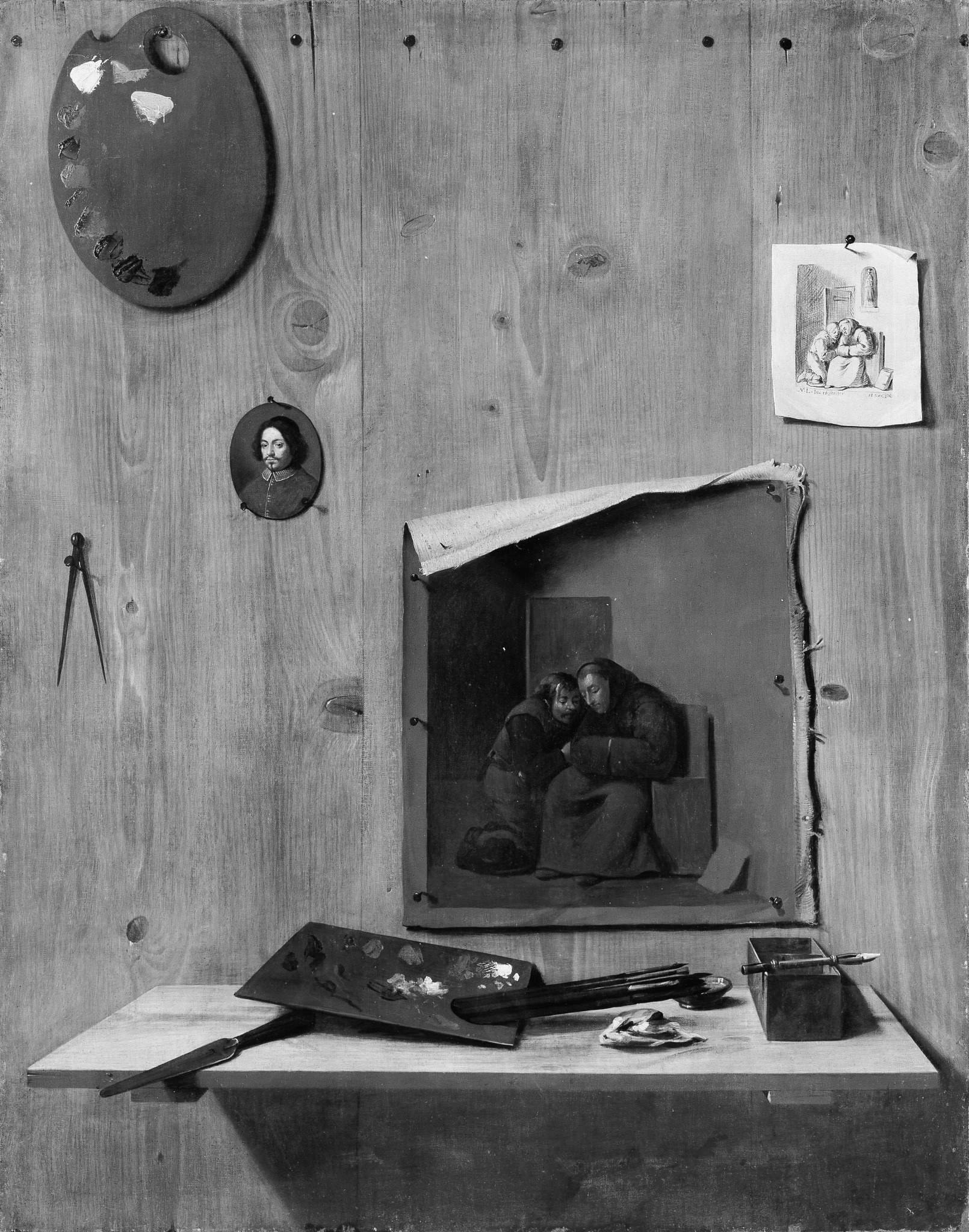
Trompe l'oeil with Palettes and Miniature by Jean François de Le Motte (c. 1700) is an oil painting at The Metropolitan Museum of Art. This work perfectly exemplifies the trompe l'oeil genre, masterfully tricking the viewer's eye into believing painted objects are real. De Le Motte uses meticulous detail and chiaroscuro to create a powerful illusion of depth and texture, making a simple arrangement of artistic tools and a small portrait seem to pop off the canvas.
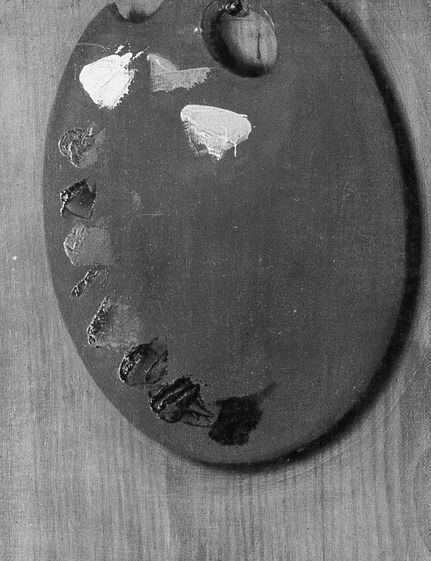
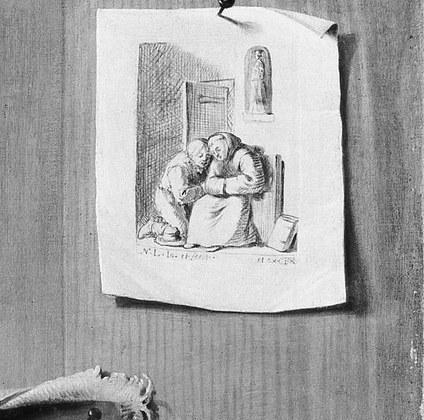
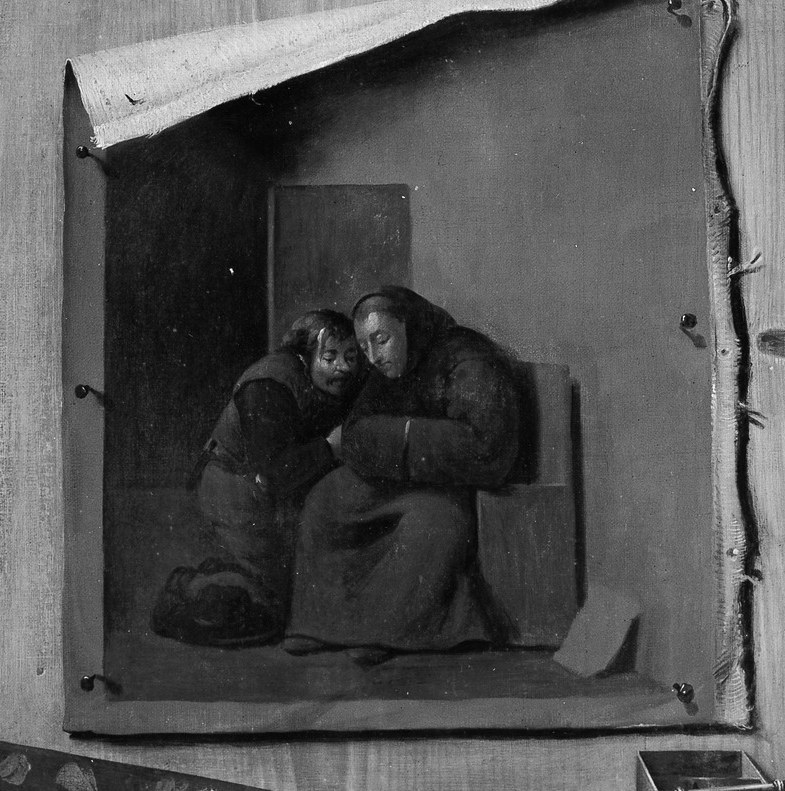
Notice the simulated wood grain, the realistic dabs of paint on the palette, and the textured edge of the pinned sketch. The tiny oval portrait, featuring two figures, adds another layer of illusion within the illusion.
Jean François de Le Motte (1635-1685) was an artist known for his skill in creating convincing visual deceptions. This painting, made around 1700, showcases his ability to render everyday artistic objects with such precision that they appear tangible, inviting viewers to question the nature of reality.
What details in art make you question what you are seeing?
Details
Transcript
It looks like a real wooden wall. But these are painted objects on the wall. Look at the artist's palette. And the small sketch pinned here. Here is a miniature portrait. The painter Jean François de Le Motte made this. He wanted you to believe it was real.