Tilla Durieux by Pierre-Auguste Renoir
View the artwork: Tilla Durieux →
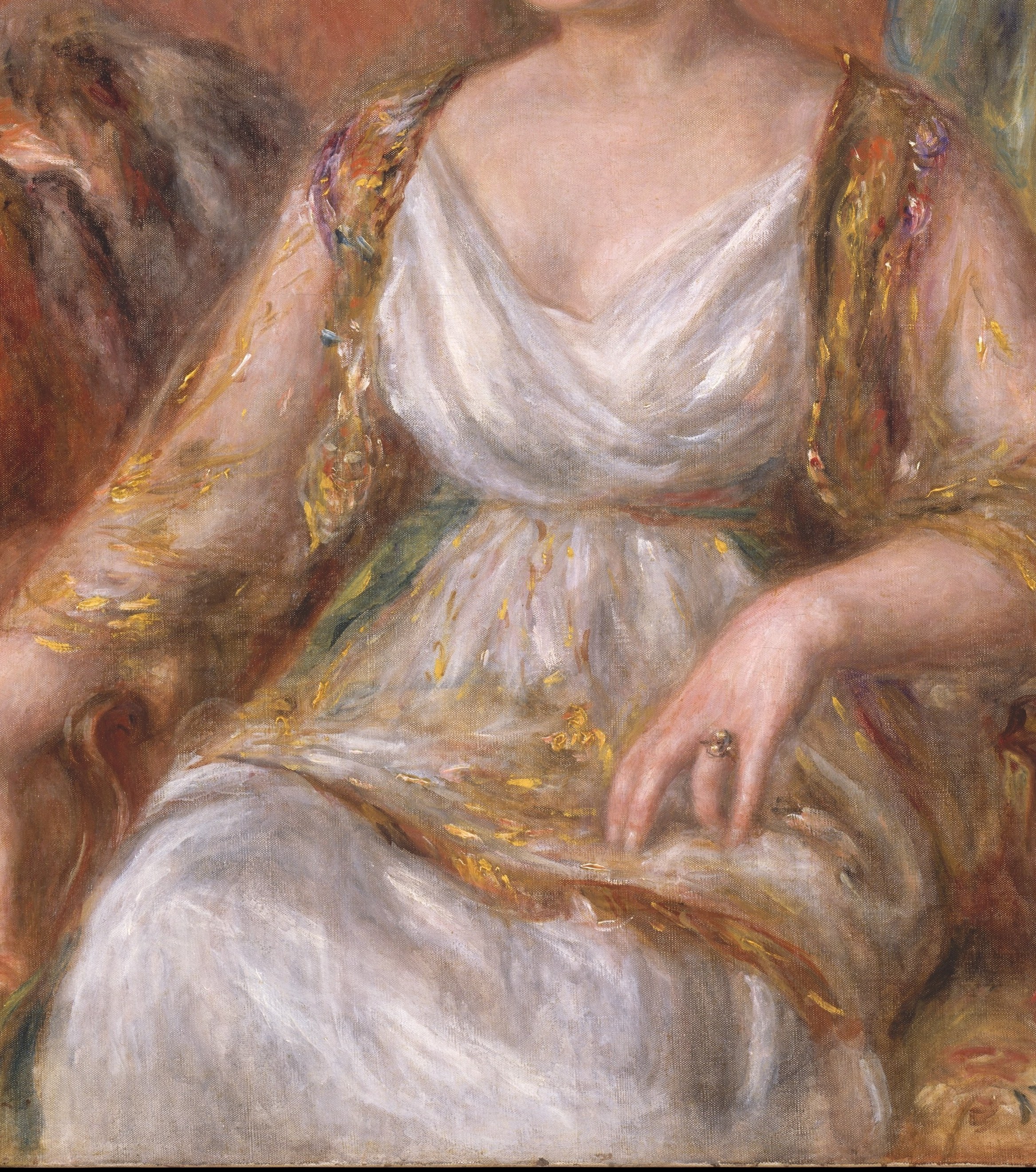
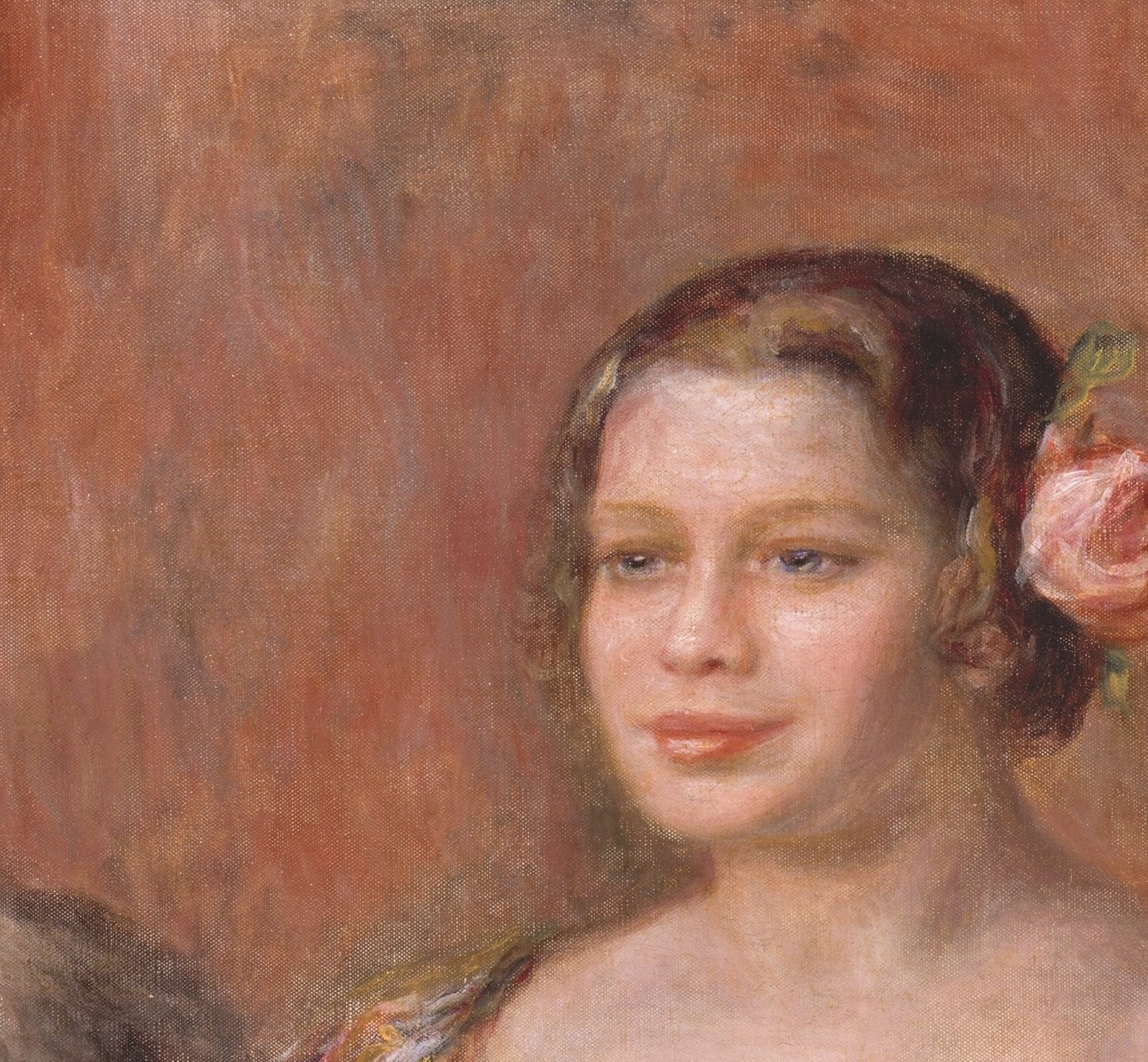
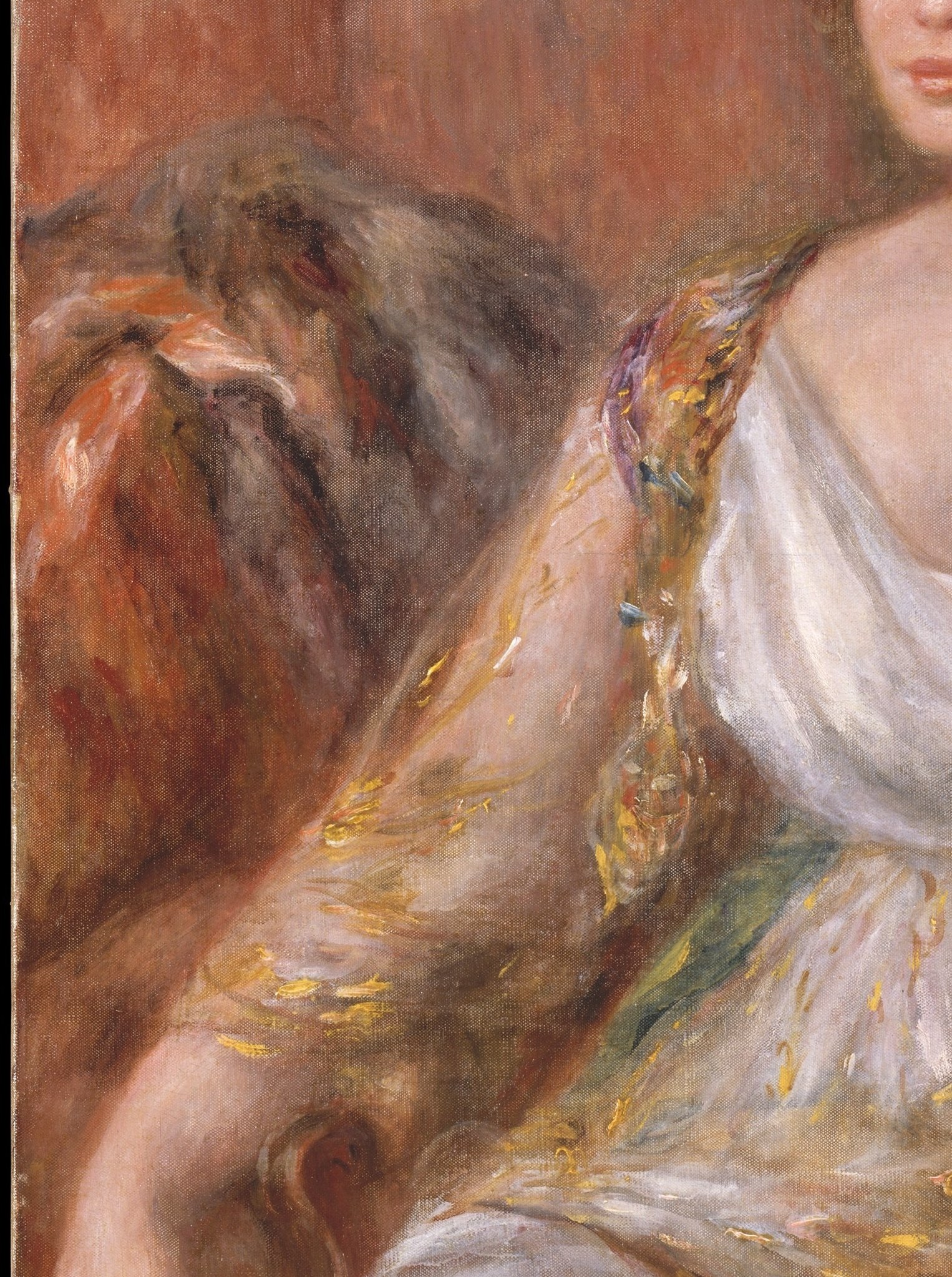
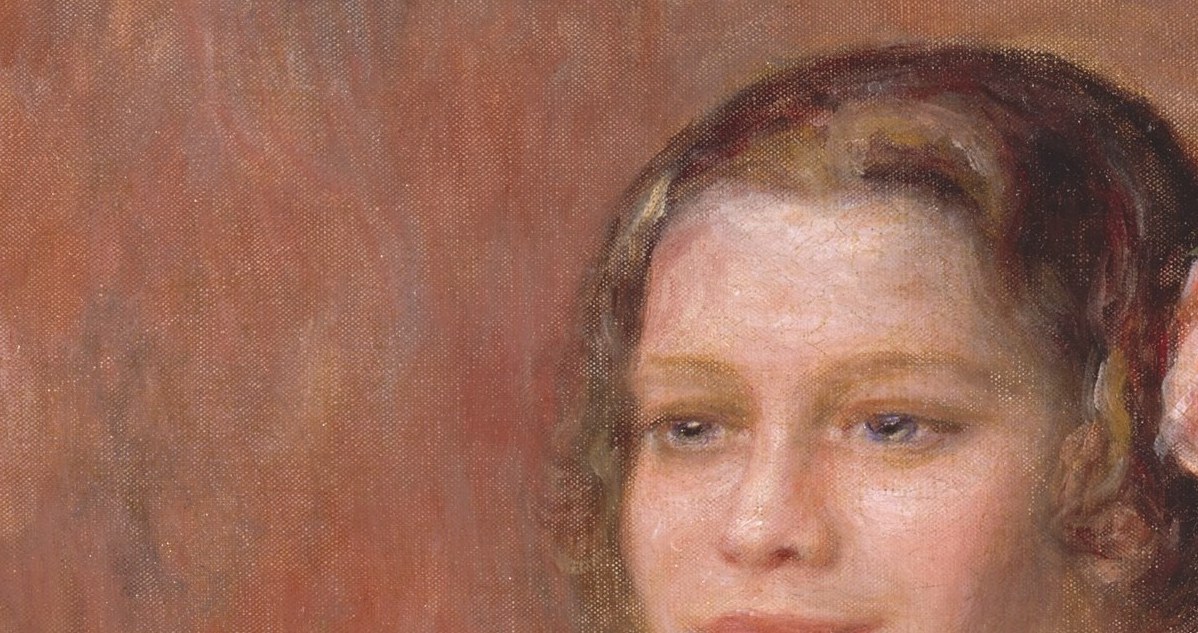
Pierre-Auguste Renoir painted *Tilla Durieux* in 1914, and many consider it the finest portrait of his late period. It hangs today in the European Paintings galleries of the Metropolitan Museum of Art. The sitter was a celebrated Austrian stage actress, and the white draped gown she wears is not a studio prop, it is a costume designed by the couturier Paul Poiret for her acclaimed performance as Eliza Doolittle in Shaw's *Pygmalion* the year before.
Look closely at her left hand, resting softly in her lap. Those yielding, tenderly painted fingers were made by hands that could barely hold a brush. Renoir was seventy-three, confined to a wheelchair by severe rheumatoid arthritis, and his brush had to be strapped to his deformed hand. The looseness and confidence of the paint tells you everything about his spirit.
The painting itself barely survived its time. Still wet when World War I broke out, it was left behind in Paris as Durieux and her husband, the dealer Paul Cassirer, fled. It passed through several collections before Durieux herself reclaimed it in 1933 while escaping Nazi Germany. She carried it with her into exile, eventually settling in Zagreb.
The Met received the canvas in 1960 as part of the Stephen C. Clark bequest. A portrait of a performer, painted by an artist who refused to stop, and worn by a woman who refused to let it go.
#arthistory #renoir #metmuseum
Details
Transcript
She was one of the most famous actresses in Europe. But Renoir did not paint her performing. He painted this: a private, inward gaze. The dress is a costume by Paul Poiret. She wore it as Eliza Doolittle in Pygmalion. Now look at her left hand. Renoir painted these soft hands with a brush tied to his own crippled fingers.