The Dutch Burn English Ships during the Expedition to Chatham, 20 June 1667 (Raid on the Medway) by Jan van Leyden
Jan van Leyden painted "The Dutch Burn English Ships during the Expedition to Chatham" the same year as the raid itself, in 1667. The canvas records a decisive Dutch naval victory that exposed England's vulnerability at sea. It hangs at the Rijksmuseum in Amsterdam.
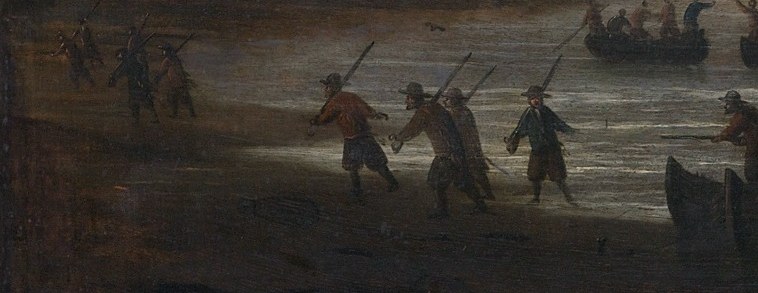
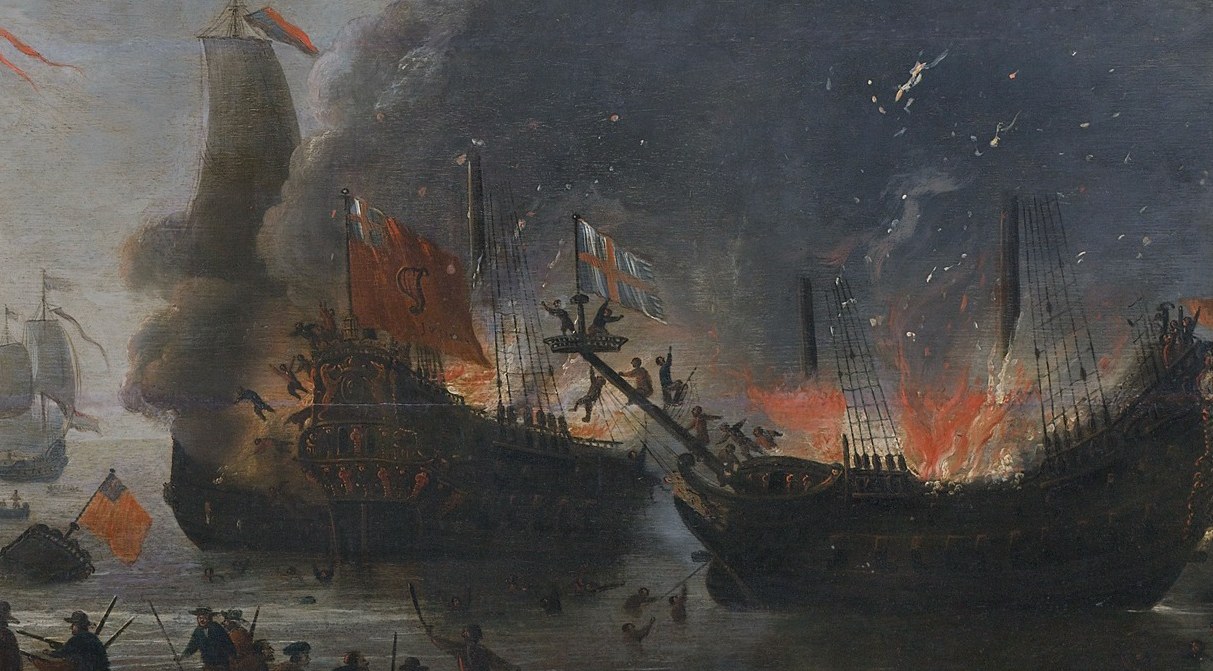
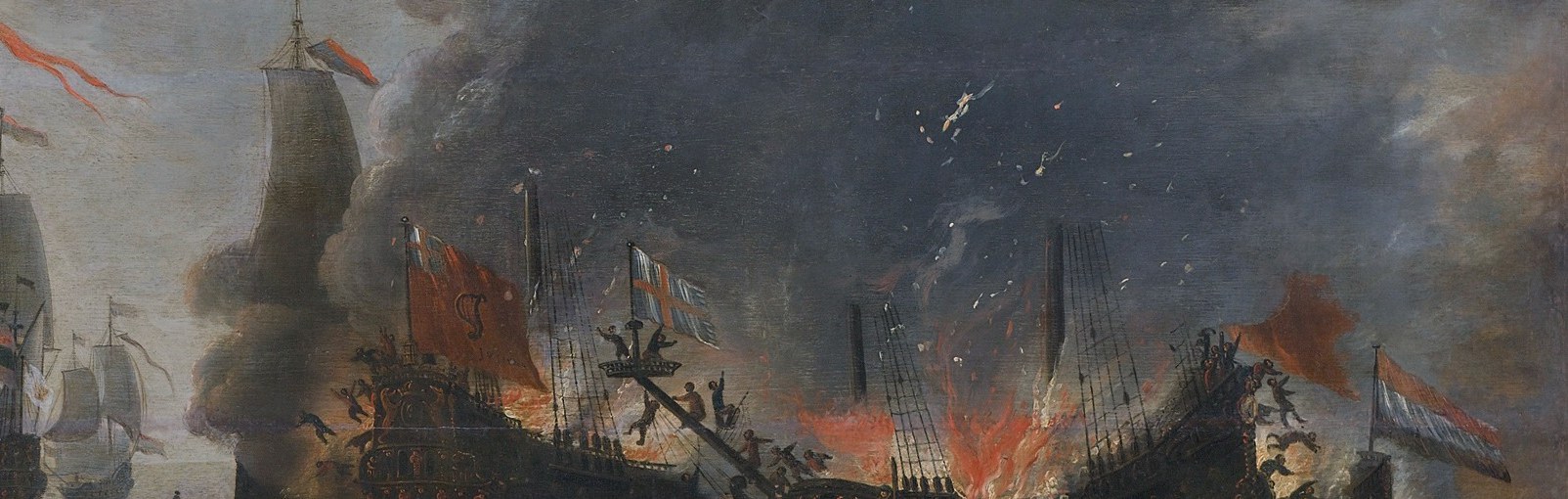
Look at the soldiers marching on the left shore, advancing toward the stone fort. Behind them the English fleet burns at anchor. Small figures in boats push through smoke and fire at the center of the chaos. A tattered Dutch flag rises against the smoke, a quiet marker of what has just happened here.
The Raid on the Medway, on June 20, 1667, was a devastating blow to England during the Second Anglo-Dutch War. Dutch warships sailed up the Medway River, burned English ships at anchor, and captured the English flagship. Van Leyden, about 22 years old at the time, created this painting as a contemporary record of his country's triumph. It entered the Rijksmuseum in the twentieth century.
A young painter setting down his nation's greatest naval victory in oil, the same year it happened. Over three and a half centuries later, the smoke still rises.
Details
Transcript
June 1667. Dutch warships sailed up the Medway, into England. Soldiers came ashore and advanced on the fort. Behind them, English warships burned at anchor. Men in small boats pushed through the smoke. A painter recorded it that same year. The war ended weeks later.