Mary, Jesus and St Francis by http://www.wikidata.org/.well-known/genid/33b2f3669e2af8ac5ff70eda0209b621
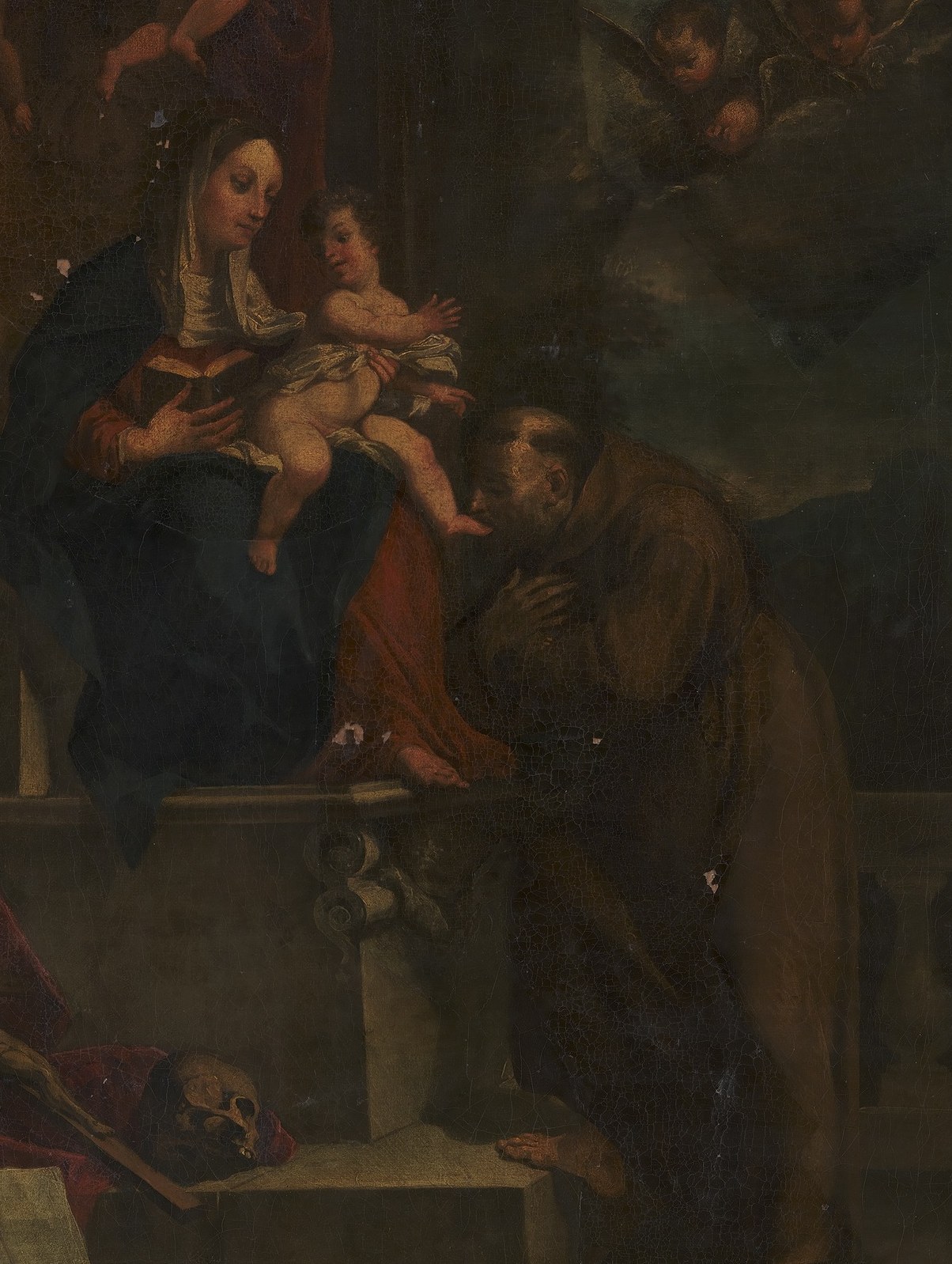
Jusepe de Ribera's "Mary, Jesus and St Francis," painted around 1644, is a striking example of the Spanish Baroque style, currently held in a private collection. Ribera, known as 'Lo Spagnoletto' (The Little Spaniard), masterfully used dramatic chiaroscuro to heighten emotional intensity in his works.
In this painting, Mary gently holds the infant Jesus, their forms illuminated against a deep, dark background. St. Francis of Assisi kneels in devout contemplation, his upturned face and clasped hands expressing profound spiritual awe. Observe the stark contrast of light and shadow, which sculpts the figures and draws the eye to their expressions.
The presence of a skull and an open book beneath St. Francis's hands serves as a memento mori, reminding viewers of mortality and the importance of spiritual reflection, themes central to Franciscan spirituality. Two ethereal cherubs hover above, subtle celestial witnesses to this intimate divine encounter.
Ribera’s ability to infuse his figures with such palpable emotion and create a sense of sacred intimacy is why his work continues to resonate deeply today. What feelings does this powerful interplay of light and shadow evoke for you?
Details
Transcript
Mary cradles Jesus, bathed in light from the darkness. This painter was a master of intense light and shadow. St. Francis kneels, his gaze fixed on the divine. His hands are clasped in profound devotion and prayer. The skull is a reminder of mortality, a common Franciscan symbol. Two cherubs observe from above, unseen by the figures. It creates a quiet, powerful moment of spiritual encounter.