Shepherd's Idyll by François Boucher
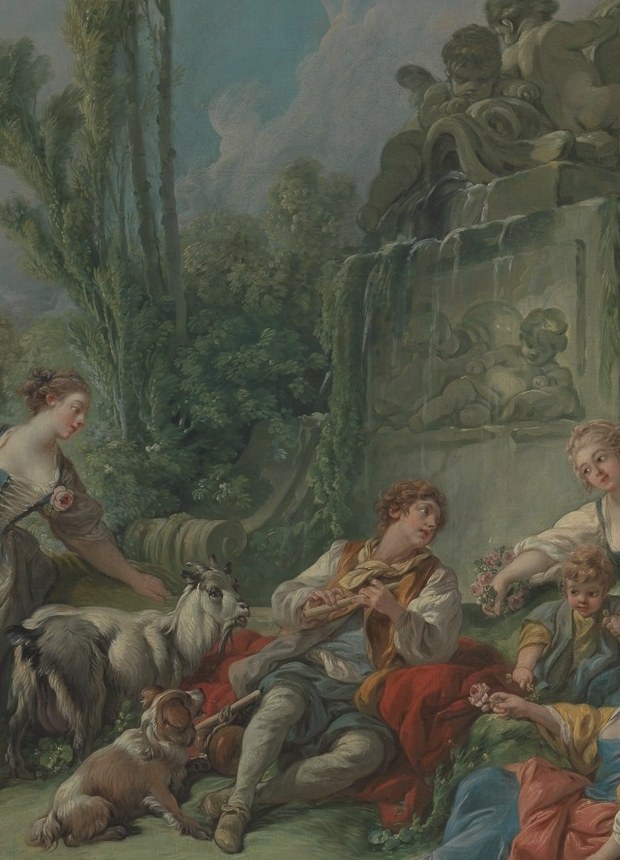
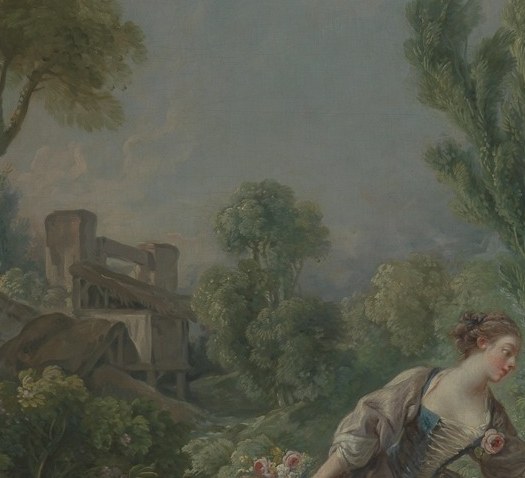
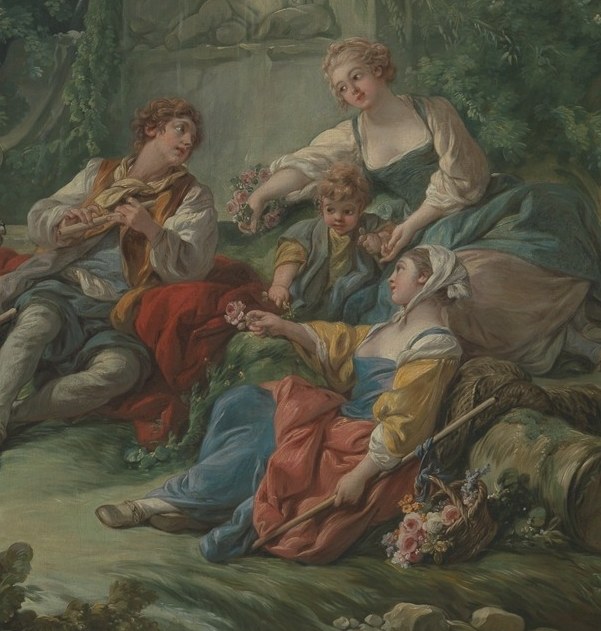
This is François Boucher's "Shepherd's Idyll," painted in 1768. At first glance, it is a simple, beautiful pastoral scene: a woman in a luminous blue dress holds flowers while a shepherd leans in and children play with a small dog. It is the 18th-century French aristocracy's favorite fantasy, dressing courtly leisure as carefree rural life.
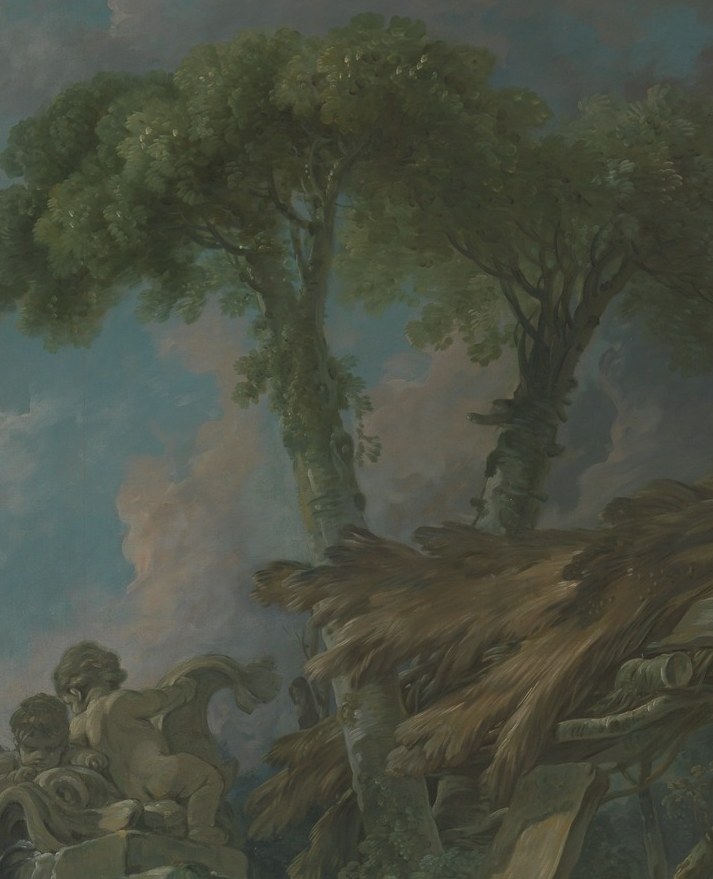
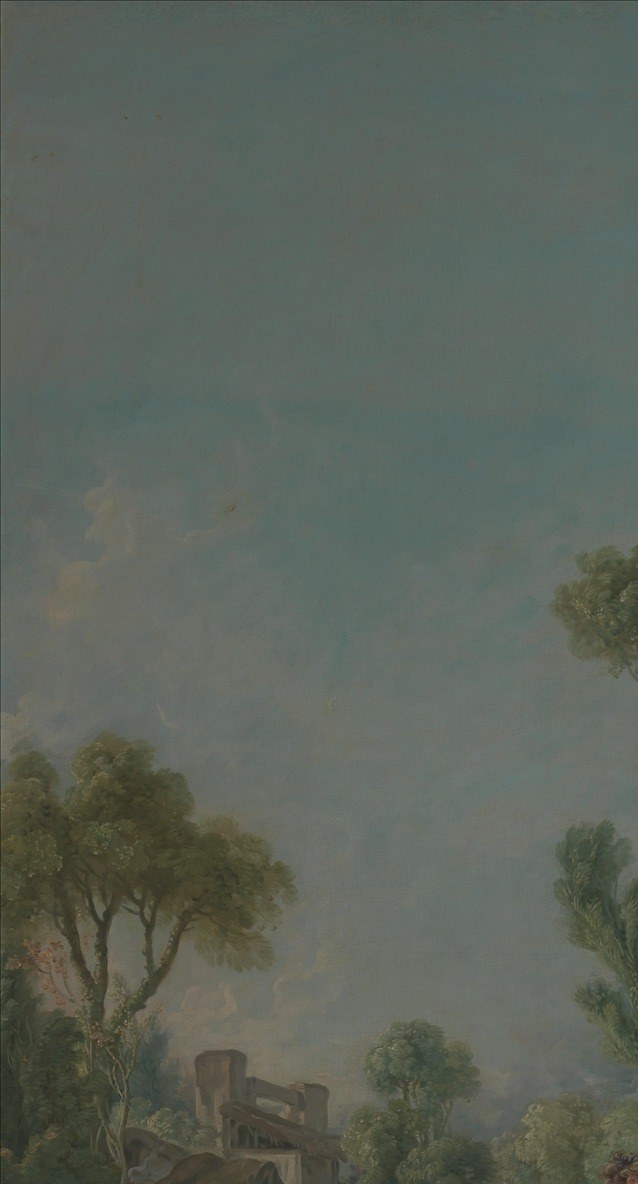
But look closely at the distant rocks on the right side of the canvas. Two small sculptural forms stand atop the outcrop, barely visible against the pale sky. They are classical statues, almost certainly deities, deliberately placed by Boucher to preside over the scene. They are easy to scroll past, but they change the picture entirely.
Boucher was the most celebrated painter of the Rococo, known for his idyllic, sensual visions of a perfect world. This painting was made late in his career, during the reign of Louis XV, when the French court had an insatiable appetite for these Arcadian escapes. The cow, the flowers, the relaxed bodies on the grass all signal a world without work or worry.
But the statues on the rocks suggest a deeper order. This is not just a picnic. It is a world watched over by classical gods, a landscape where myth and leisure merge. Once you see them, the whole scene feels more deliberate, more fragile, and strangely more permanent.
Details
Transcript
A perfect summer afternoon. Flowers, music, and a soft blue dress. It looks like a simple picnic in the country. But Boucher painted this in 1768, deep in the reign of Louis XV. The French aristocracy loved these fantasies of rural innocence. Now look past the figures, to the distant rocks on the right. Two statues stand on top of the outcrop. Classical deities, placed there to watch over the idyll. A scene that pretends to be about leisure is actually about a world ordered by gods.