Madonna and Child by Domenico Veneziano
View the artwork: Madonna and Child →
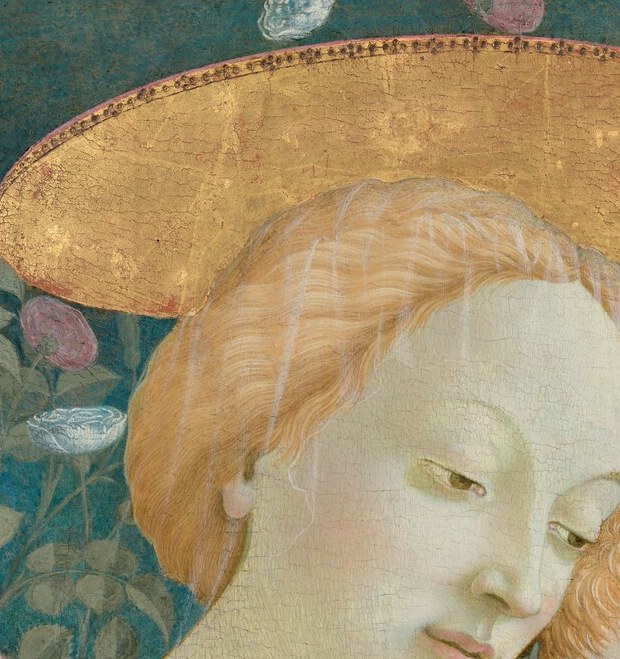
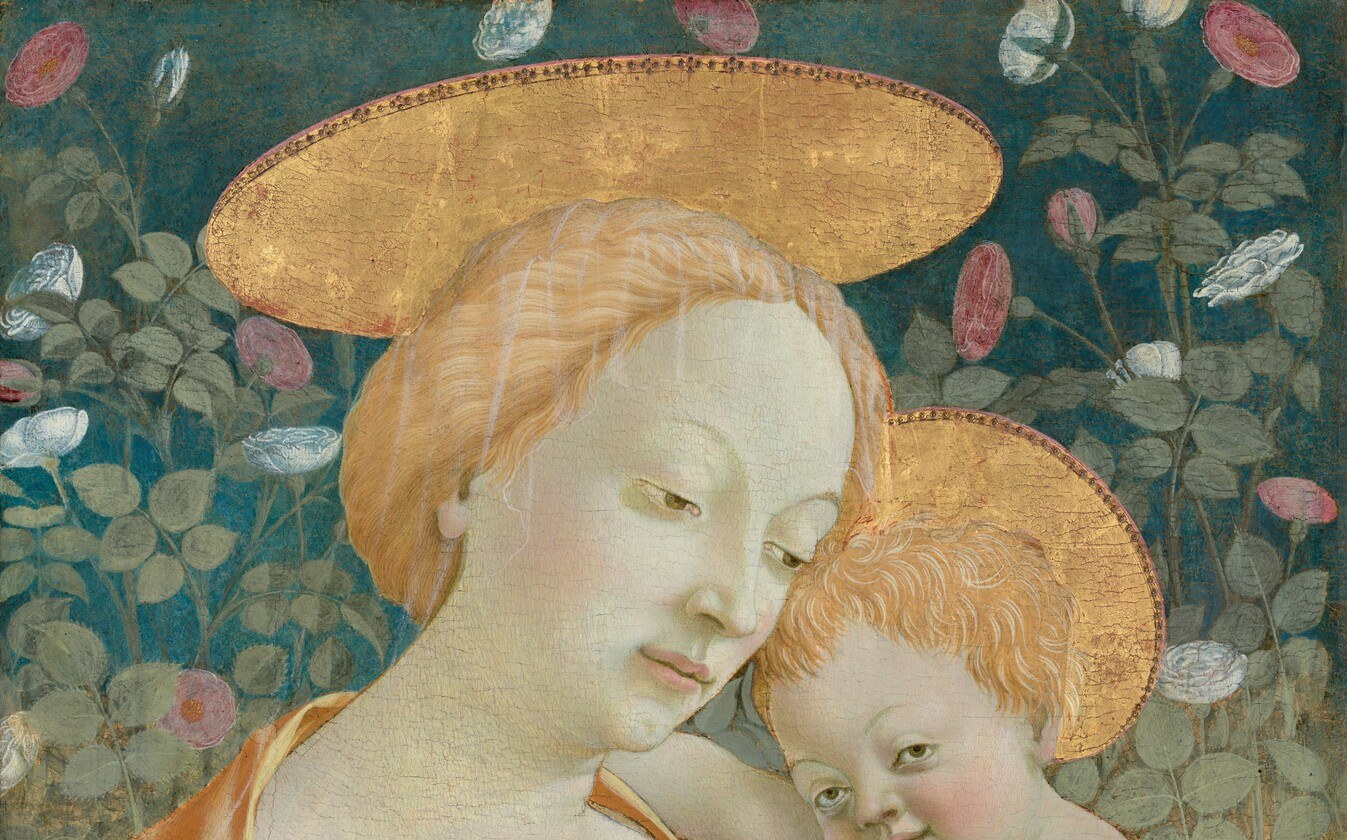
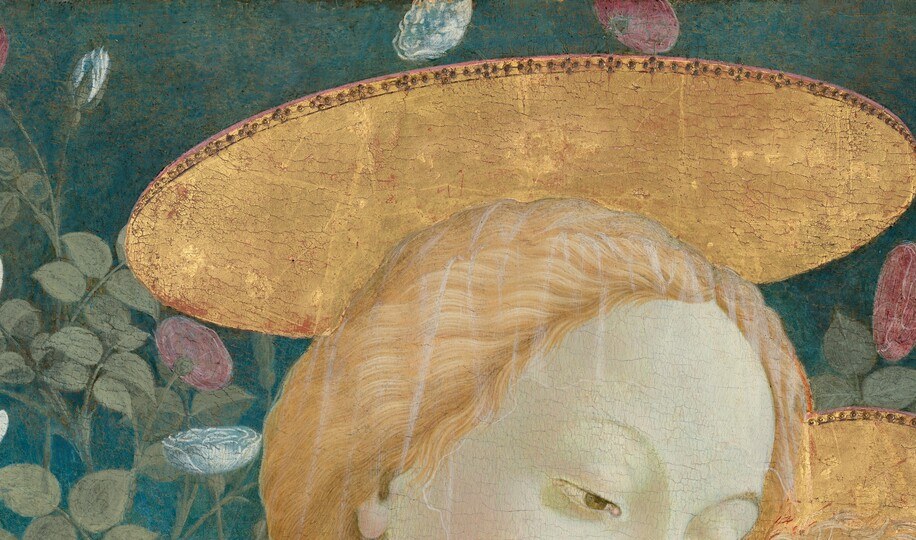
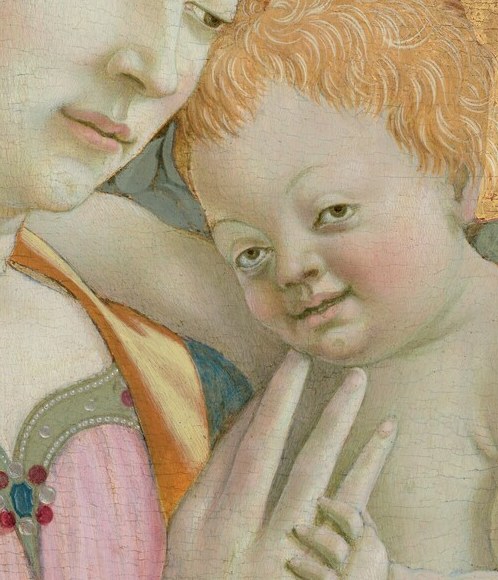
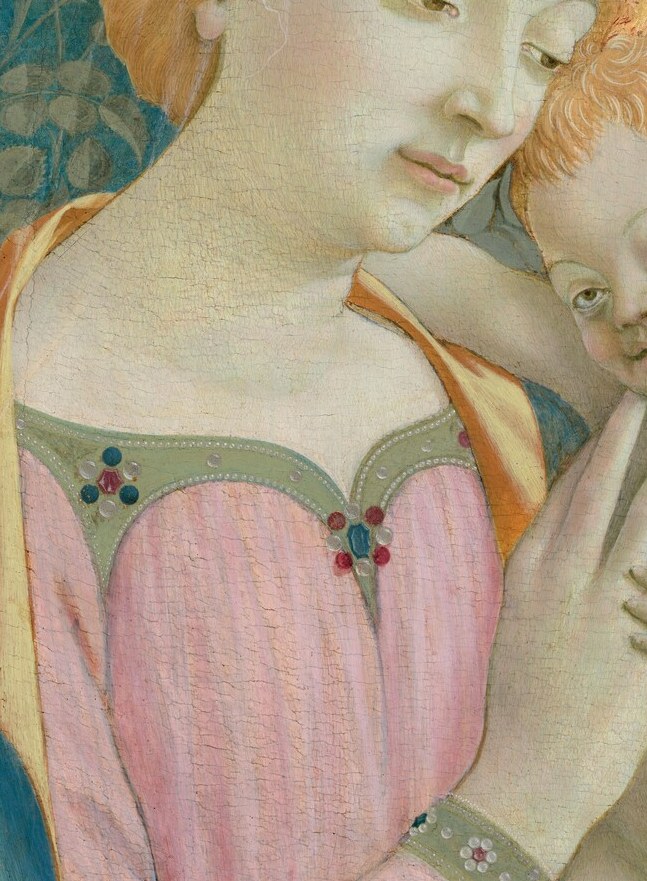
This is Domenico Veneziano's 'Madonna and Child,' painted around 1445 in Florence, now in the National Gallery of Art. The first thing you notice is the gaze: Mary looks down, absorbed. Her child looks out, directly at you. The painter has split the emotional world in two, private maternal devotion and an invitation that implicates the viewer in something larger.
Look at the hands. Mary's fingers wrap precisely around the infant's plump torso, an observation of real weight and real tenderness that was still fresh in Renaissance art. Then look at the child's bare feet. In the visual language of the period, bare infant feet are not only a humanizing detail. They quietly prefigure the Crucifixion, the same feet pierced. The rose garden behind them is a hortus conclusus, the enclosed garden symbolizing Mary's purity. Nothing in the frame is accidental.
Domenico Veneziano worked in tempera, egg yolk and ground pigment that dried fast and demanded precision. His colors were unusual. The teal-blue mantle reads as celestial, but the warm rose-pink bodice was a bold humanizing choice, pulling the Virgin toward earthly warmth. Giorgio Vasari later credited him with bringing oil technique to Tuscany, though history complicates that claim. Fewer than a dozen of his paintings survive. One of them, the St. Lucy altarpiece, changed Florentine painting.
A young mother holds her child. The child looks at you. The painting asks whether you can hold both things at once: the ordinary weight of a baby in a lap, and the knowledge of everything that lap will one day carry.
#arthistory #earlyrenaissance #florentinepainting
Details
Transcript
She will not look at us. Mary's gaze is for the child alone. Her fingers curve exactly around his weight. This is not a throne. It is a lap. Now the child breaks the spell. He looks straight out. For 580 years he has been looking straight out. His bare feet already know where the nails will go. Every mother holding a child holds the whole unwritten future.