Artwork
Madonna and Child
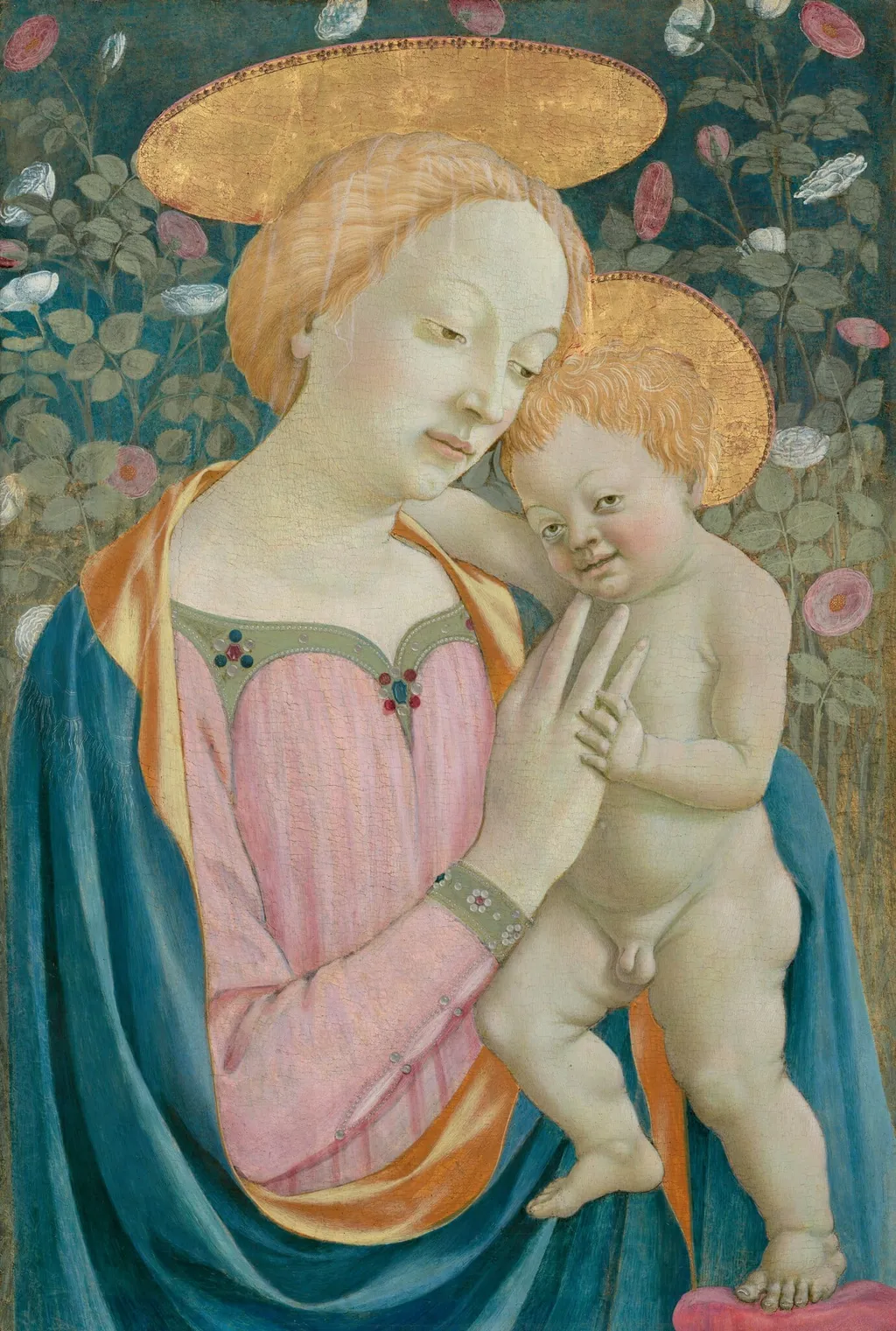
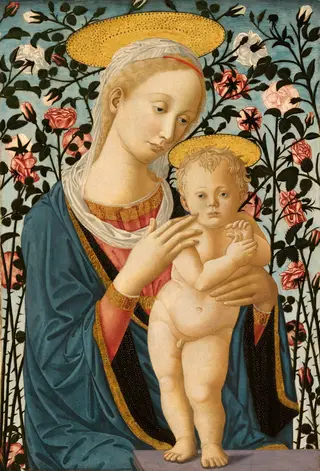
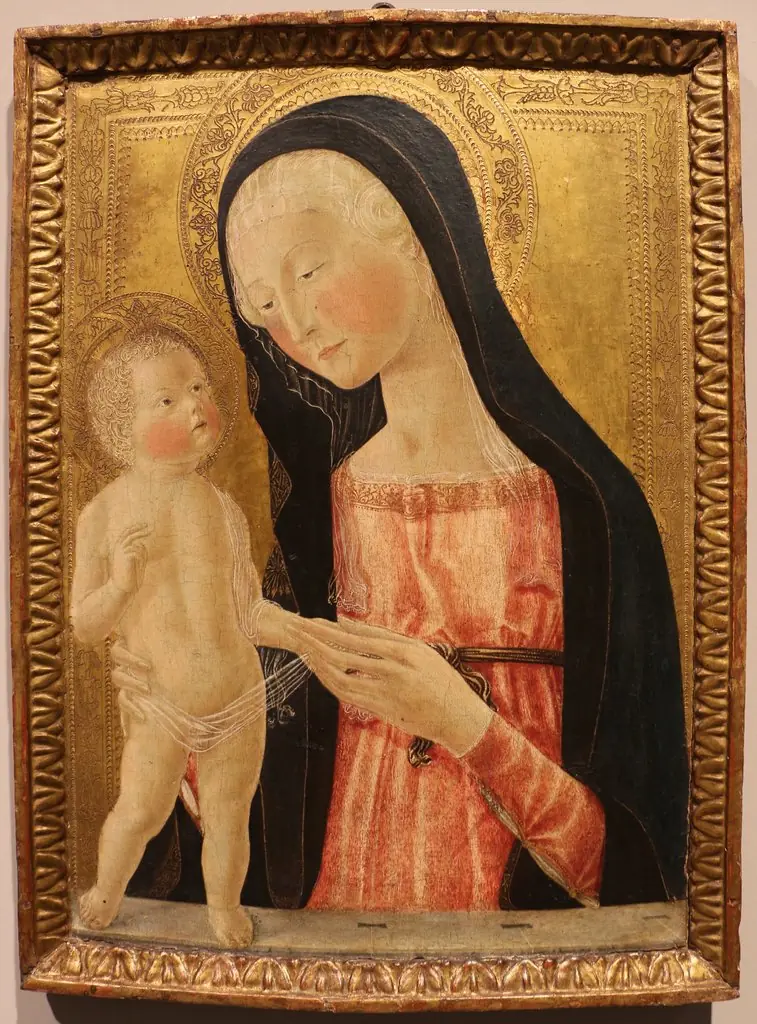
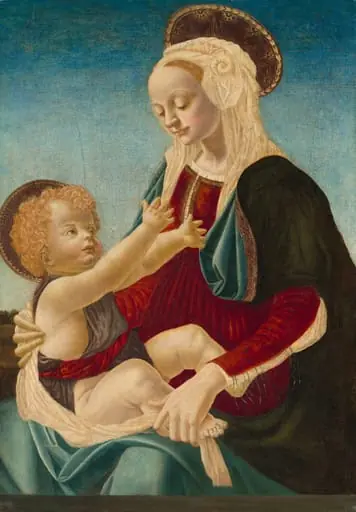
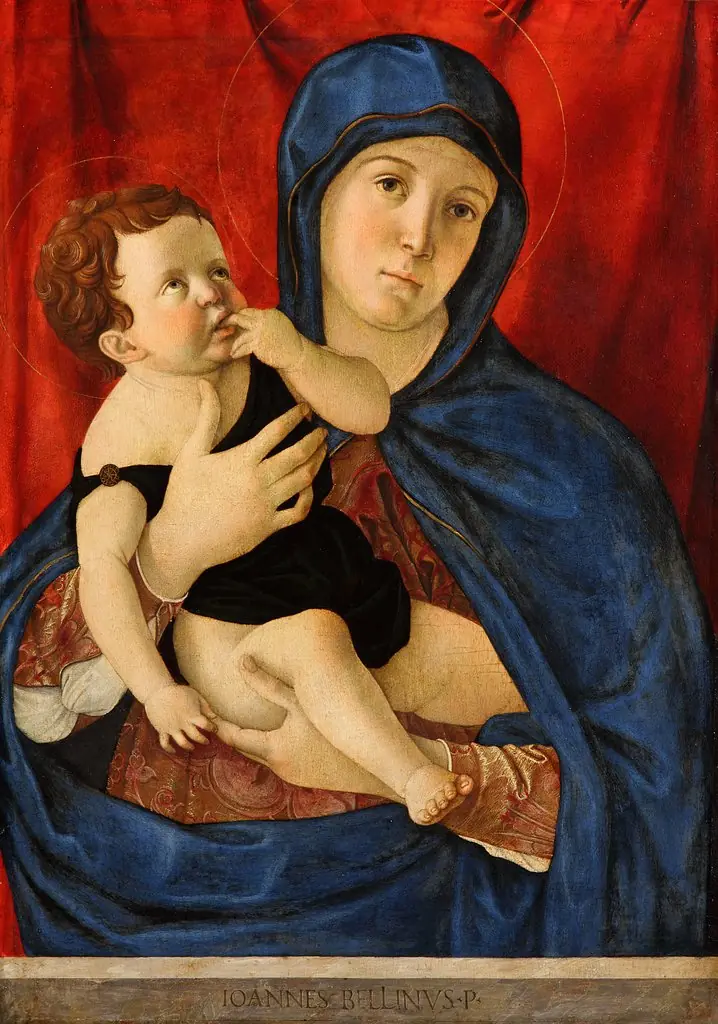
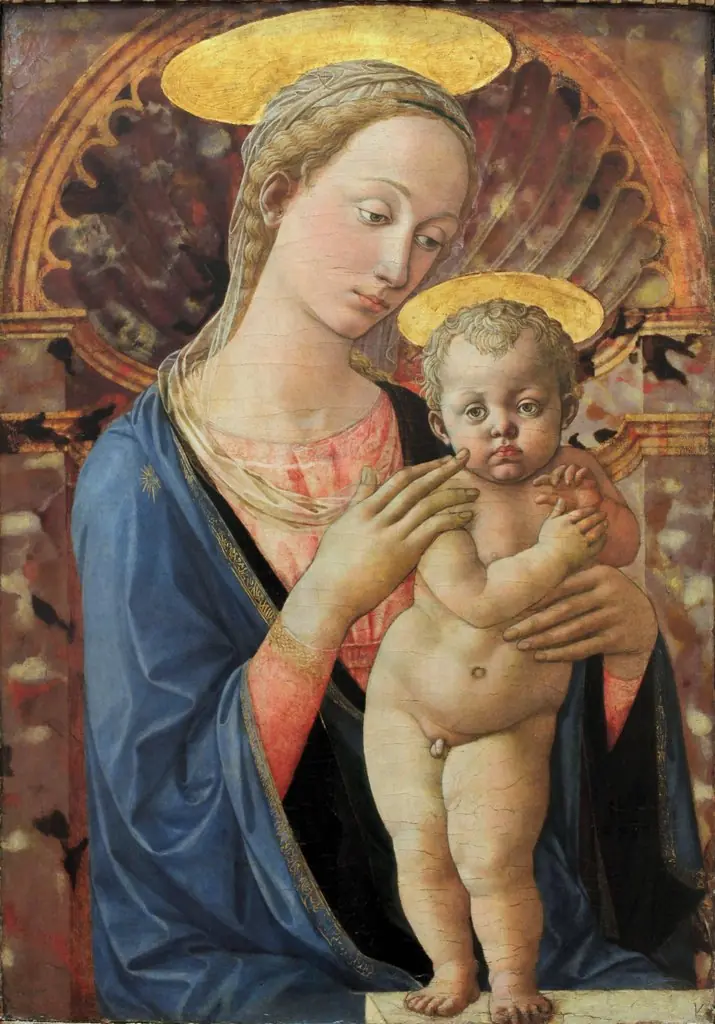
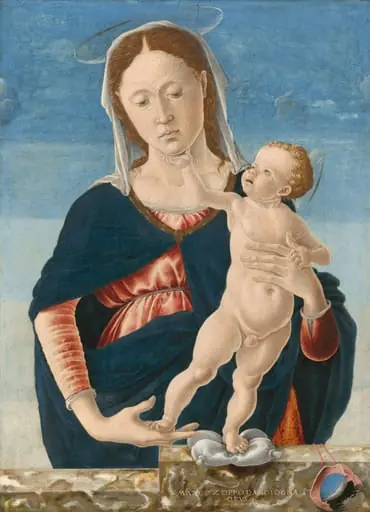
Madonna and Child is a tempera painting by the Early Renaissance artist Domenico Veneziano. It dates from 1448 and is held in the collection of the National Gallery of Art.
About this work
Subject & Meaning
These iconographic elements together convey Mary's purity, Christ's sacrificial destiny, and the intimate bond between mother and son.
The painting depicts the Virgin Mary and the Christ Child in a half-length composition. The background features a rose garden, a motif common in mid-15th-century Florentine art. Symbolically, the white roses allude to Mary's virginity, while the pink roses prefigure the blood of Christ's Passion.
The Child stands on a cushion and reaches toward his mother in a tender embrace, emphasizing both human affection and divine love. The halos are rendered as perspectival disks, a Renaissance innovation that would be adopted by Piero della Francesca. These iconographic elements together convey Mary's purity, Christ's sacrificial destiny, and the intimate bond between mother and son.
Technique & Style
Painted in tempera on a poplar panel (83 × 57 cm), the work employs a technique in which oil was added as a binder to the tempera, yielding a rich, delicate color. The composition presents the Virgin half-length, with the Christ Child standing on a pillow and reaching up to embrace her. They are set before a rose bower, where white blooms signify Mary's virginity and pink blossoms prefigure Christ's Passion.
The luminous, soft palette reflects Fra Angelico's 'paint of light', while the sculptural plasticity of the figures echoes Masaccio and Donatello. The halos are rendered as perspective disks, a device later used by Domenico's pupil Piero della Francesca.
History & Provenance
Painted in Florence around 1445–1450, Domenico Veneziano's Madonna and Child was likely a private devotional panel; no specific commission is recorded. Its earliest documented provenance begins in Ireland with Richard Lovell Edgeworth (1744–1817) at Edgeworthstown, County Longford. The painting descended through the Edgeworth family, to his daughter Maria Edgeworth, then to half-brother Charles Sneyd Edgeworth, and finally to Francis Ysidro Edgeworth.
In 1929 it was acquired by Julius Böhler of Munich, then bought in 1930 by Duveen Brothers. Duveen sold it to the Samuel H. Kress Foundation in May 1936, and it was gifted to the National Gallery of Art in Washington, D.C., in 1939, where it remains as part of the Samuel H. Kress Collection. No accession number or exhibition history is documented in the available sources.
Context
Dating to about 1445–1450, the painting belongs to Domenico Veneziano's late Florentine maturity, executed near his celebrated Pala di Santa Lucia dei Magnoli. That altarpiece is recognized as the first Renaissance work to depict sunlight through paint rather than gold leaf and to enrich tempera with oil for nuanced color. The Washington panel reflects this refined palette, showing the influence of Fra Angelico's 'pittura di luce' while incorporating the sculptural plasticity of Masaccio and Donatello.
The rose-garden backdrop, a motif typical of mid-15th-century Florence, carries symbolic implications: white for Mary's virginity and pink prefiguring Christ's Passion. Moreover, the perspectival halos anticipate a device later employed by Piero della Francesca, who was Domenico's pupil. Thus the painting exemplifies a crucial synthesis of luminous color, linear perspective, and volumetric form that helped shape early Renaissance painting in central Italy.
Legacy
The painting is notable for its innovative use of perspective halos, a device that was later adopted by Domenico Veneziano's pupil Piero della Francesca, highlighting its influence on early Renaissance spatial representation. Since its donation to the National Gallery of Art in Washington, D.C., in 1939 as part of the Samuel H. Kress Collection, the work has remained a key example of mid-15th-century Florentine painting, studied for its delicate color palette and compositional harmonies.
Overview
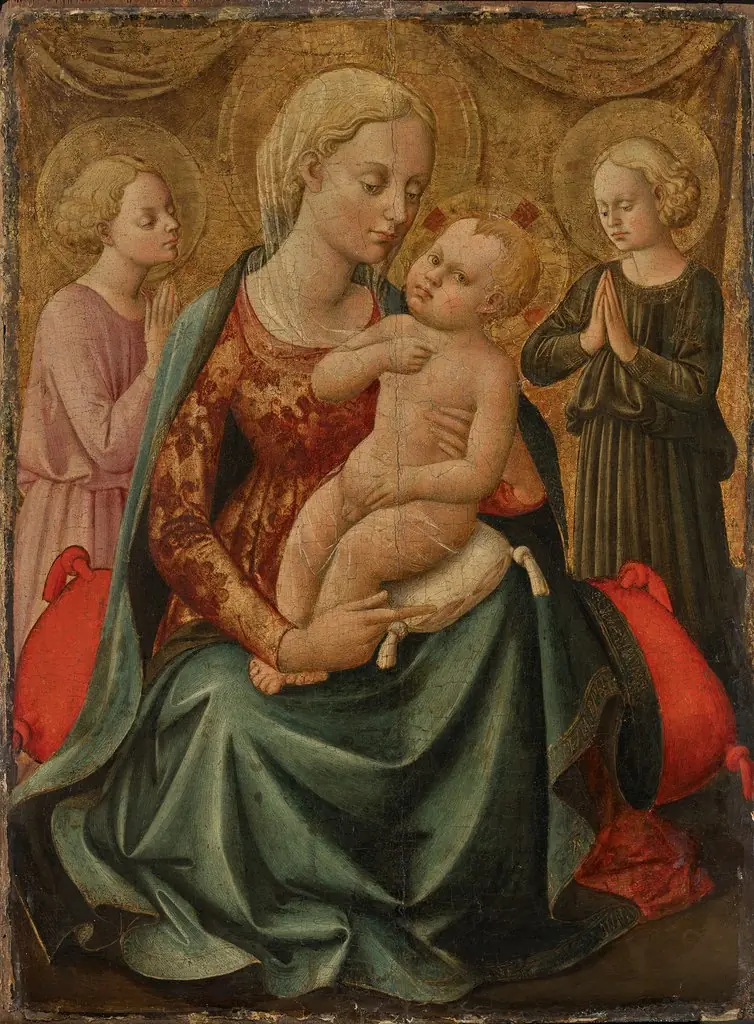
This painting, titled Madonna and Child, is rendered in tempera on a poplar panel. It depicts the Virgin Mary tenderly cradling the infant Jesus within an interior setting. The composition features a vibrant palette and gilded accents, with light illuminating the figures' faces in a naturalistic manner. The artist's attention to detail is evident in the rendering of textiles and the child's form.
Own this work as a print
Artist & collection