Sculptors at Work, Tomb of Rekhmire by Nina M. Davies
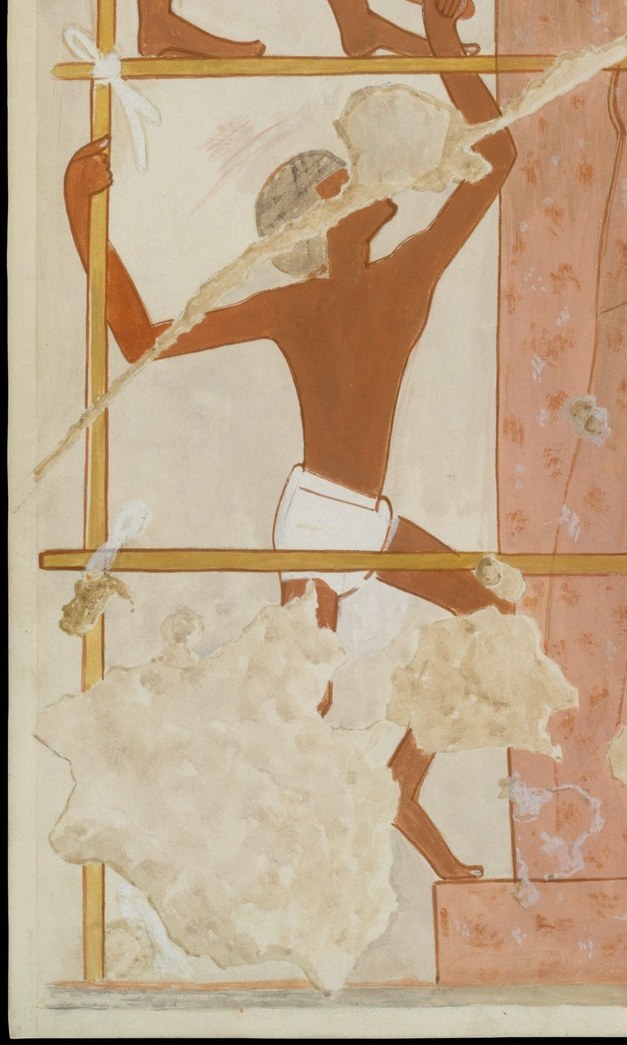
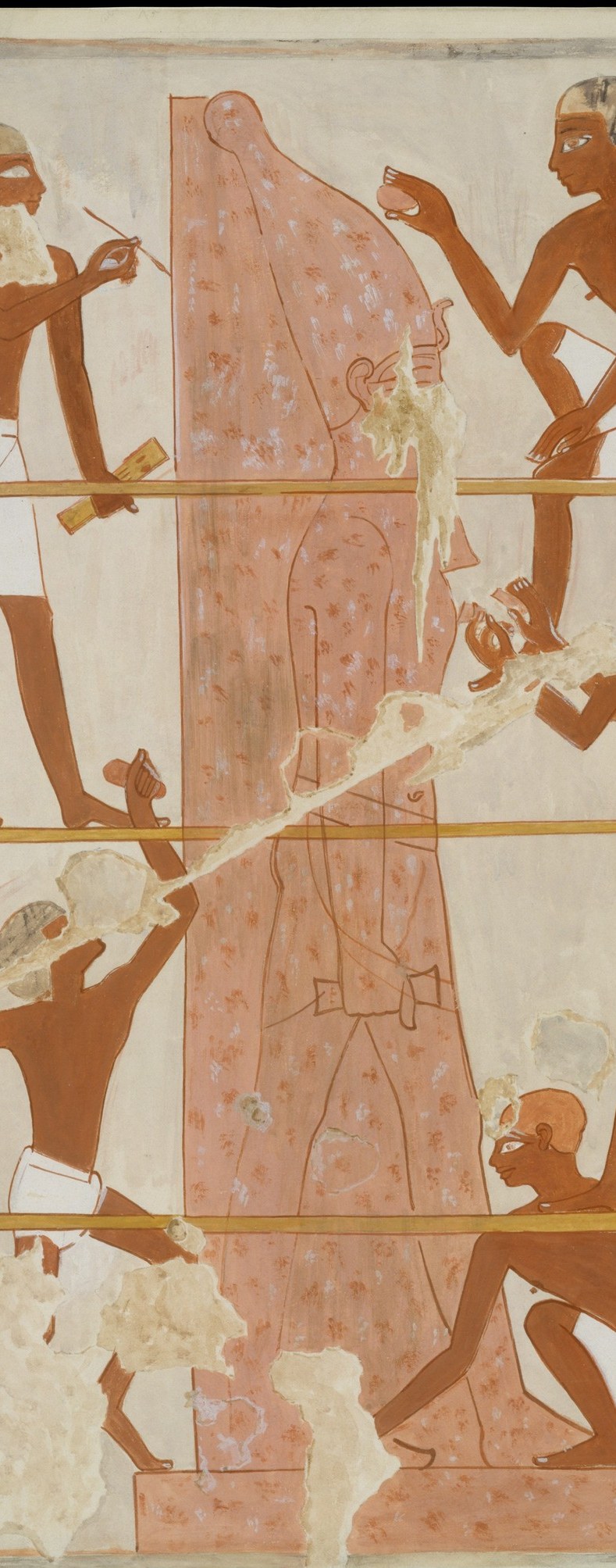
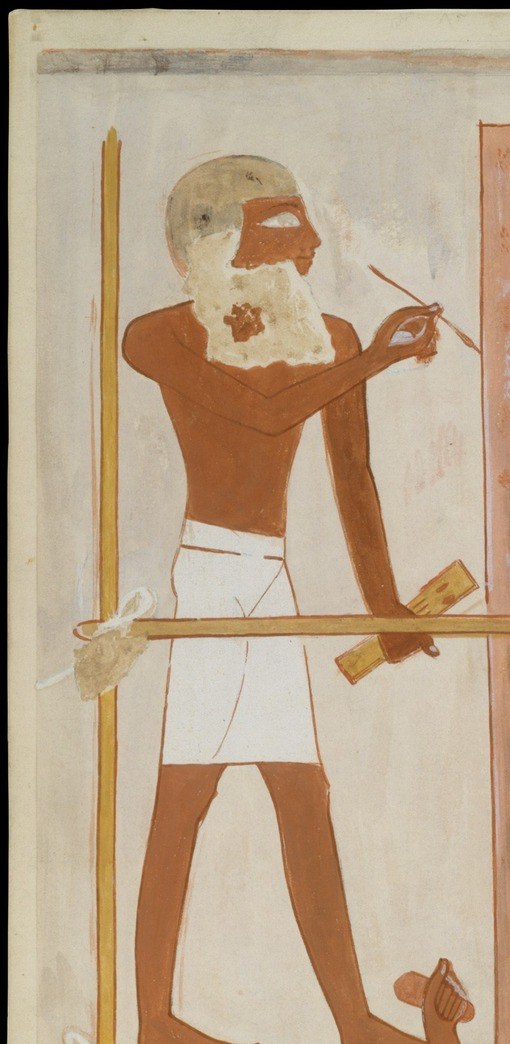
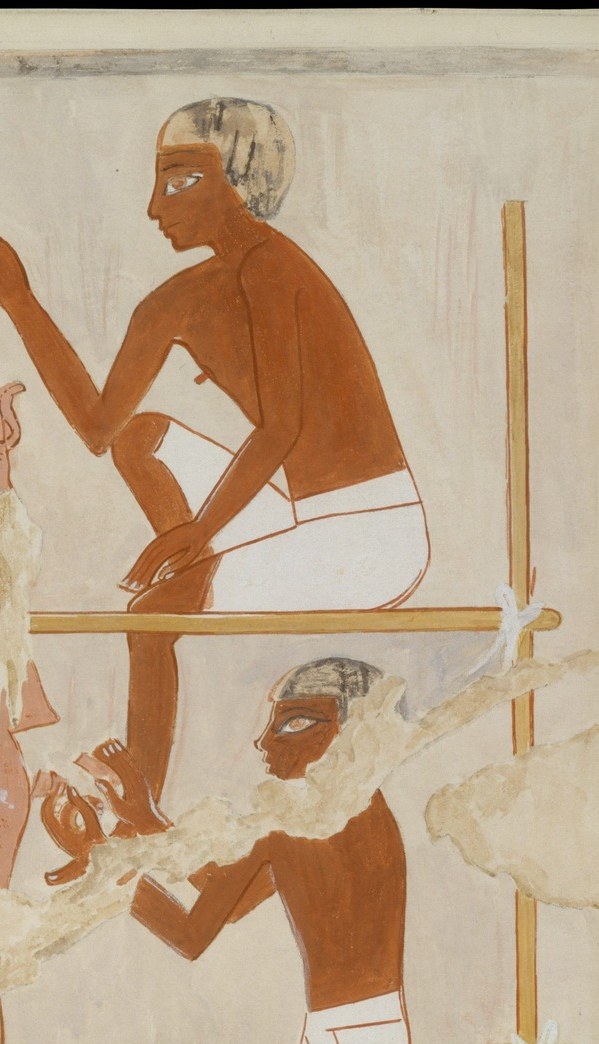
Nina M. Davies painted "Sculptors at Work, Tomb of Rekhmire" as a documentary reproduction of an ancient Egyptian tomb scene from around 1479 BCE, now held by The Metropolitan Museum of Art. She was not an ancient artisan but a 20th-century Egyptologist who, with her husband Norman, made it her life's work to record fading tomb paintings before they were lost to time and tourism.
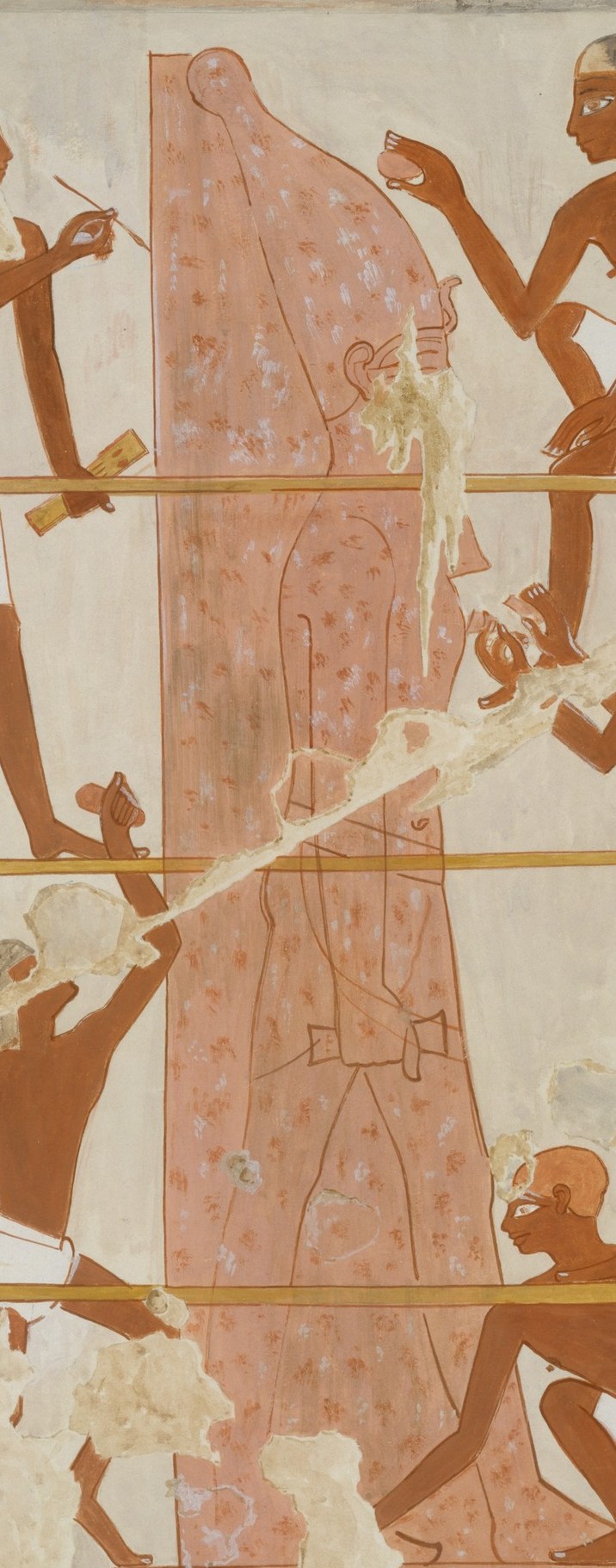
Look for the faint red grid ruled directly onto the pink stone column. That grid is the real discovery here. It is not decoration. It is the working method by which Egyptian sculptors transferred canonical proportions from a drawing to the block, a squared-up blueprint preserved in the original tomb and faithfully captured by Davies.
The scene shows a workshop hierarchy: two standing overseers above, two crouching sculptors below, separated by the red register line that Egyptians used to code rank and sequence. One overseer holds a scroll, marking him as literate and administrative. The workers wear white linen kilts, their postures encoding social order through body language alone.
Nina Davies's copies were often published under her husband's name, "N. de Garis Davies," making her individual hand difficult to isolate. But paintings like this one, made with a scientific eye and a steady brush, have become primary records themselves. The tomb walls they copied have since degraded. Her copy, with its strange pink stone and its careful grid, is now the clearer witness.
Details
Transcript
Four men shaping a giant pink stone. Two stand. Two kneel. An ordinary workshop scene. But look closely at the stone itself. Faint red lines. A drawn grid. This is how Egyptian sculptors transferred proportions. A real working method, preserved by a copyist in the 20th century. Nina Davies documented tombs before they faded. Her copy now outlasts the ancient original.