Jean Monet (1867–1913) on His Hobby Horse by Claude Monet
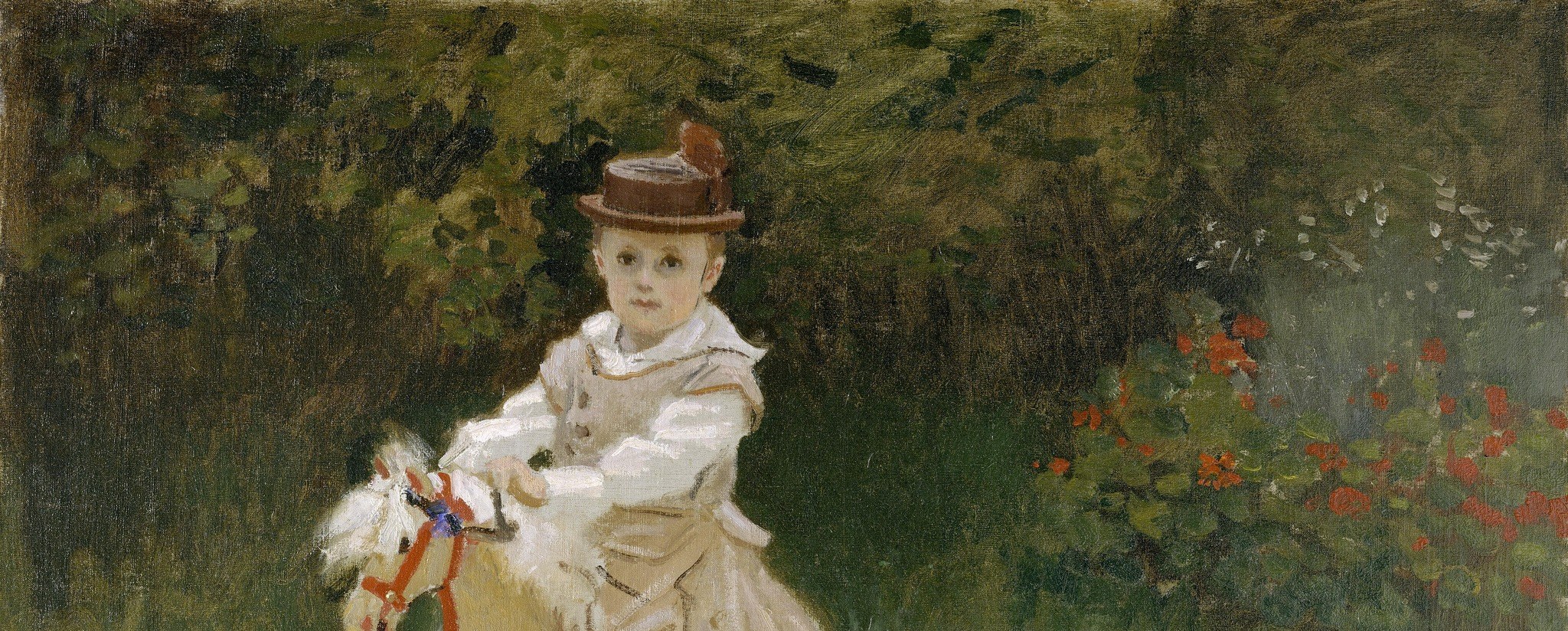
Claude Monet's 'Jean Monet on His Hobby Horse' (1872) is a portrait of the artist's eldest son, now in the collection of the Musée Marmottan Monet in Paris. It was painted the year the family moved to Argenteuil, a moment that launched the most productive phase of Impressionism.
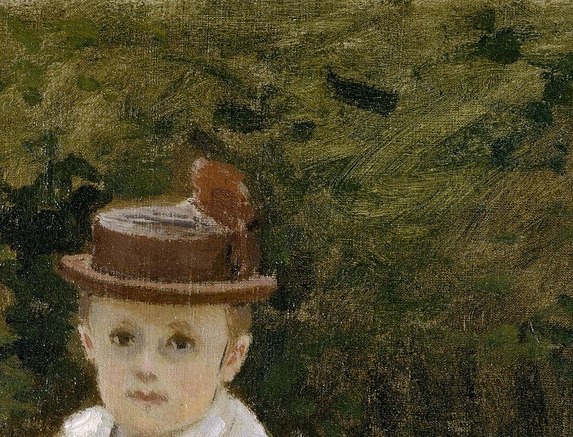
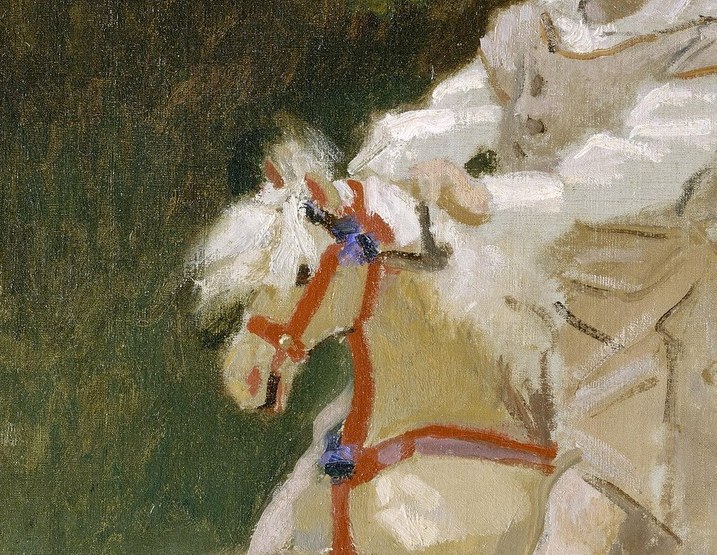
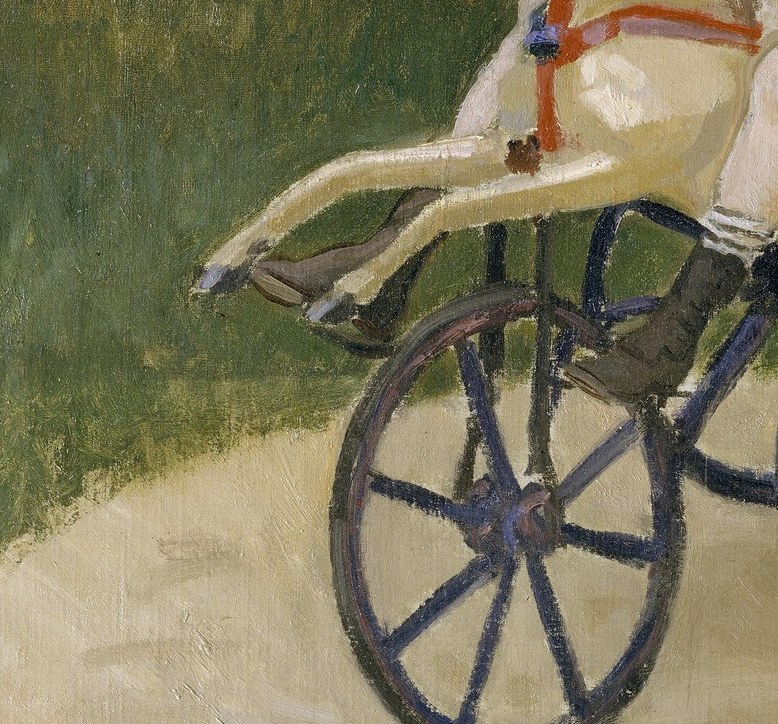
Jean wears a feathered brown hat and white shirt, gripping the blue reins of a mechanical hobby horse with large spoked wheels. Monet's loose, directional brushwork gives the child an alert, slightly self-conscious expression and captures the weight of the fabric. The red bridle and saddle straps are the painting's hottest accents, pulling the eye to the toy's mid-section.
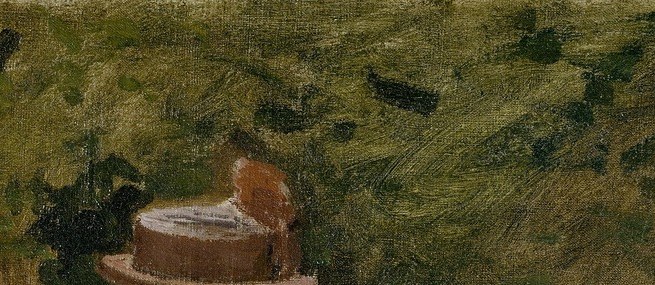
The garden behind Jean is rendered in broken dabs of green, pink, and ochre that fuse into flowering shrubs. This is Monet's first garden at Argenteuil, which he planted specifically to create subjects to paint at home. It is the direct ancestor of the famous water garden he would build at Giverny a decade later.
During the First World War, German troops advanced toward Giverny, where Monet was living. Refusing to leave, he entrusted nearly two hundred canvases to a friend's basement for safekeeping. This painting survived the war and the damp, a small triumph of domestic life over the forces that threatened to erase it.
Details
Transcript
When German troops approached Giverny, Monet refused to leave. He hid nearly 200 canvases in the damp basement of a friend's house. This one survived, and it shows his first son Jean. Look at the garden behind him. That blur of pink and green is Monet's first garden at Argenteuil. He planted it himself so he would always have something to paint.