The Virgin from a Pentecost Scene and the Figure of St. Martin by http://www.wikidata.org/.well-known/genid/56ebf00bb54014face2831074383c76c
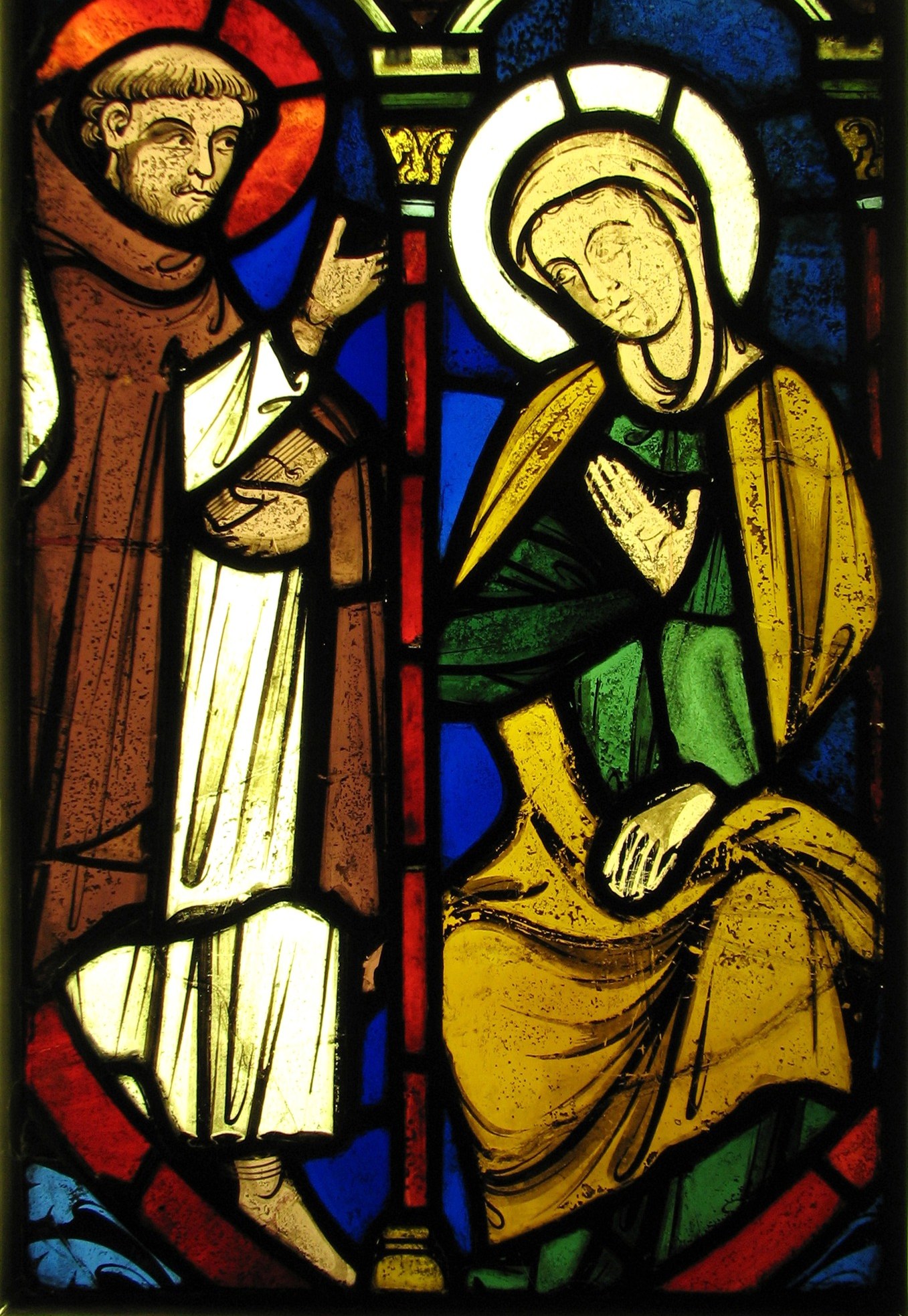
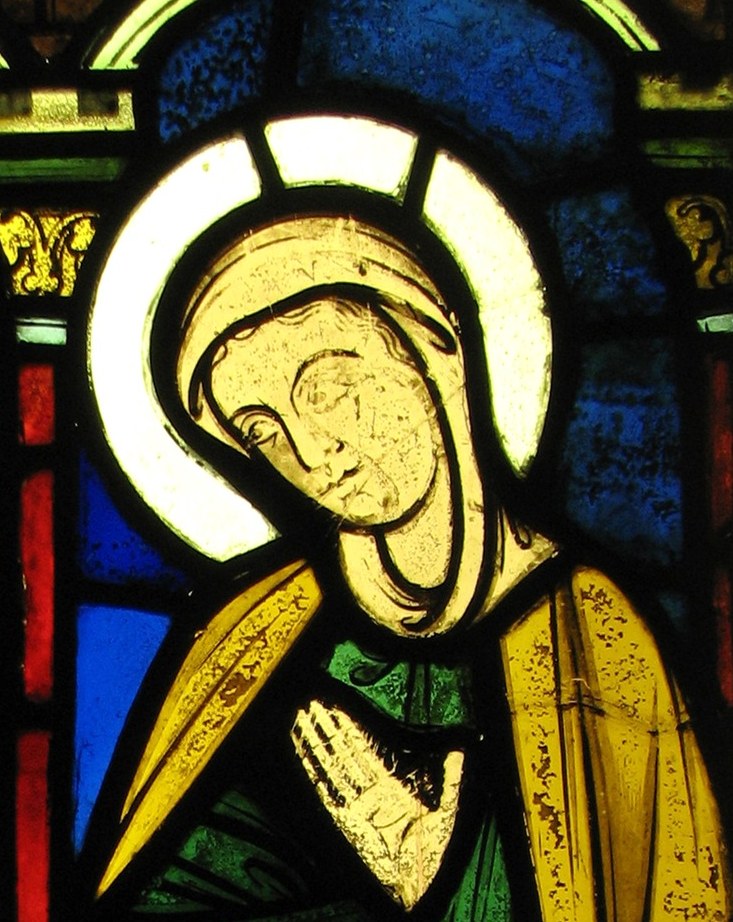
This is a detail from a 13th-century French stained-glass window, now in the collection of the Metropolitan Museum of Art. It shows the Virgin Mary beside St. Martin of Tours. The panel was made around 1245, part of a larger Pentecost window. What survives is a masterclass in how glass painters embedded theology in color and scale.
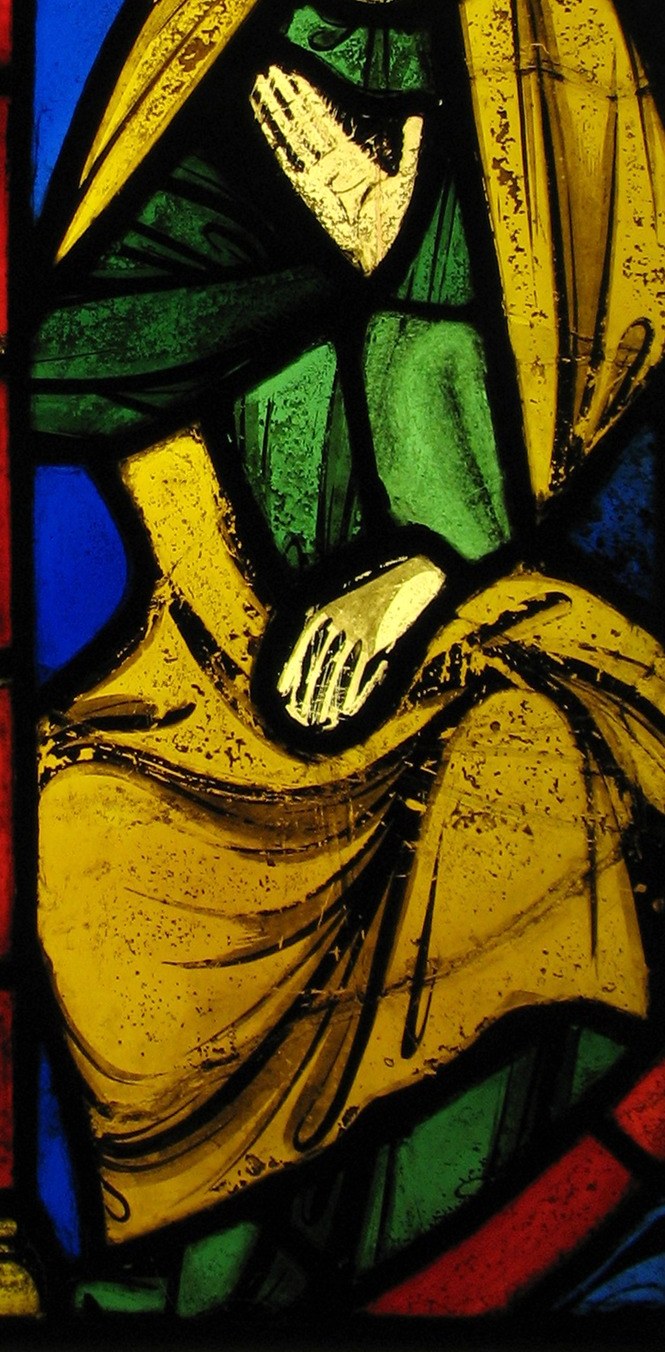
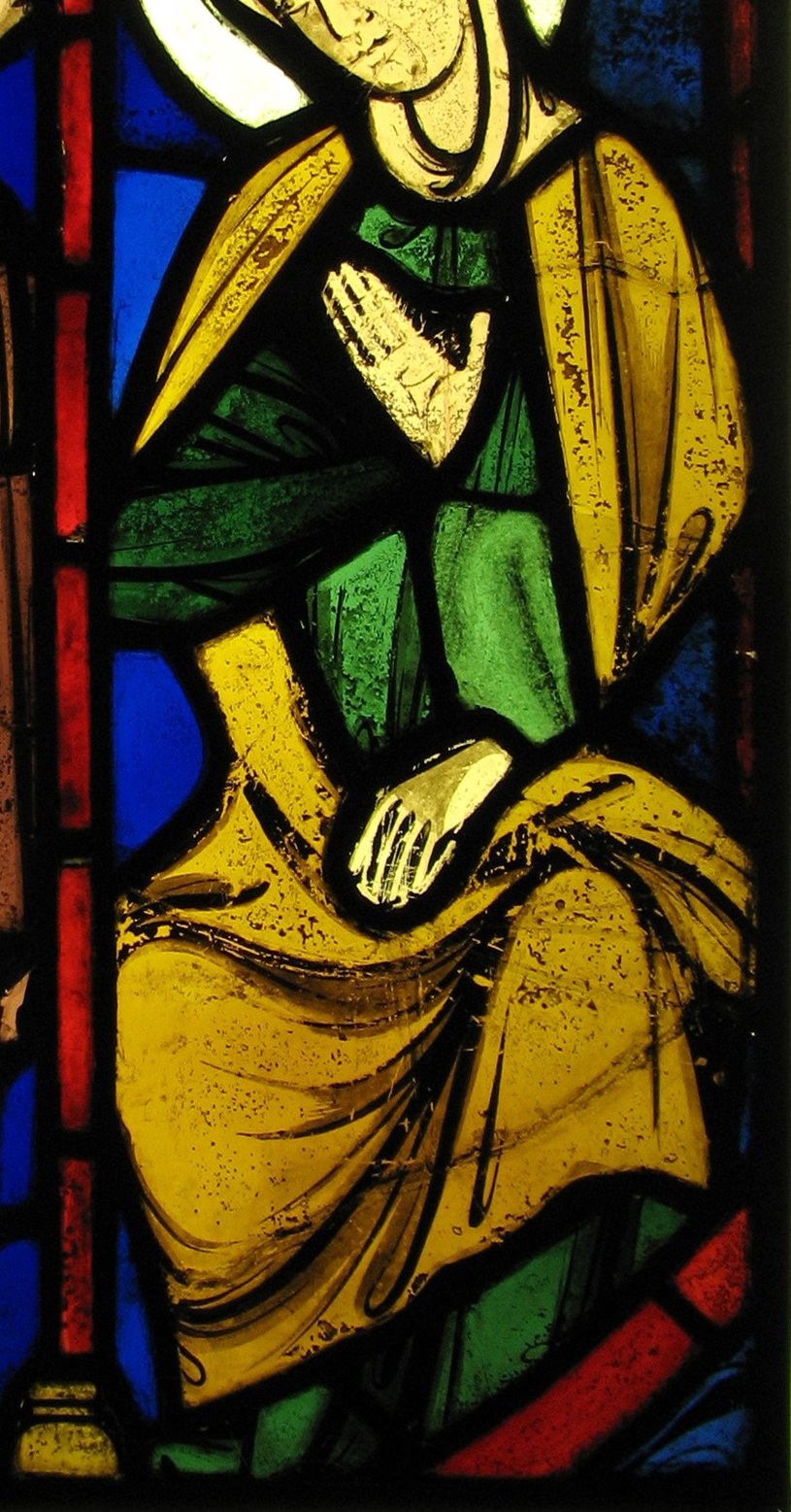
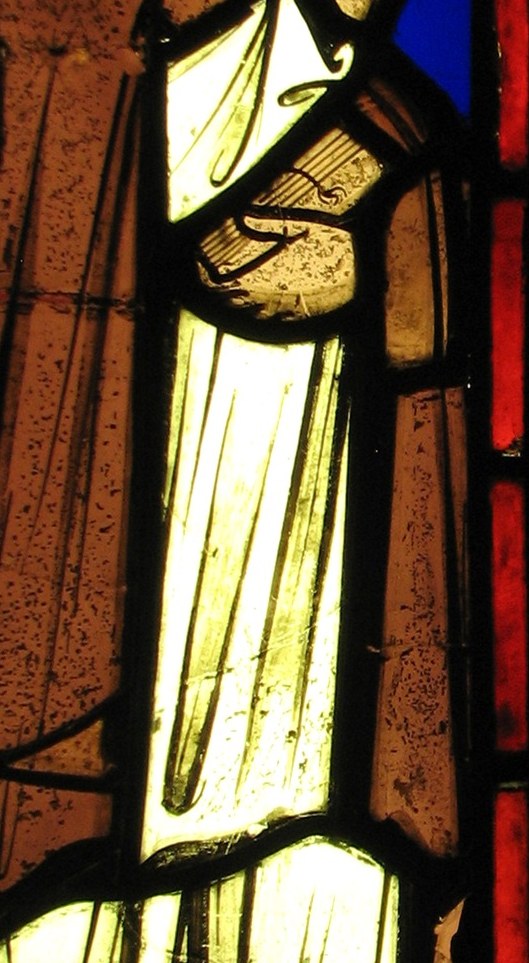
Look first at the halos. The Virgin's is larger than St. Martin's. In medieval art, size was never neutral; it was an argument. A bigger halo meant a greater place in the sacred order. Then look at her clothing: a green undergown beneath a yellow-gold mantle. In transmitted light the gold would have blazed. Green signified hope and new life; layered gold read as divine radiance. St. Martin answers with his own iconography: the white liturgical cloth over his brown habit, an echo of the famous cloak he cut in half for a beggar.
The deep cobalt ground is the panel's most costly element. That saturated blue, ground from crushed glass and cobalt, is technically demanding and closely associated with the great Gothic workshops of the Île-de-France, the same tradition that produced Chartres. The lead lines are not just structure; they are the drawing, defining every contour and fold. Even the alternating red border at the top places the panel within a specific medallion-window program, a diagnostic signature of the period.
This is not a painting in the conventional sense. It was made to be read in light, a theology lesson rendered in glass. The medium itself was the message: costly materials deployed with restraint and clear symbolic purpose.
Details
Transcript
Two holy figures share a quiet moment. The blue behind them was wildly expensive. It was made from crushed cobalt glass in the 1240s. The Virgin wears a green robe under a gold mantle. Green meant hope; layered with gold it glowed like heaven. St. Martin's white cloth recalls the cloak he shared with a beggar. Her halo is larger than his, a quiet statement of her status.