Volendam Street Scene by Henri, Robert
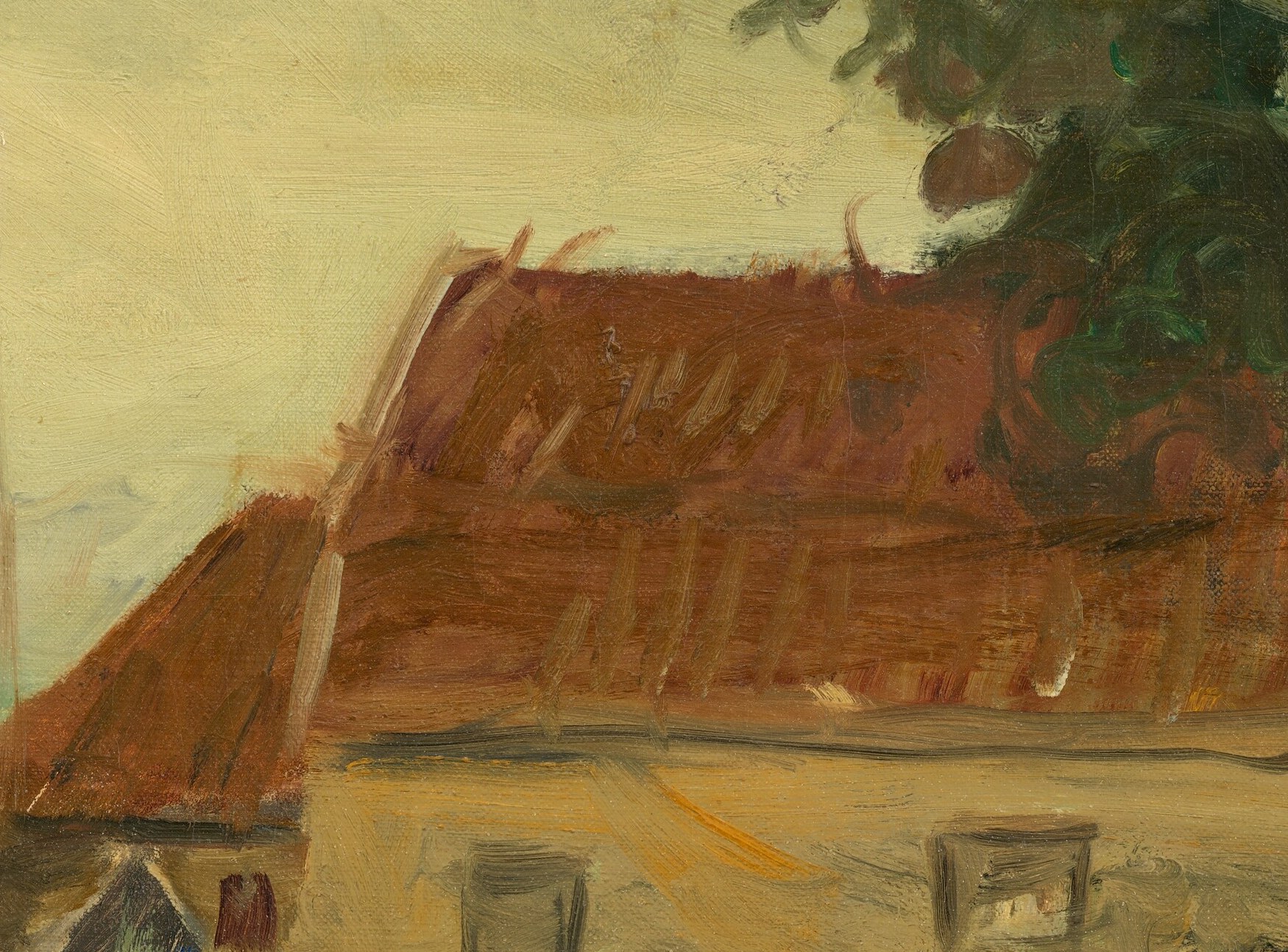
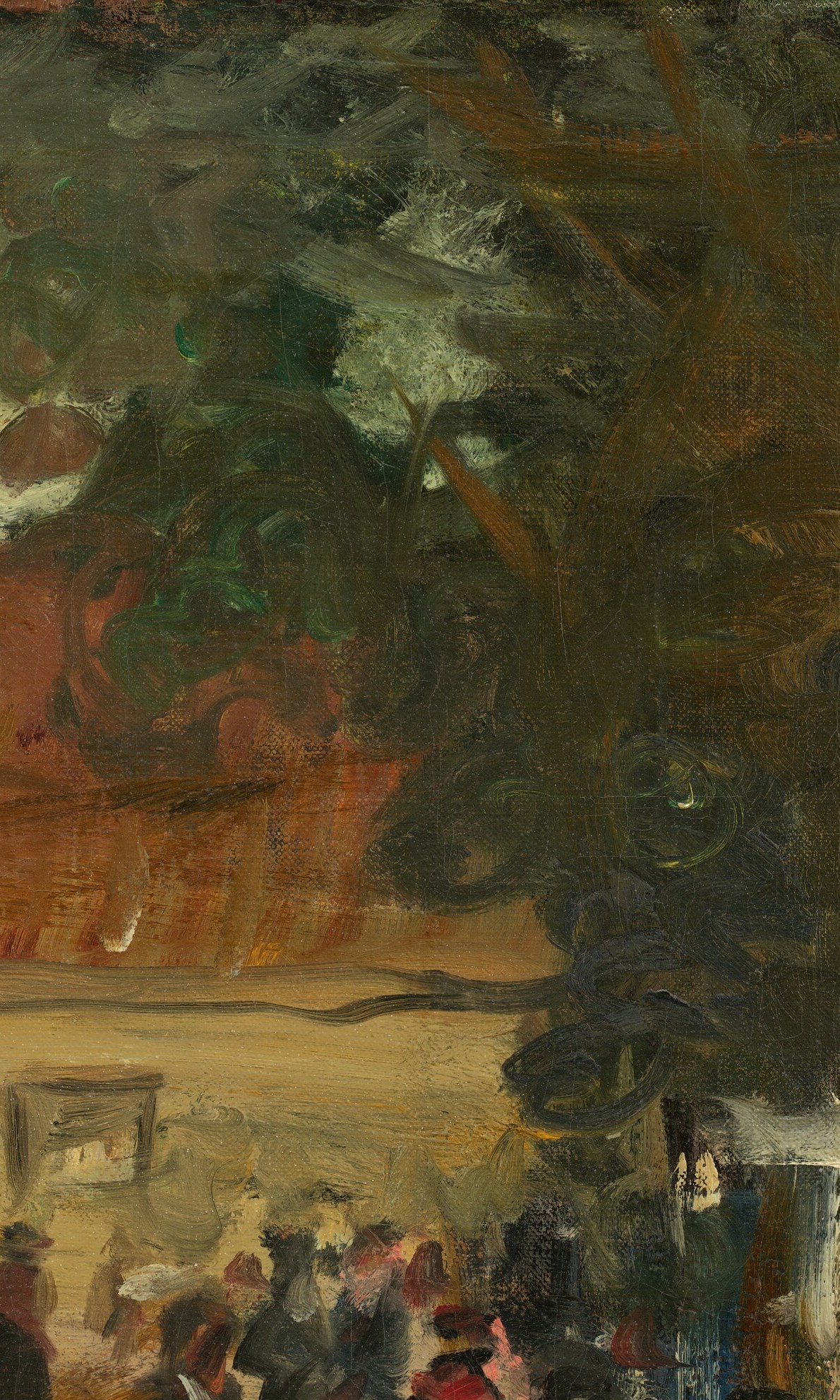
Robert Henri painted Volendam Street Scene in 1910, and it belongs now to the Brooklyn Museum. What looks at first like a simple village view is in fact a quiet manifesto. Henri crossed the Atlantic to find subjects the art world preferred to overlook: ordinary working people going about their lives without ornament or apology.
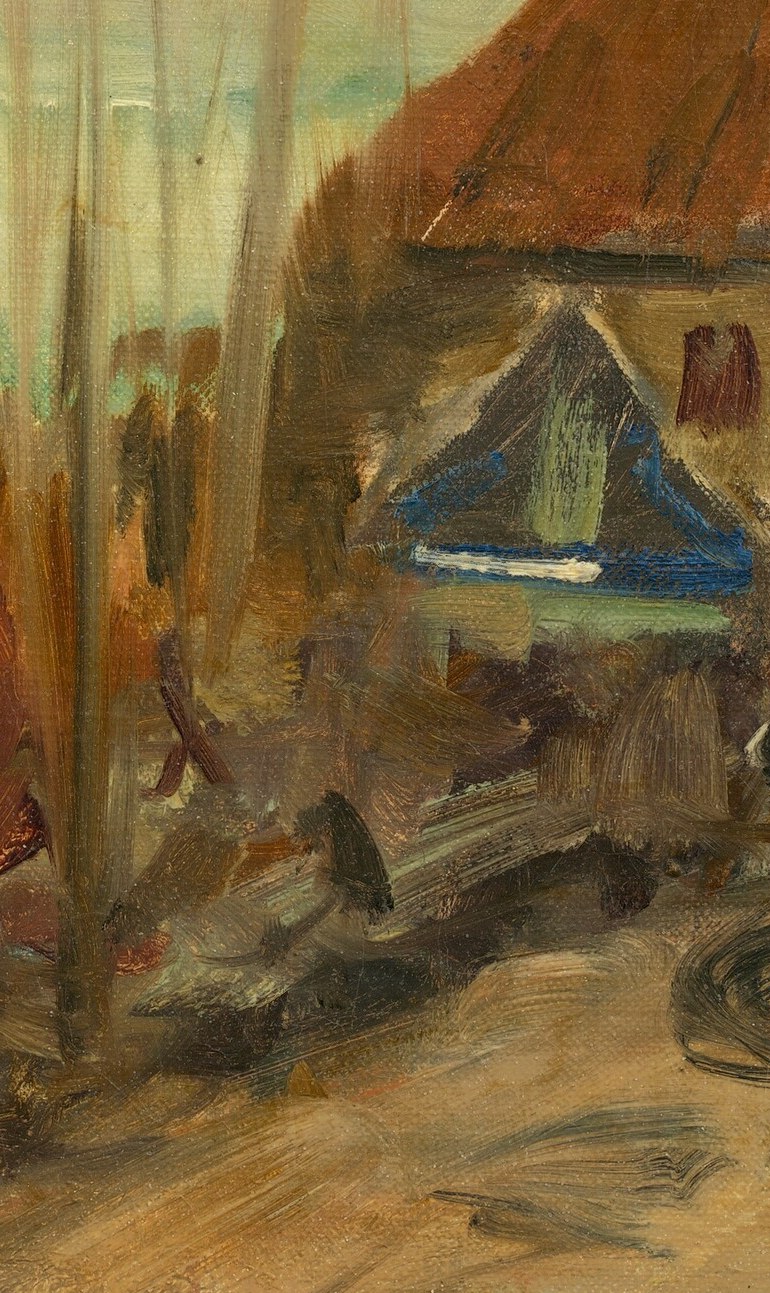
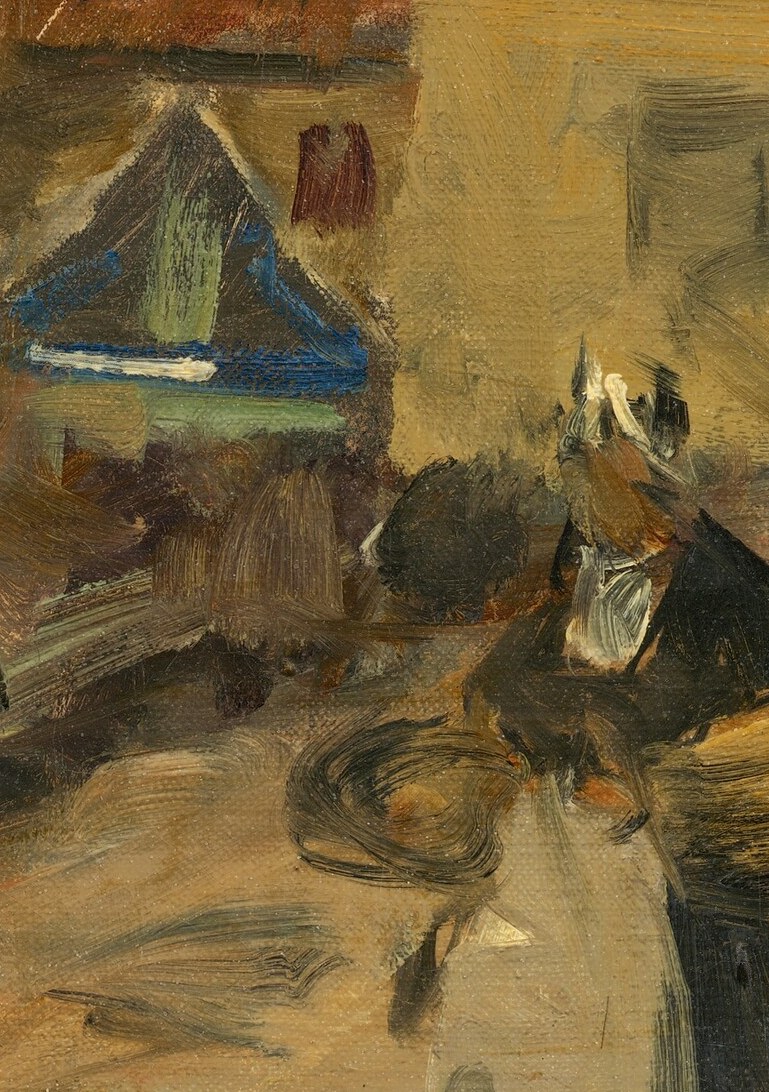
Look first at the woman in the white Dutch bonnet in the foreground. She is the largest, most carefully weighted figure in the composition. Then find the stooped laborer just left of center, bent under a load Henri deliberately left unspecified. His back is the real subject: a body shaped by work, rendered with the same seriousness any academic painter would give a classical hero.
Henri had trained in Paris and absorbed Impressionism, but he came home determined to stage an even sharper revolt against the National Academy of Design. With a small group of followers he founded the Ashcan School, a movement that insisted unidealized urban and small-town life was fully worthy of art. Volendam, a fishing village that drew painters from across Europe, gave him a Dutch version of the same truth he chased in New York and Philadelphia.
By 1913, when the Armory Show introduced Cubism to America, Henri knew his own brushwork was starting to look dated. He championed Matisse and Weber anyway. This painting holds his deepest conviction: that a real human face, a real stooped shoulder, can carry more feeling than any polished surface.
Details
Transcript
She could be anyone's grandmother. But Robert Henri came here to paint exactly her. An American, he'd already trained in Paris. But he left the salons to find real working people living their lives. This man carries his load with a straight, unglamorous back. Henri wouldn't let him be invisible. He called it the Ashcan School: truth over beauty.