Banks of the Oise at Dawn by Louis Hayet
This is Louis Hayet's "Banks of the Oise at Dawn," painted in 1894 and held at the Cleveland Museum of Art. Hayet was a founding member of the Neo-Impressionists, the movement led by Georges Seurat that insisted on painting with tiny, distinct dots of pure color according to strict scientific theories of optics. But this painting later contributed to his rejection from the very group he helped establish.
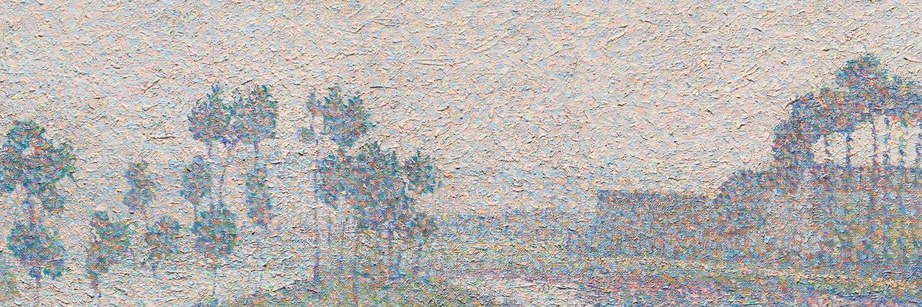
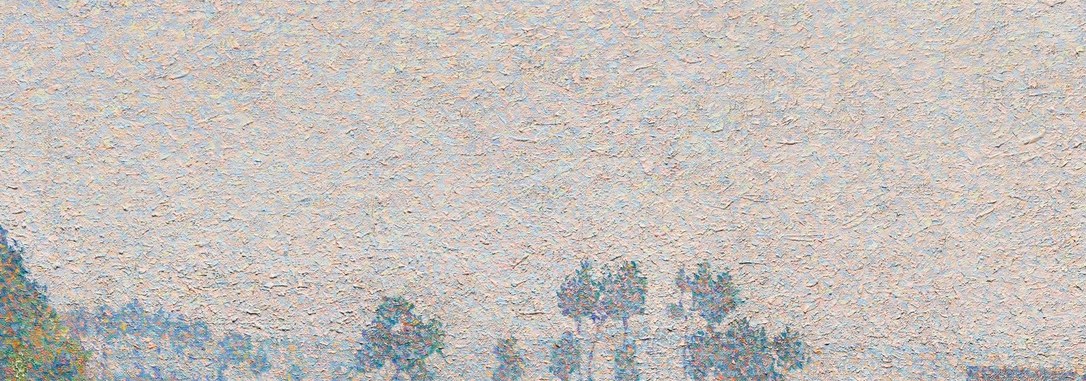
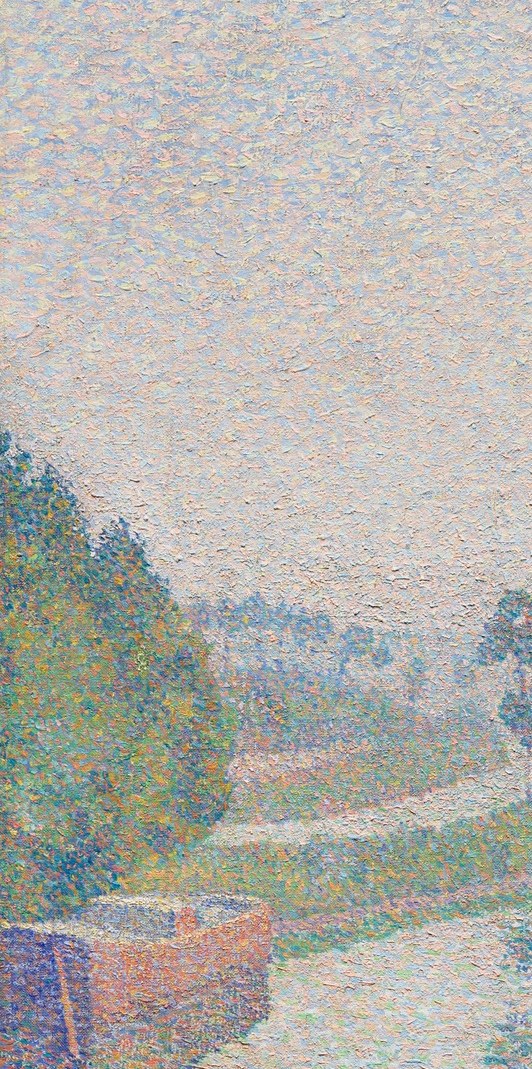
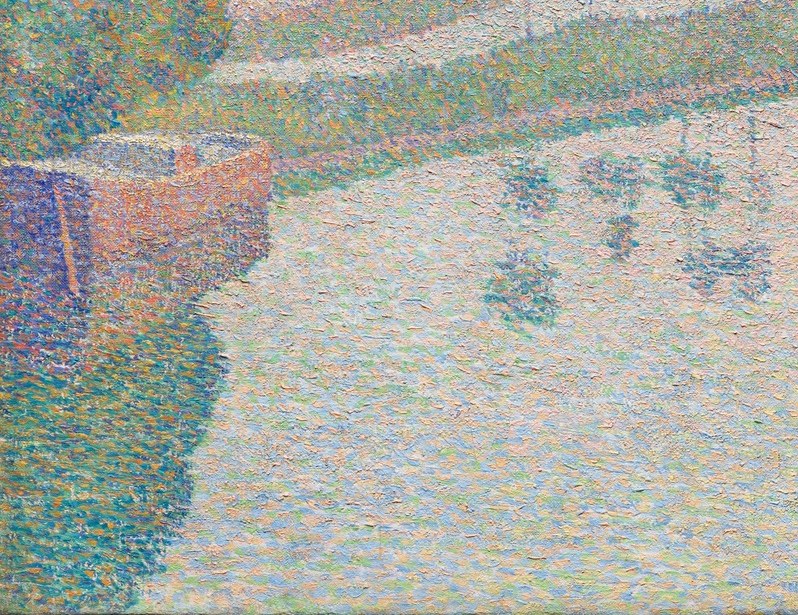
Look at how the poplar trees on the left bank dissolve into the morning fog. There are no hard outlines here, just layered, fuzzy brushstrokes of pale lavender and green that dematerialize solid form into pure atmosphere. The golden embankment in the foreground is the painting's warmest passage, placed there deliberately to create simultaneous contrast with the cool, glassy river. Hayet knew the optical rules intimately.
The scandal, such as it was, was aesthetic. Hayet drifted from the rigid Divisionist method championed by Signac and Seurat, favoring a looser, more intuitive touch that prioritized atmospheric mood over scientific rigor. He was effectively pushed out, his work deemed insufficiently doctrinaire. He continued painting, mostly alone, for decades, dying in 1940 with little recognition.
It seems strange that a misty, tranquil sunrise could rupture an artistic alliance. What do you think: does a painter owe loyalty to a theory, or to what they actually see?
Details

Transcript
This painting got its creator rejected from his own artistic circle. The group found it too soft, too atmospheric. They wanted strict scientific color dots. Hayet wanted this: fog. Look at how the poplars dissolve. No hard edges, just colored light. His golden embankment proved he understood their theory perfectly. He simply chose atmosphere over orthodoxy. A founding Neo-Impressionist, frozen out for painting what he saw.