Oysters by Manet, Edouard
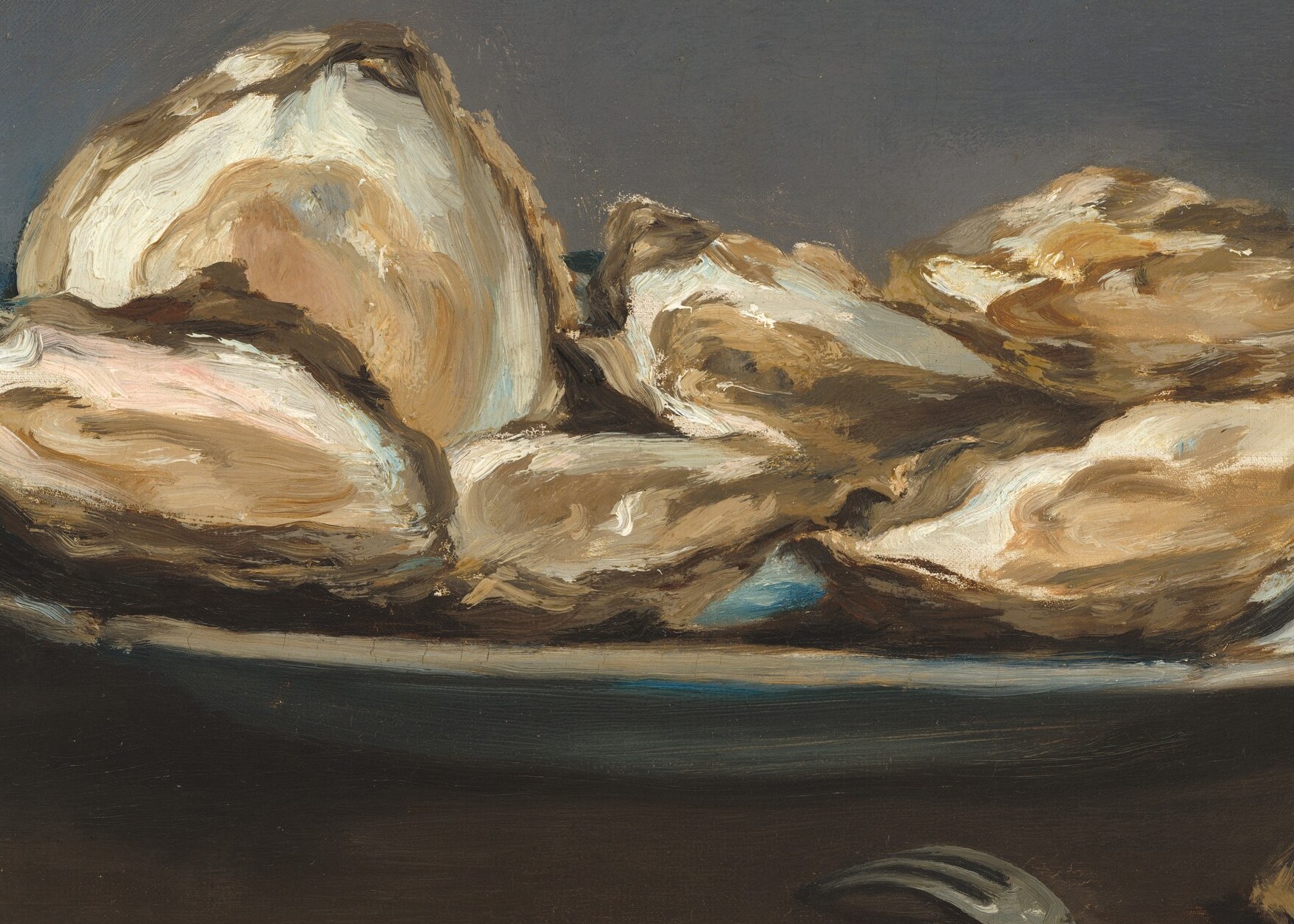
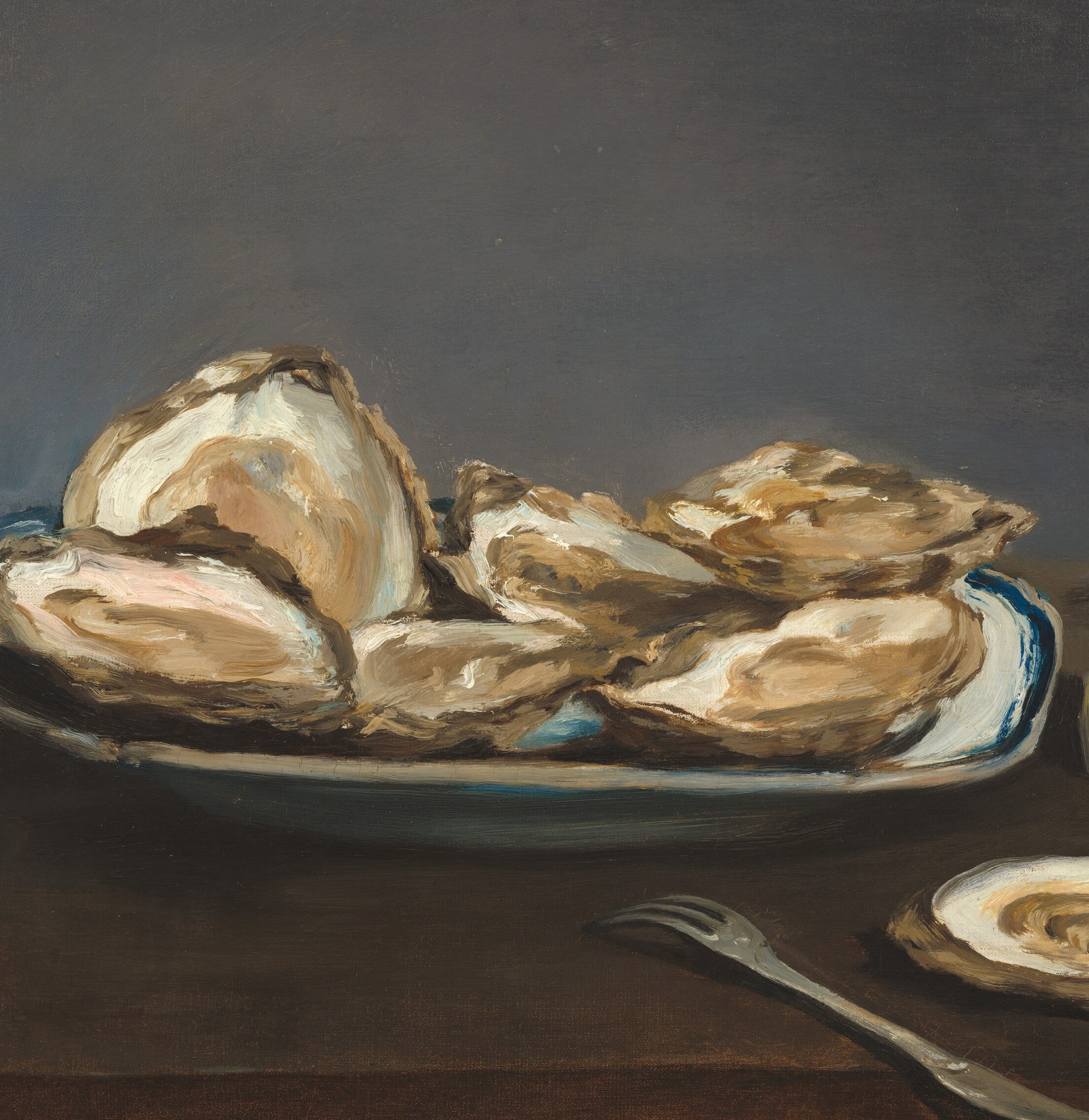
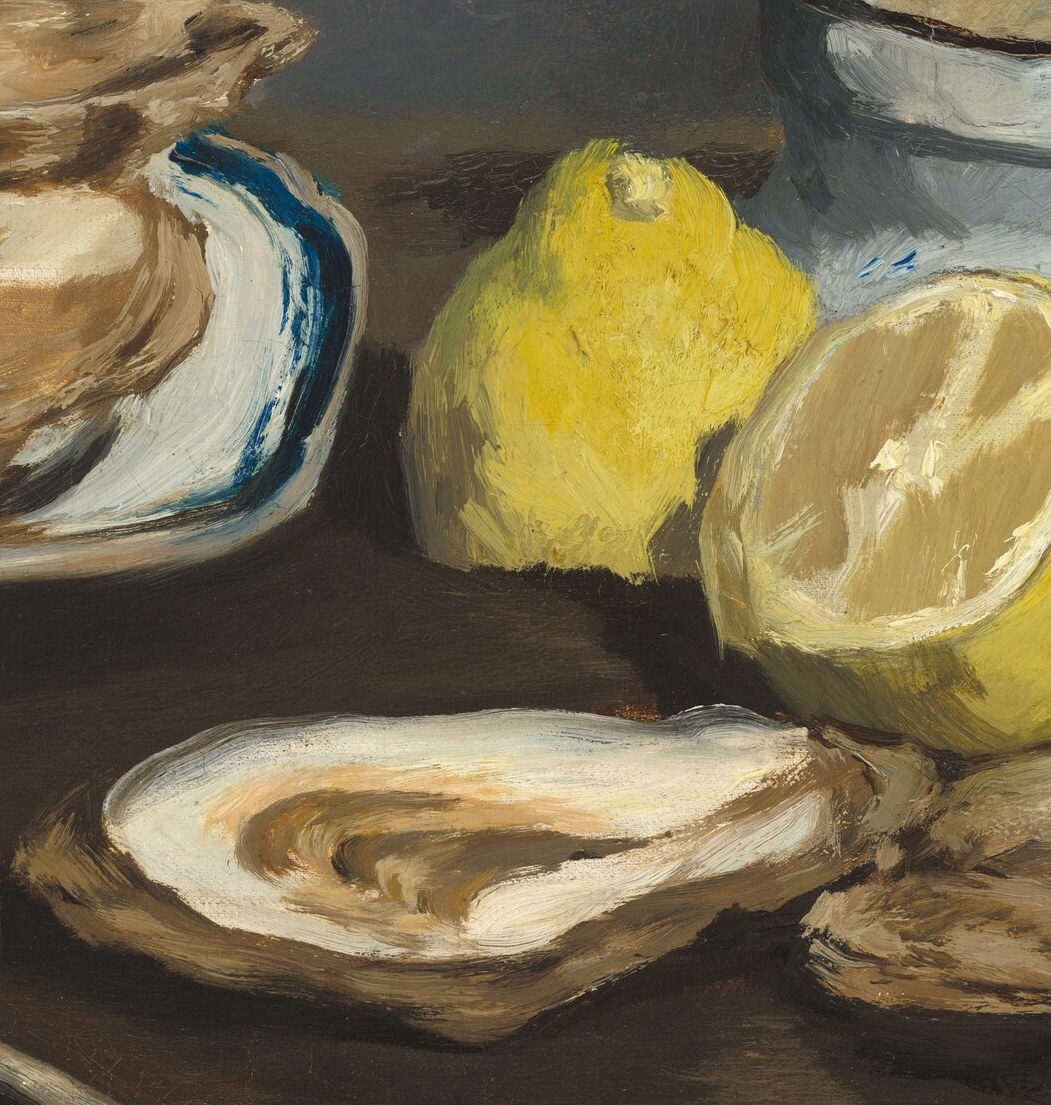
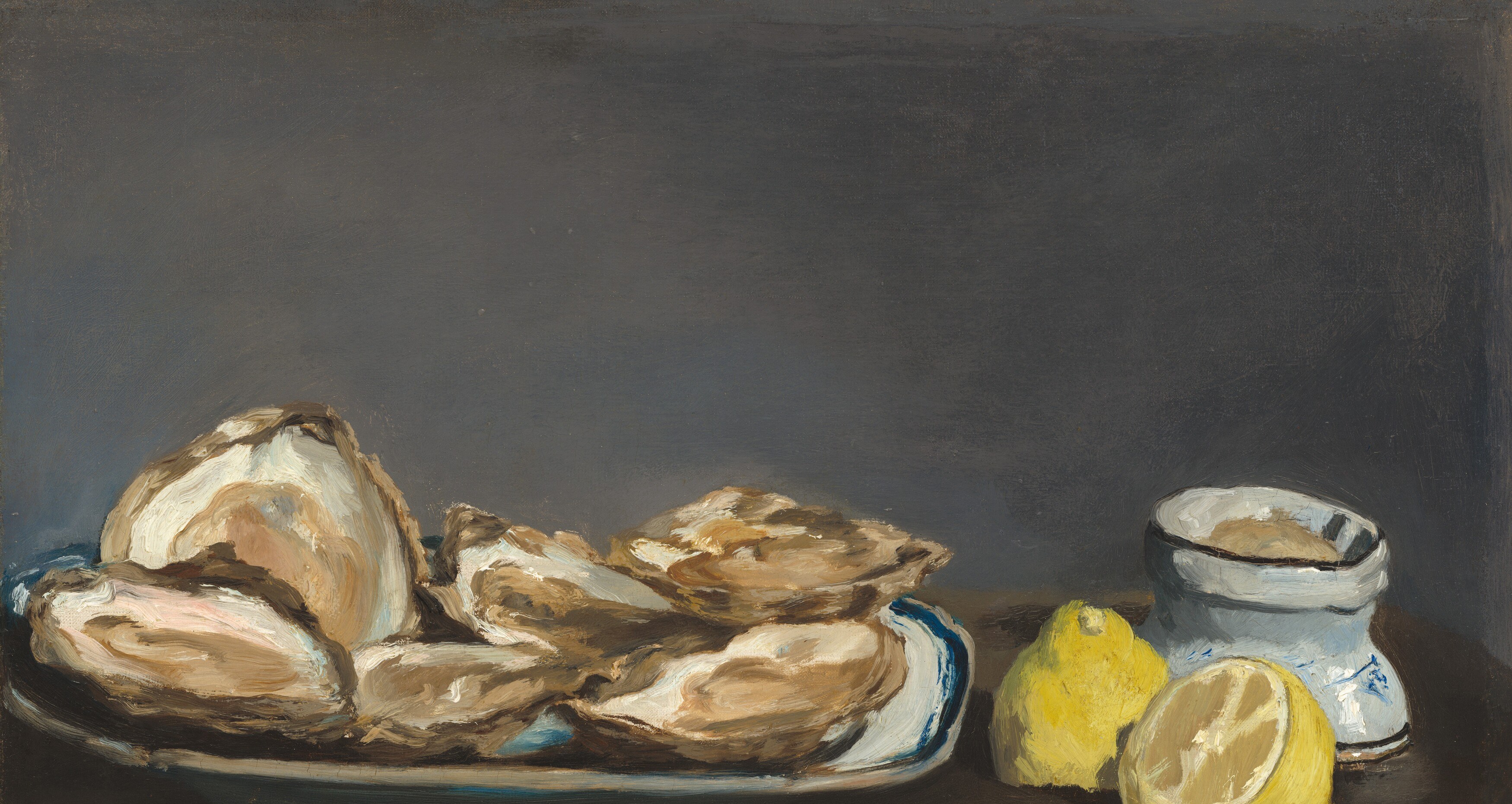
Edouard Manet's 'Oysters' (1862) is more than just a still life; it’s a quiet meditation on life's pleasures and its fleeting nature, held in the collection of the National Gallery of Art, Washington D.C.
Look closely at the glistening wet shells and the sharp lemon wedges. These elements, while depicting a fresh meal, also carry symbolic weight, echoing the 'vanitas' tradition of Dutch and Flemish painting that Manet consciously engaged with.
Manet, a Parisian-born artist, often rejected academic polish for a more direct observation of modern life. His use of dark backgrounds and bold brushstrokes, visible even in this intimate scene, became a hallmark of his innovative style, bridging Realism and proto-Impressionism. The seemingly casual arrangement of the fork and the loose oysters invite us into a moment, implying a human presence without depicting it.
This painting is a subtle masterclass in how everyday objects can convey profound ideas, inviting us to find deeper meaning in the commonplace. What everyday scenes do you think hold hidden stories?
Details
Transcript
This isn't just a snack, it's a coded message. These glistening oysters spoke of fresh pleasure. But in 1862, they also meant life's fleeting nature. The lemon often symbolized the sharpness of life's passing. The painter, Manet, often used dark backgrounds to make colors pop. This casual arrangement suggests a moment just begun, or just ended. A quiet reminder of time passing, in a simple meal.