María Teresa (1638–1683), Infanta of Spain by Juan Bautista Martínez del Mazo
When María Teresa was seven, she sat for this portrait by Juan Bautista Martínez del Mazo, Velázquez’s son-in-law and most skilled follower. The painting dates to 1645 and now lives at the Metropolitan Museum of Art in New York.
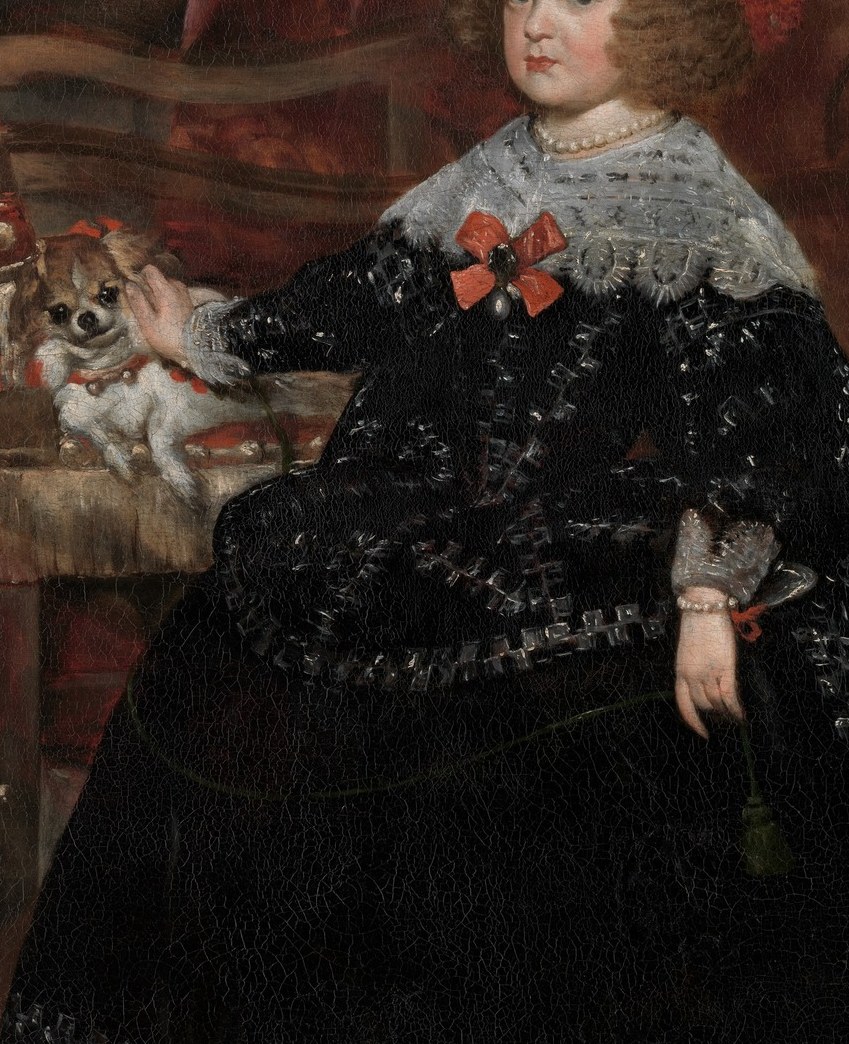
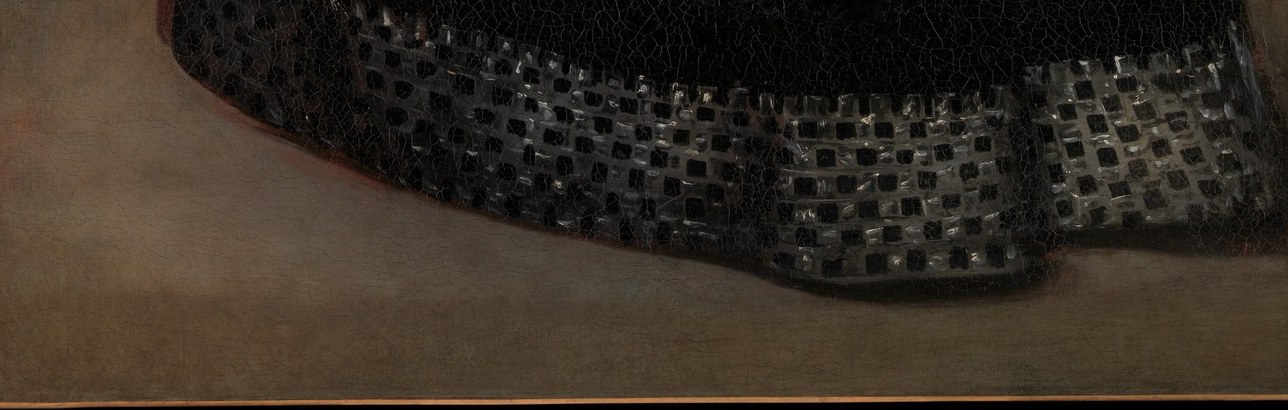
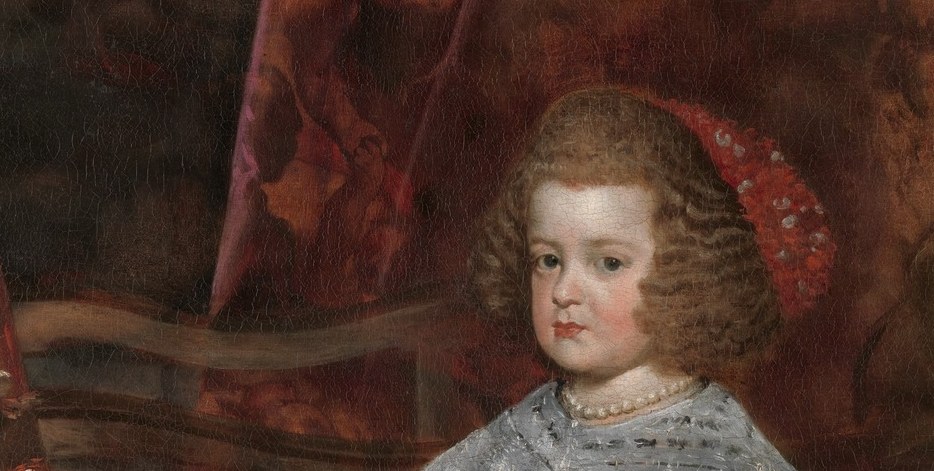
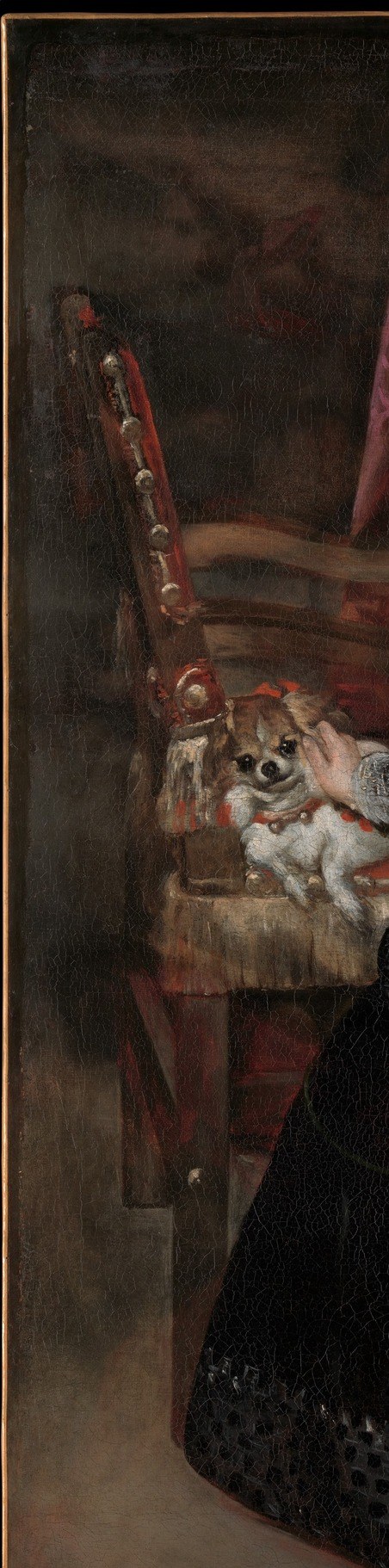
Look at her face: still soft with childhood, but already wearing the composure demanded of a Spanish Habsburg infanta. Then look at the gown. The metallic squares that cover it are not painted pattern, but individually rendered studs catching the light. And the skirt is not merely full: it is a guardainfante, an architectural hoop skirt unique to seventeenth-century Spain, so wide it announces her status before she utters a word.
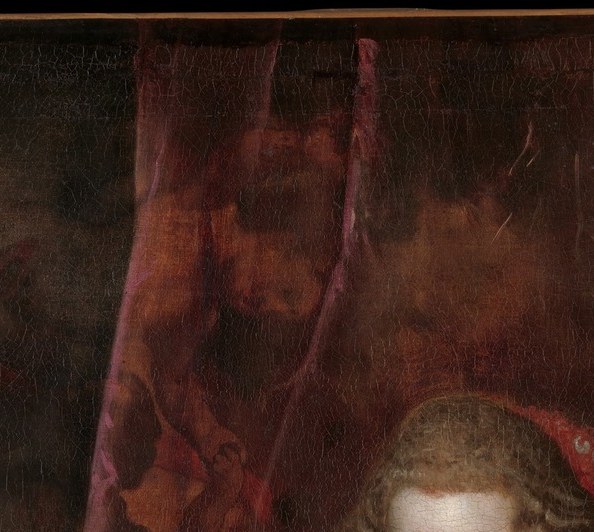
María Teresa was betrothed young, as Habsburg daughters were, eventually marrying Louis XIV of France. This portrait was made to be sent abroad, a diplomatic tool as much as a likeness. Every detail was calculated: the red curtain of sovereignty, the loyal lap dog, the rigid hands holding orange blossoms that may signal a dynastic union to come.
Next time you see a court portrait, let your eye go to the bottom edge. The lace hem touching the floor was never meant to be noticed. That is exactly where the real cost is hidden.
Details
Transcript
She is seven years old. Her face is already a mask of royal duty. That skirt is not a chair. It is a cage of silk and metal. Each of these squares was stitched and paid for. Now look at the very bottom edge, where the floor should be. Even the hem that touches the ground is finished with costly lace.