A Fleet at Sea by Vroom, Hendrick Cornelisz
Hendrick Cornelisz Vroom's 1614 painting, *A Fleet at Sea*, marks a pivotal moment in art history. It's a key work by the artist credited with founding Dutch marine art, moving the genre towards more realistic depictions of the sea and ships.
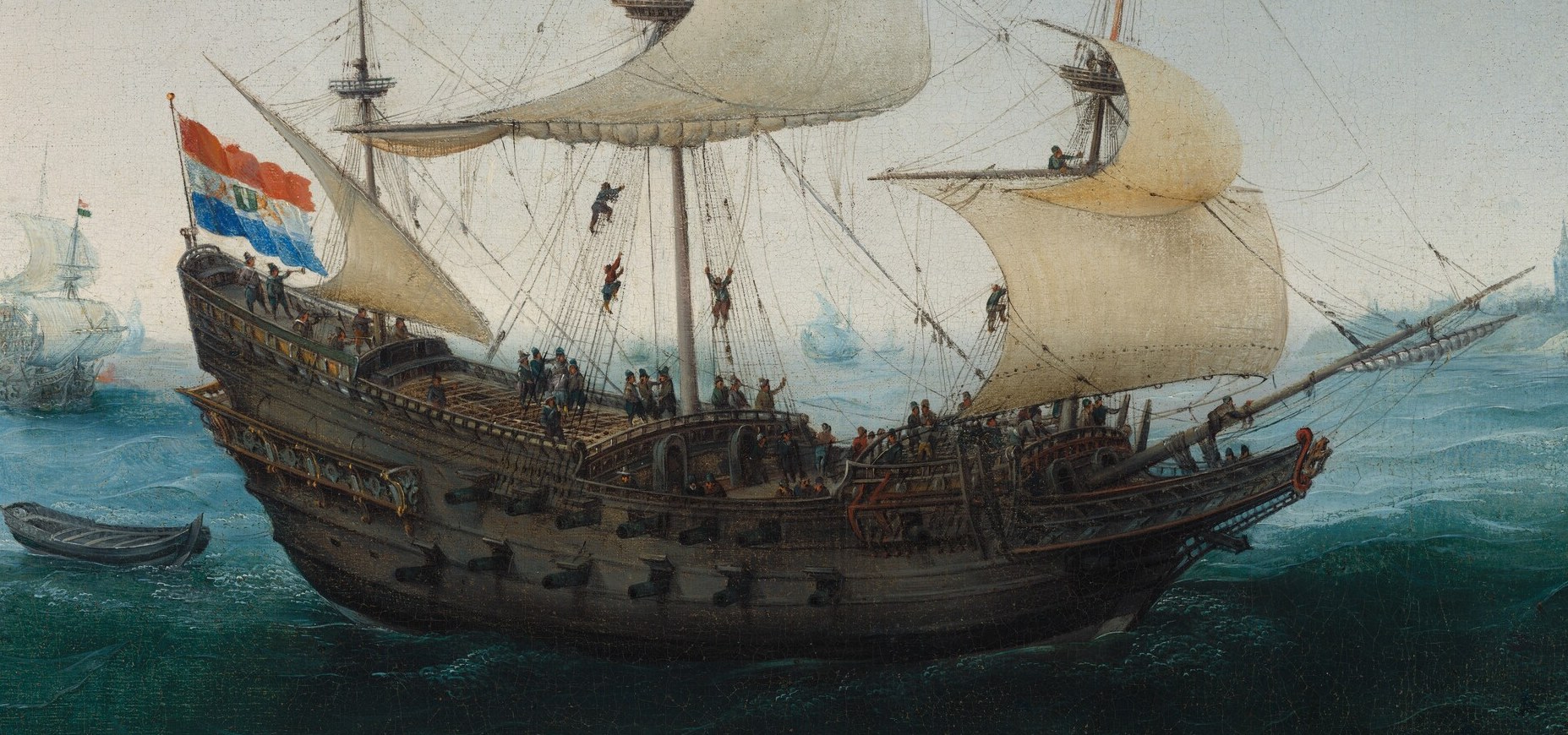
Look closely at how Vroom rendered the turbulent green waves, allowing them to intersect the hulls of the ships. This detail, along with the lowered viewpoint, distinguished his work from earlier, more elevated perspectives in Netherlandish marine art. The prominent orange lion rampant flag on the main warship proudly signals Dutch identity and naval strength.
Created during the Dutch Golden Age, *A Fleet at Sea* reflects the era's booming maritime commerce and growing naval power. Vroom's innovative approach established marine painting as a significant and distinct genre, capturing the nation's close relationship with the sea.
What details do you notice that bring this historical fleet to life?
Details

Transcript
In 1614, this scene helped launch a new art movement. This painter, Hendrick Cornelisz Vroom, was its founder. He moved from high-up views to a more realistic perspective. Notice how the waves now intersect the ships' hulls. This ship's orange flag represents Dutch power and identity. This painting captured the Netherlands' rising naval importance. Vroom made marine art a distinct genre of the Dutch Golden Age.