The Descent from the Cross by Rogier van der Weyden
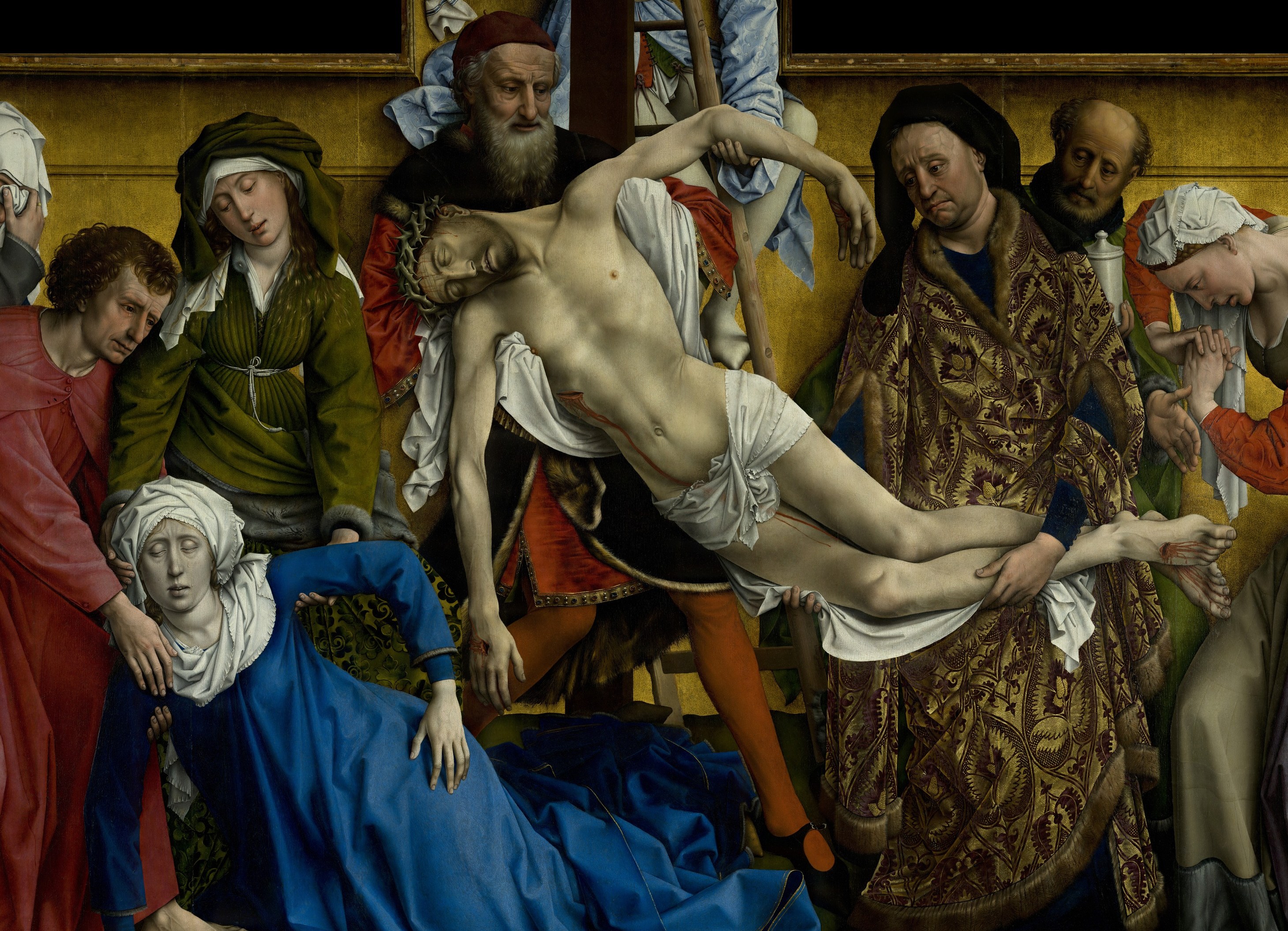
The Descent from the Cross, painted around 1435, is the work that made Rogier van der Weyden famous, and it still holds secrets most visitors walk right past.
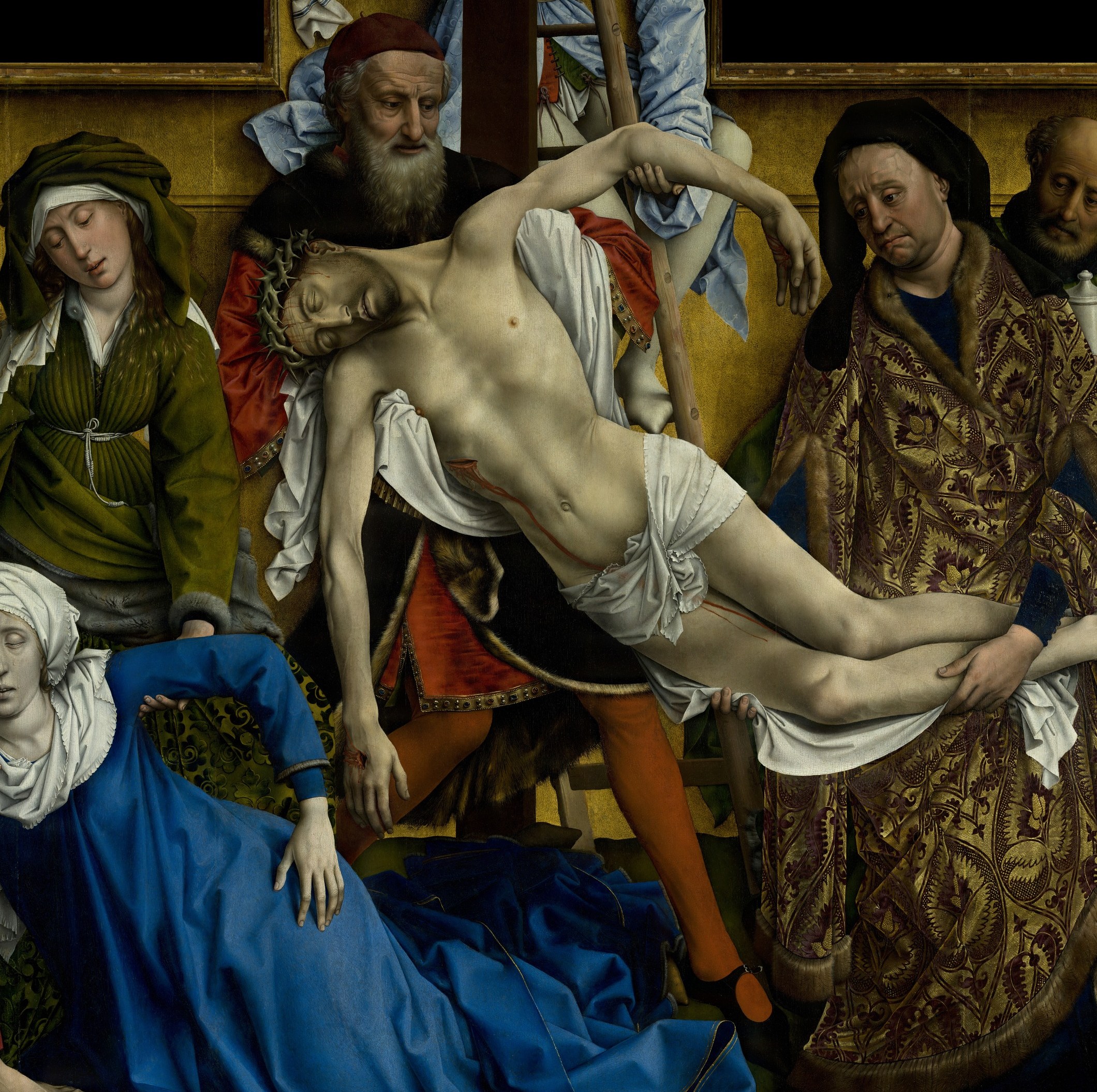
Scan the center of the composition. Christ's body does not hang, it forms a deliberate T-shape, bent at the waist and arms to mirror the silhouette of a crossbow. That shape is not accidental. The painting was commissioned by the Leuven guild of archers for their chapel, and van der Weyden embedded their symbol directly into the sacred anatomy.
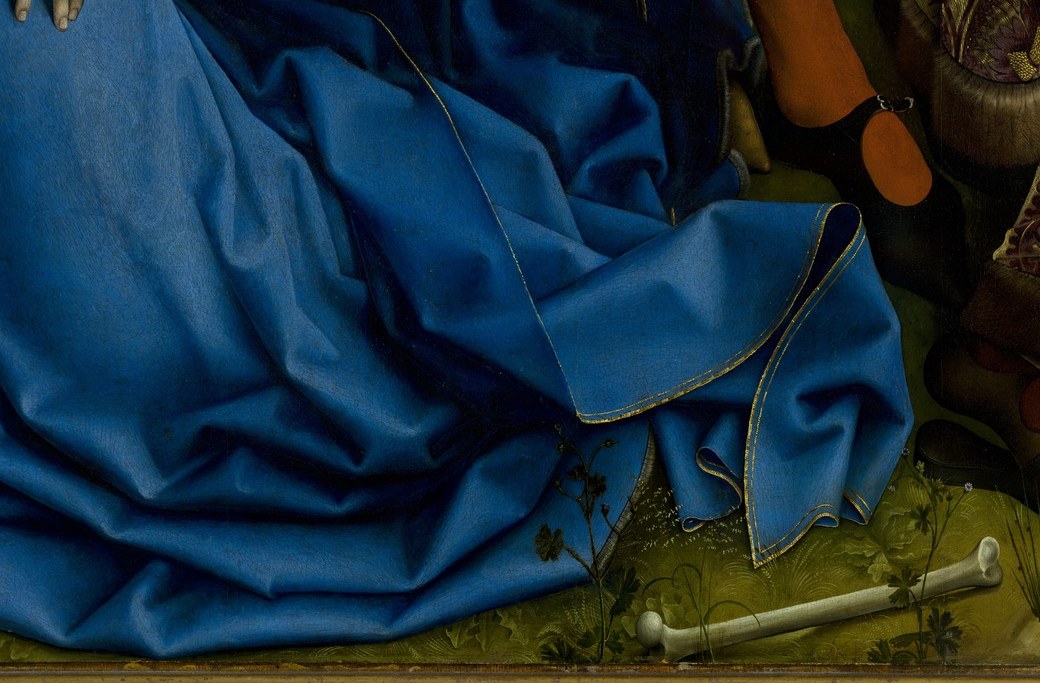
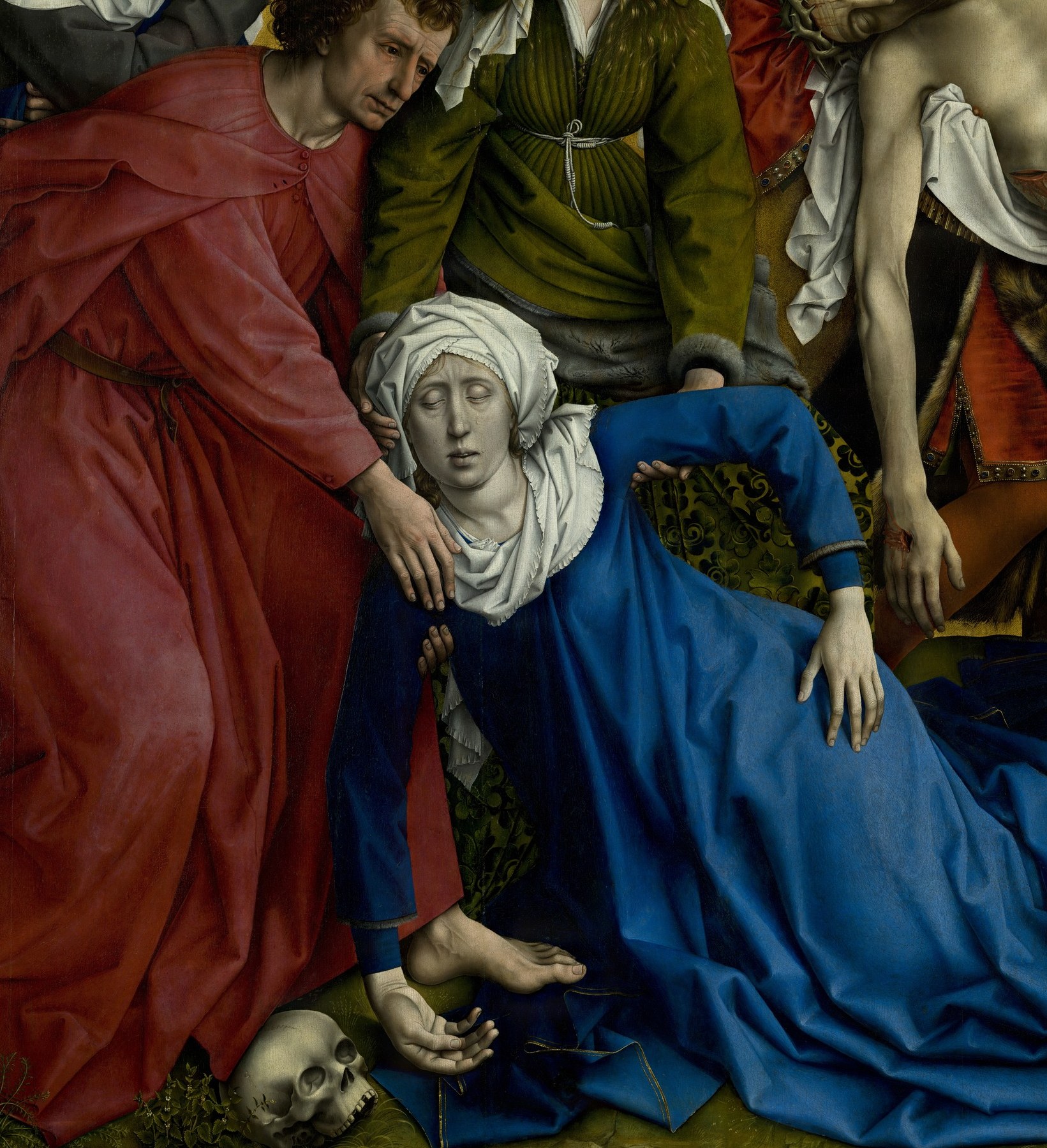
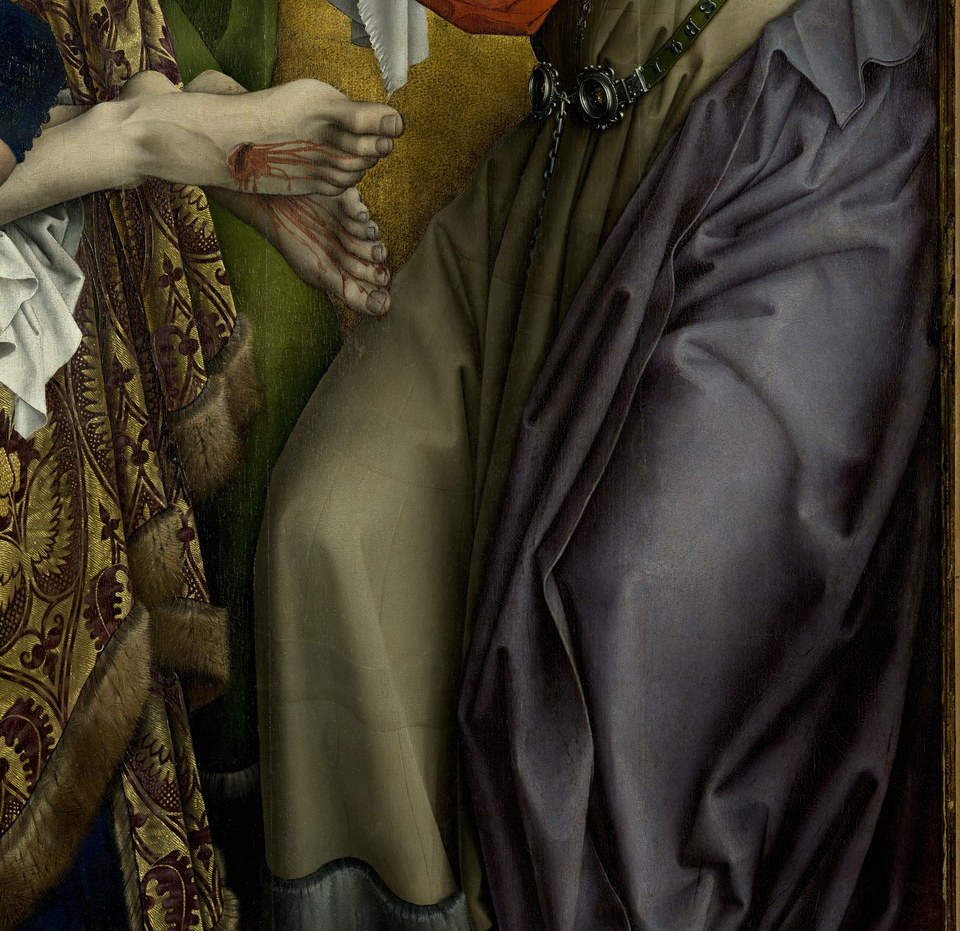
Now look at the lower edge, below Christ's feet. Tucked into the rocky ground are a human skull and crossed bones, the hill of Golgotha, literally 'the place of the skull.' It is a memento mori painted in shadow, easy to miss amid the vivid grief of the foreground. The archers' crossbow above and the skull below bookend the same dark truth: the machinery of death and its final destination, built into a single frame.
The painting has lived at the Museo del Prado in Madrid since 1939, having been acquired from the monastery of El Escorial, where it had resided for centuries after leaving the Low Countries for Spain. Van der Weyden would eclipse Jan van Eyck in popularity within decades of completing it.
Details
Transcript
A dozen figures crowd around the body. But the men who paid for this painting are nowhere in sight. They were archers. And they left their mark on Christ himself. The body bends in the exact T-shape of a crossbow. A tribute to their guild, hidden in the sacred form. Now look at the foot of the cross. The shadows hold something. A skull. Golgotha, the place of the skull, right at the base.