The Temptation of Christ by the Devil by http://www.wikidata.org/.well-known/genid/5e3b50b9c894b8c8c72d01142e14bf1c
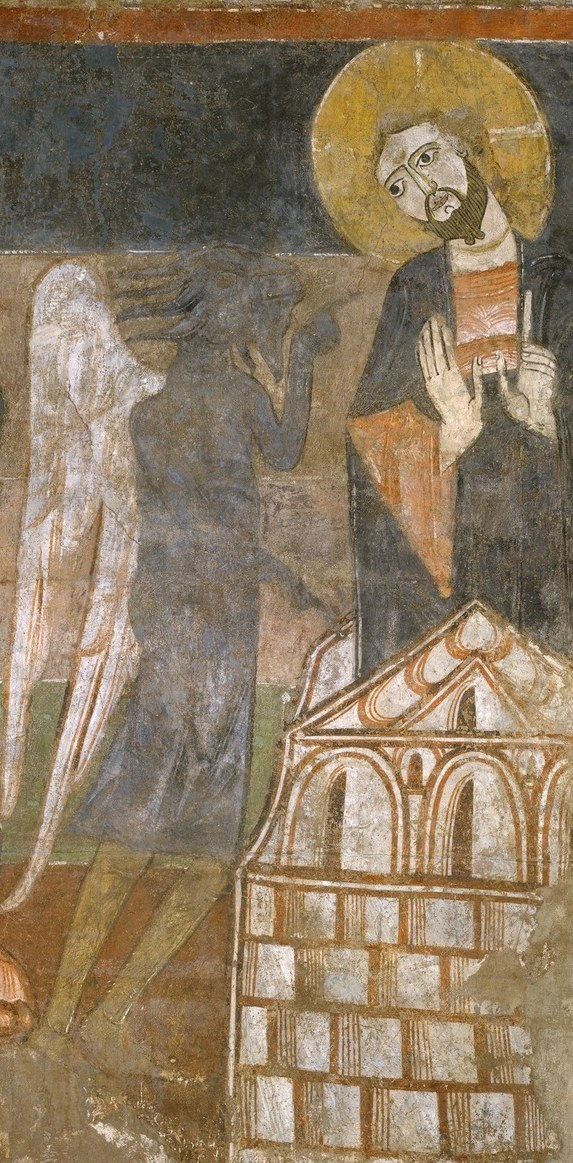
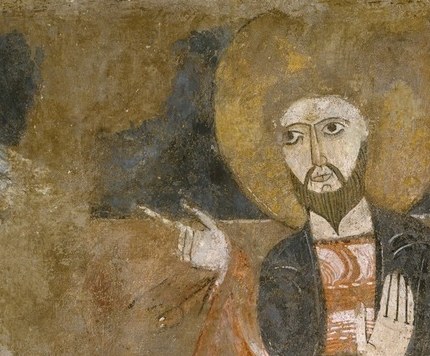
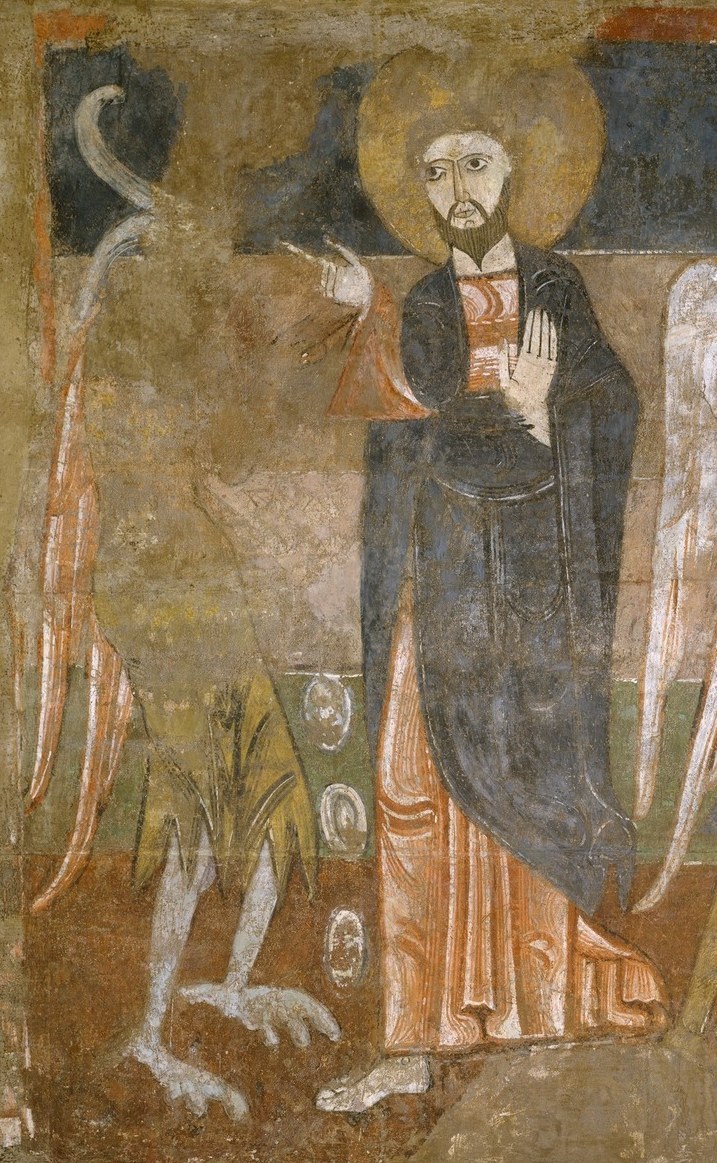
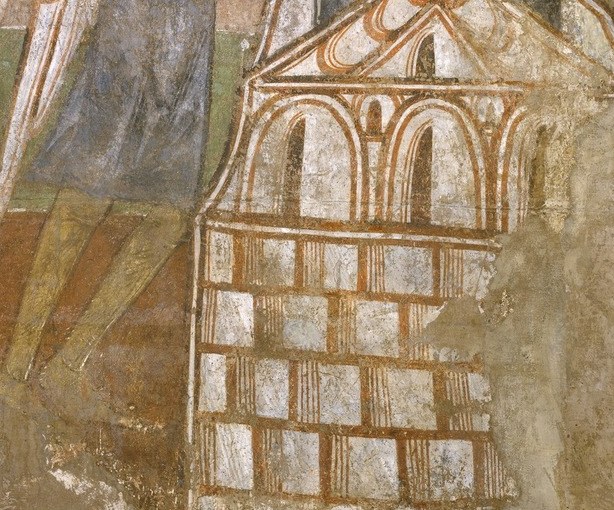
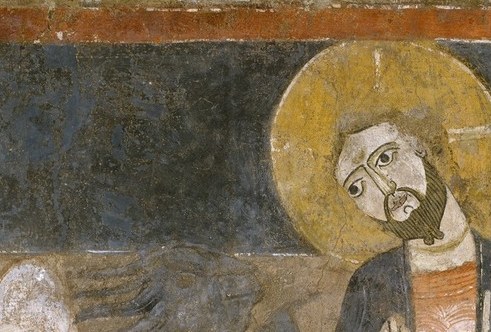
This is "The Temptation of Christ by the Devil," a Romanesque fresco painted around 1125 by an artist known only as the Master of Santa Maria de Mur. It once covered the apse of a small church in the Spanish Pyrenees. Today it hangs, entirely removed from its home, in the Museum of Fine Arts, Boston.
Look first at the center, where Christ stands with a golden halo, his posture calm and unbroken as the winged Devil crowds him from the left. The Devil is the only figure without a halo, and his elongated, stylized face is the most unsettling detail in the scene. On the right, an angel in a vivid orange robe anchors the composition with a single bright shock of color.
The fresco was painted in the early 12th century for the church of Santa Maria de Mur in Catalonia. In 1921, the entire apse decoration was removed from the church, cut into sections, and transported to the United States. The MFA reassembled it in a custom-built gallery designed to replicate the original apse. Several other frescoes from the same church ended up in different collections.
Medieval wall paintings were never meant to be seen under museum lights, let alone in a climate-controlled gallery thousands of miles from where they were made. This one survived because someone decided it was worth taking apart.
Details
Transcript
This scene was painted on a church wall in Spain around 1125. Christ stands calm as the Devil confronts him. Look at the Devil's face. In 1921, the entire apse was stripped from the church and sold. The frescoes were cut into sections and shipped to Boston. The museum reassembled them, stone by stone, in a new room built to match the original apse.