Self-Portrait by Horace Pippin
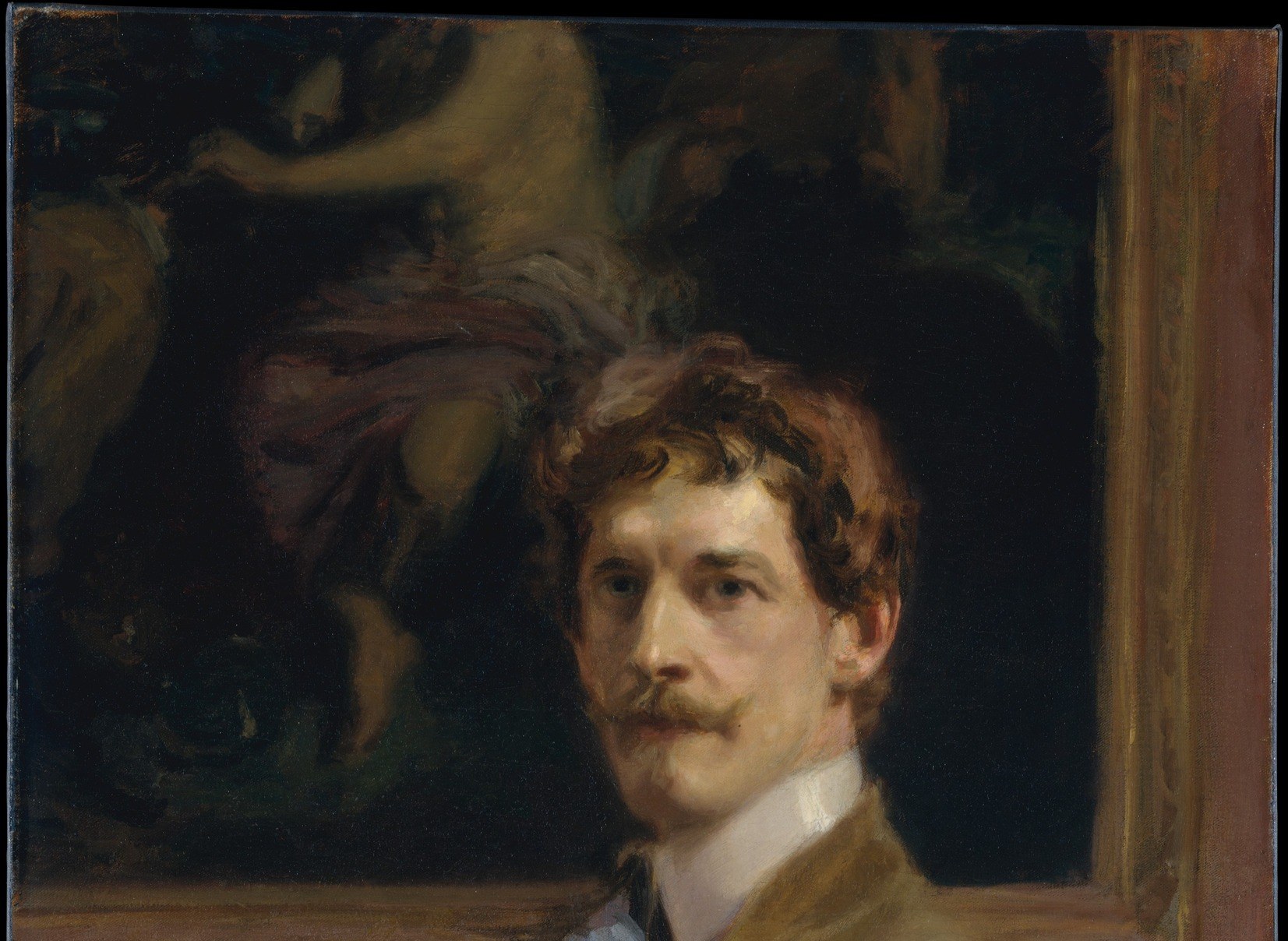
Horace Pippin never trained at an academy. He taught himself to paint after a German sniper's bullet shattered his right shoulder in the First World War, leaving the arm nearly useless. This 1944 Self-Portrait, now in the collection of the Metropolitan Museum of Art, was made just two years before his death. He was 56 years old.
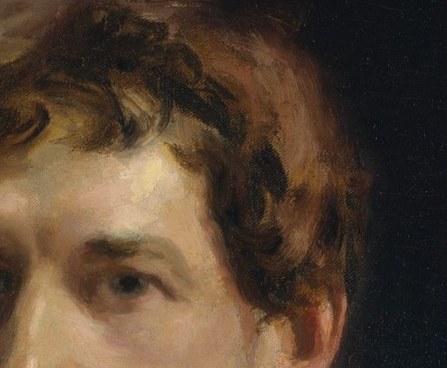
Look first at his eyes. They are rendered with a flat directness that some critics called simple. But Pippin's simplicity is deliberate, every stroke announces a man who will not be looked past. The blue background erases all context. There is no parlor, no book, no window. Only him. The starkness makes the portrait timeless: a person, not a place. Then look at the collar. The brightest white in the painting sits at his throat. Pippin presented himself in a suit and tie because he understood that dignity, for a Black man in 1944 America, was an argument he had to win with every self-presentation.
Pippin was born in West Chester, Pennsylvania, the grandson of enslaved people. He worked as a hotel porter, a junk dealer, and a iron moulder. After the war he came home and began painting on burnt wood panels with a hot poker, years before he ever held a brush. Eventually he taught himself oil painting by squeezing tubes of pigment directly onto the canvas, building forms in thick, slow layers. He was the first Black artist to be the subject of a full monograph, and major museums collected his work during his lifetime.
He painted biblical scenes, war memories, and the quiet interiors of Black domestic life. But here, at the end, he simply painted himself. No apology, no plea, no performance. Just a man returning your gaze.
Details
Transcript
He began painting at thirty-seven, after a bullet took his right arm. He held the brush in his right hand and guided it with his left. That thick paint across his forehead took years of effort most painters never face. He painted no room, no window, no context. Only himself. In 1944, America still told Black men to look down. He refuses. The crisp white collar was painted as carefully as the eyes. Two years later he was gone. The New York Times called him the most important Negro painter in America.