The Satyr and the Peasant by Liss, Johann
Johann Liss, a German Baroque painter active in Venice, explored the delicate balance between myth and reality in his work. His painting, *The Satyr and the Peasant*, completed around 1623-1626, now resides in a private collection.
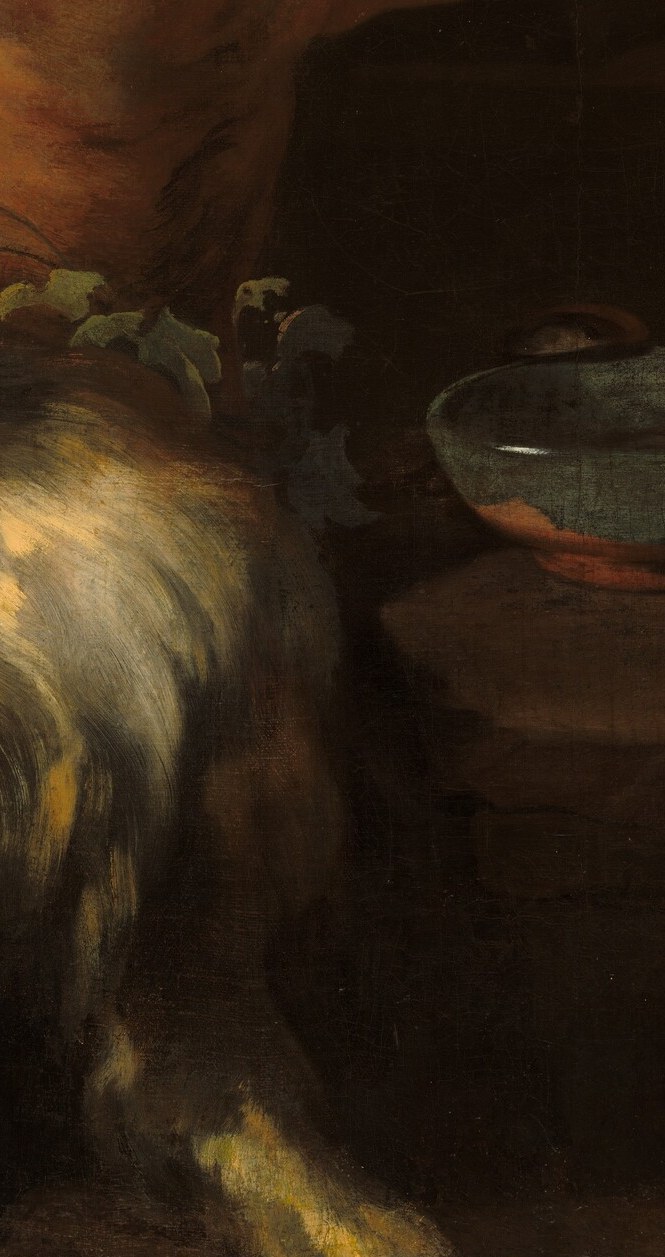
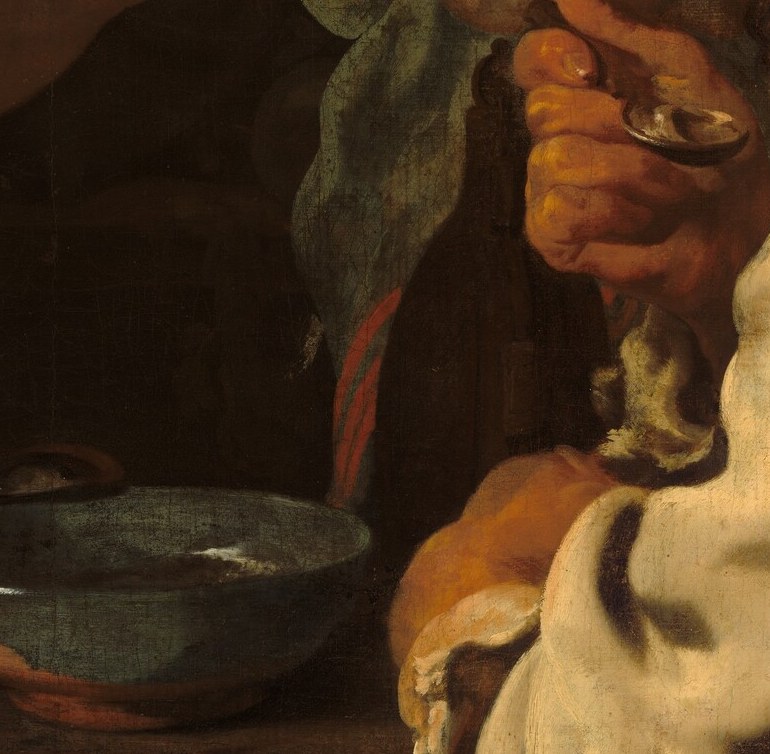
Look closely at the figures. The satyr, a mythological creature with goat legs and horns, is often depicted with grape vines and a love for wine. Here, he is shown not as menacing, but as curious, engaging with a peasant who politely offers him a jug.
Liss's distinctive style blended German precision with the vibrant palette and dramatic lighting of Venetian art. This particular scene, drawn from classical mythology, became a popular subject among Baroque painters, allowing for explorations of human and non-human interaction, hospitality, and the wild versus the civilized.
What do you think the satyr is thinking in this moment of encounter?
Details

Transcript
This painter blends myth and everyday life. The horned figure is a satyr, a creature of the wild. Notice his hairy goat legs, connecting him to nature. He is often associated with grape vines and wine. The peasant offers a jug, possibly of wine. This painting captures a moment of curious exchange, not conflict. It shows curiosity and hospitality between two worlds.