Durham, Connecticut by George Inness
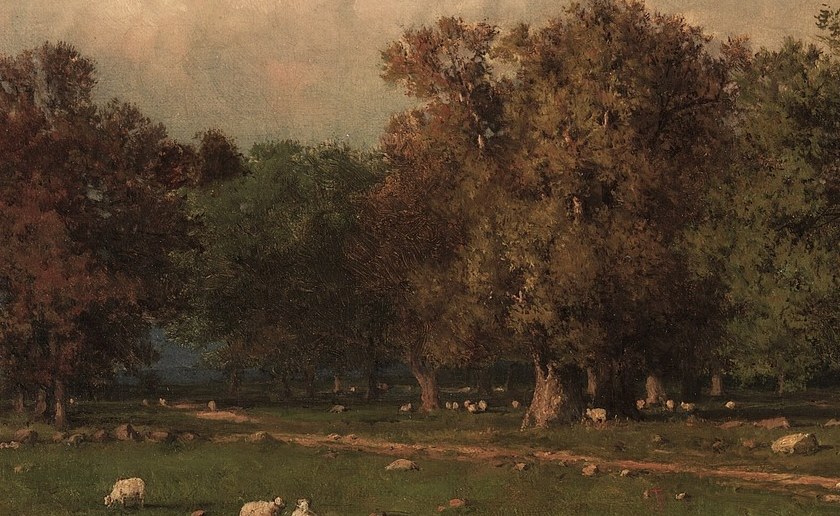
George Inness's *Durham, Connecticut* (1858) captures a moment of profound solitude and the spiritual essence of nature. This painting, housed at The Cleveland Museum of Art, exemplifies the artist's early engagement with the Hudson River School's detailed landscapes, but with a unique introspective quality.
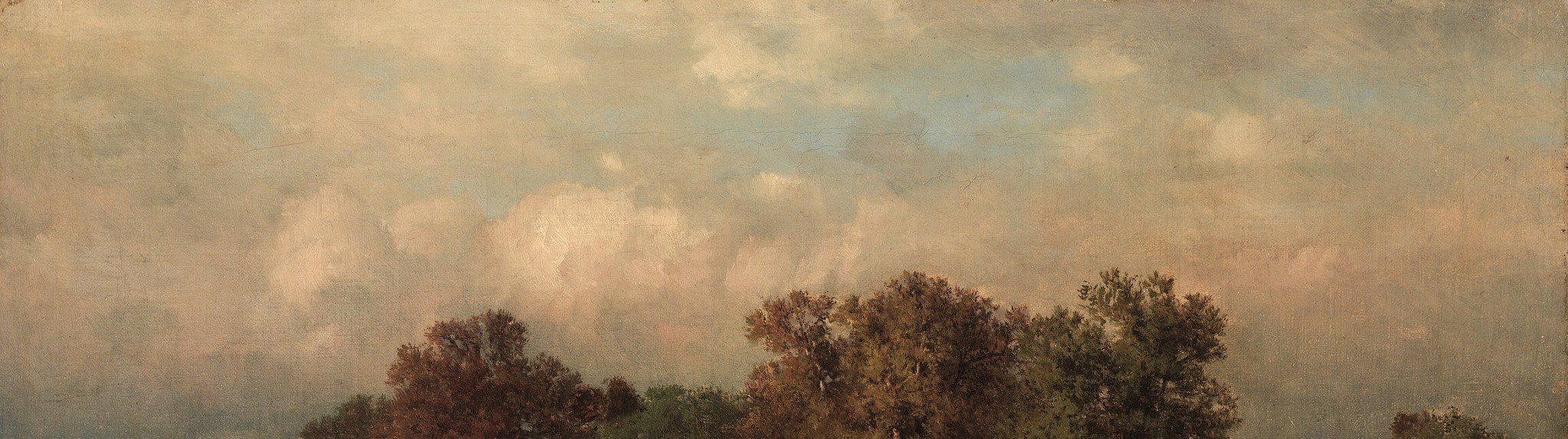
Observe the solitary figure in the foreground, his red vest a vibrant focal point against the muted greens and browns. The massive tree provides a grounding presence, while the dramatic, cloudy sky hints at an inner or outer turmoil. Even the lone sheep in the field seems to share in the contemplative mood.
Inness, a transitional figure between realism and impressionism, sought to combine the earthly and the ethereal. Influenced by spiritualism later in life, his works consistently aimed to evoke deep mood and atmosphere. This 1858 piece reflects that early drive to capture the complete essence of a locale, blending the physical and the spiritual.
This scene invites reflection on the quiet moments of existence and our connection to the natural world. What emotions does this quiet landscape evoke in you?
Details
Transcript
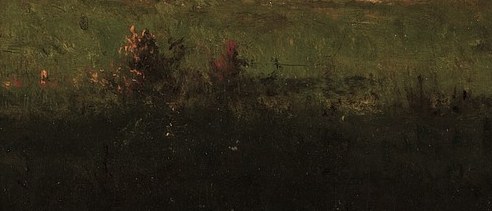
This boy looks all alone in the field. His red vest is a bright, lonely accent. He sits under this great, dense tree. A dramatic sky hovers over the land. George Inness painted this in 1858. He aimed to capture nature's spiritual essence. The light catches grass in a sunlit patch. Even a single sheep seems to ponder.