The Descent from the Cross by Master of the Holy Blood
This is "The Descent from the Cross," painted around 1520 by an artist known only as the Master of the Holy Blood. His workshop in Bruges produced devotional images for a city that had made religious art a precision trade. What stays with me is how the painting splits mourning into two distinct actions.
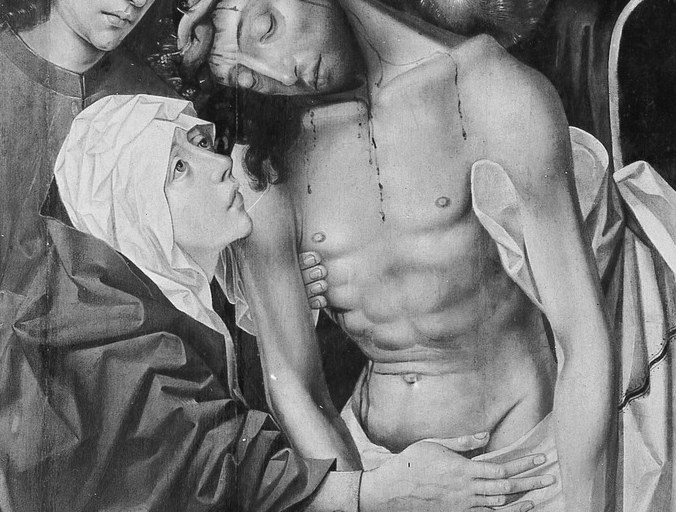
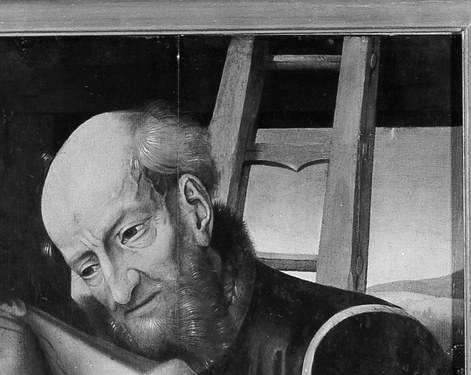
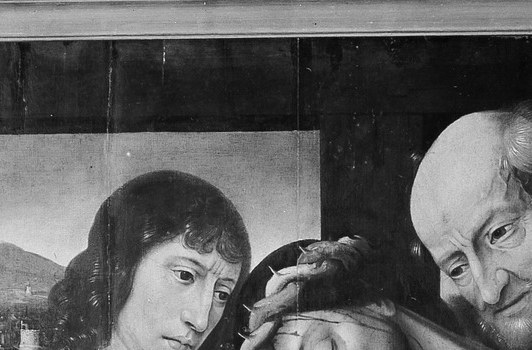
Look at the central panel. Christ's body is handled with extraordinary, almost professional tenderness. Joseph of Arimathea cradles the shoulders. Another man guides the arm. Every grip is sure, every task shared. The faces are composed. The workshop was teaching more than painting here: it was teaching how to lower a body from a cross without damaging it, a ritual these men had performed and rehearsed.
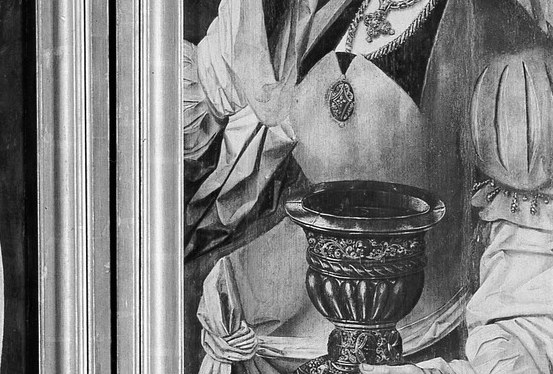
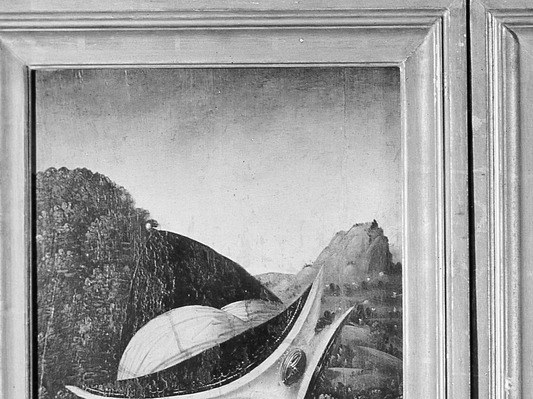
Then shift to the right wing. A mourner's hands twist outside the frame of the central action. The composure breaks. Where the men in the center perform grief through ritual, this figure feels it through the body, unable to help, unable to look away. The same workshop that painted Christ's side wound with clinical exactness also painted this: a small, uncontrolled gesture that says everything the peaceful faces do not.
The painting belongs to The Metropolitan Museum of Art. The artist's name is lost; his name comes only from a work still kept in Bruges at the Museum of the Holy Blood. Perhaps one pair of those wringing hands belonged to a real person who sat for this, just across the workshop from the men who taught steadiness.
Details
Transcript
Look first at Christ's left side. The wound is precise, forensic. A Flemish workshop trademark. Two men lower the body with practiced care. These are not only saints. They are a workshop teaching novices how to carry sacred weight. But here, on the right wing, the lesson stops. Hands wring, uncontrolled. Grief is not a technique. It is an interruption.