Delaware Water Gap by George Inness
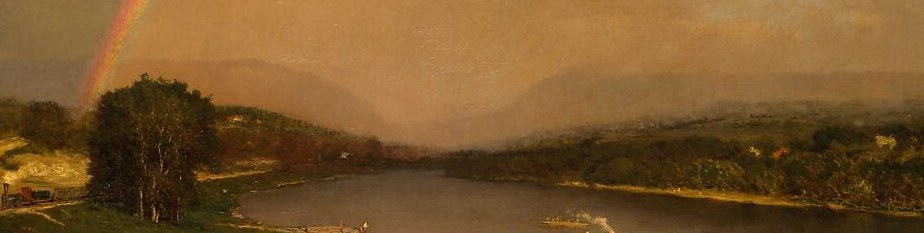
Delaware Water Gap by George Inness, painted in 1861, is a landscape with a secret argument. It hangs today in the Metropolitan Museum of Art's American Wing, but when the paint was still wet the United States was coming apart. The Civil War had begun. Most artists turned toward the fight. Inness turned toward a rainbow over the Delaware River.
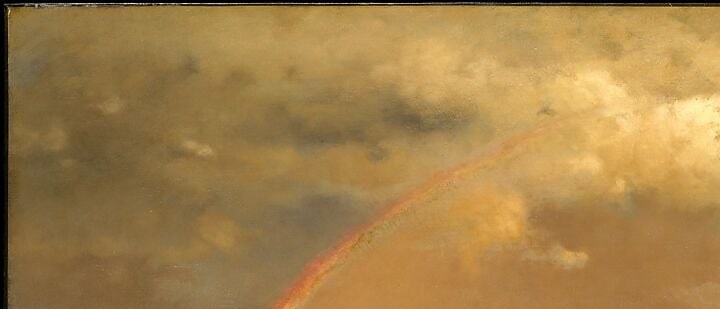
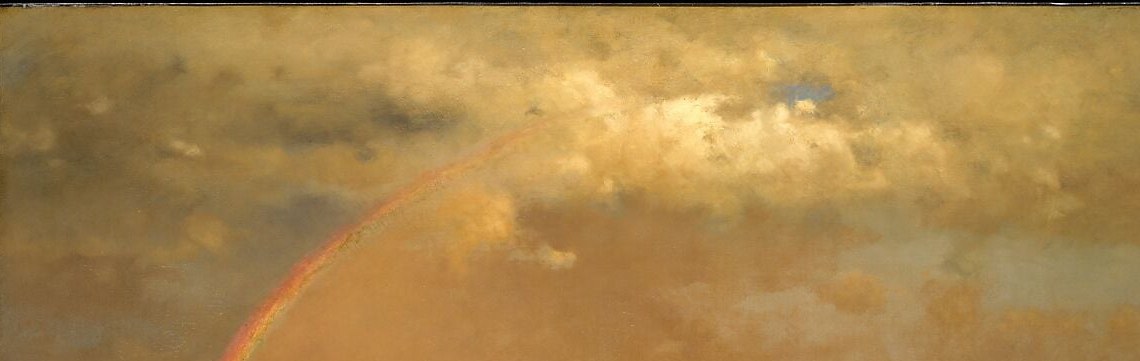
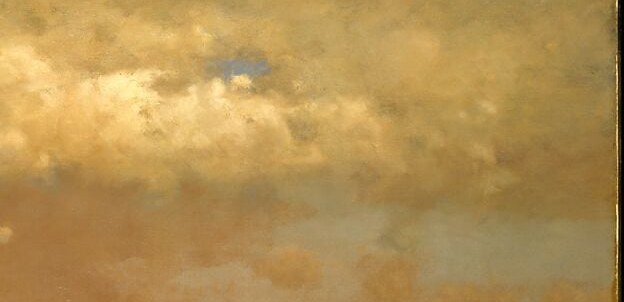
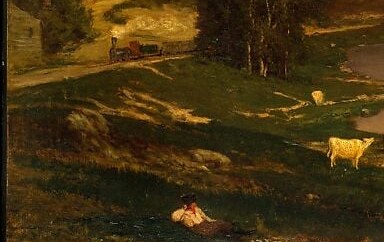
The painting is built on a stark binary: ink-dark storm clouds rolling in from the left, and a luminous golden break flooding through on the right. The rainbow arcs across the full width of the canvas, vivid and unmissable. It reads as a biblical covenant, a promise, placed deliberately over a nation at war. Down below, cattle graze in a bright green meadow as if nothing is happening at all. That stillness under duress is the painting's whole point.
Inness was shaped by the Hudson River School early on, but by 1861 he was moving past it. He had encountered the theology of Emanuel Swedenborg in Europe and was becoming convinced that a landscape could carry spiritual meaning, not just geological fact. The loose, urgent impasto in the storm clouds and the careful atmospheric recession toward the Delaware Water Gap mountains show both hands: the expressionist and the technician, working together.
He would paint over a thousand works before he died in 1894, but few carry their historical moment so visibly on the surface. Next time you see a rainbow in a 19th-century landscape, ask what year it was made, and ask what the painter was refusing to paint.
Details
Transcript
The first year of the American Civil War. Most painters filled their canvases with battlefields. George Inness painted a rainbow instead. The dark clouds are built with urgent, stabbing brushwork. And here the storm cracks open into gold. Below all of it, cattle graze. Life refuses to stop. Inness was a spiritualist. He believed landscape could hold the divine.