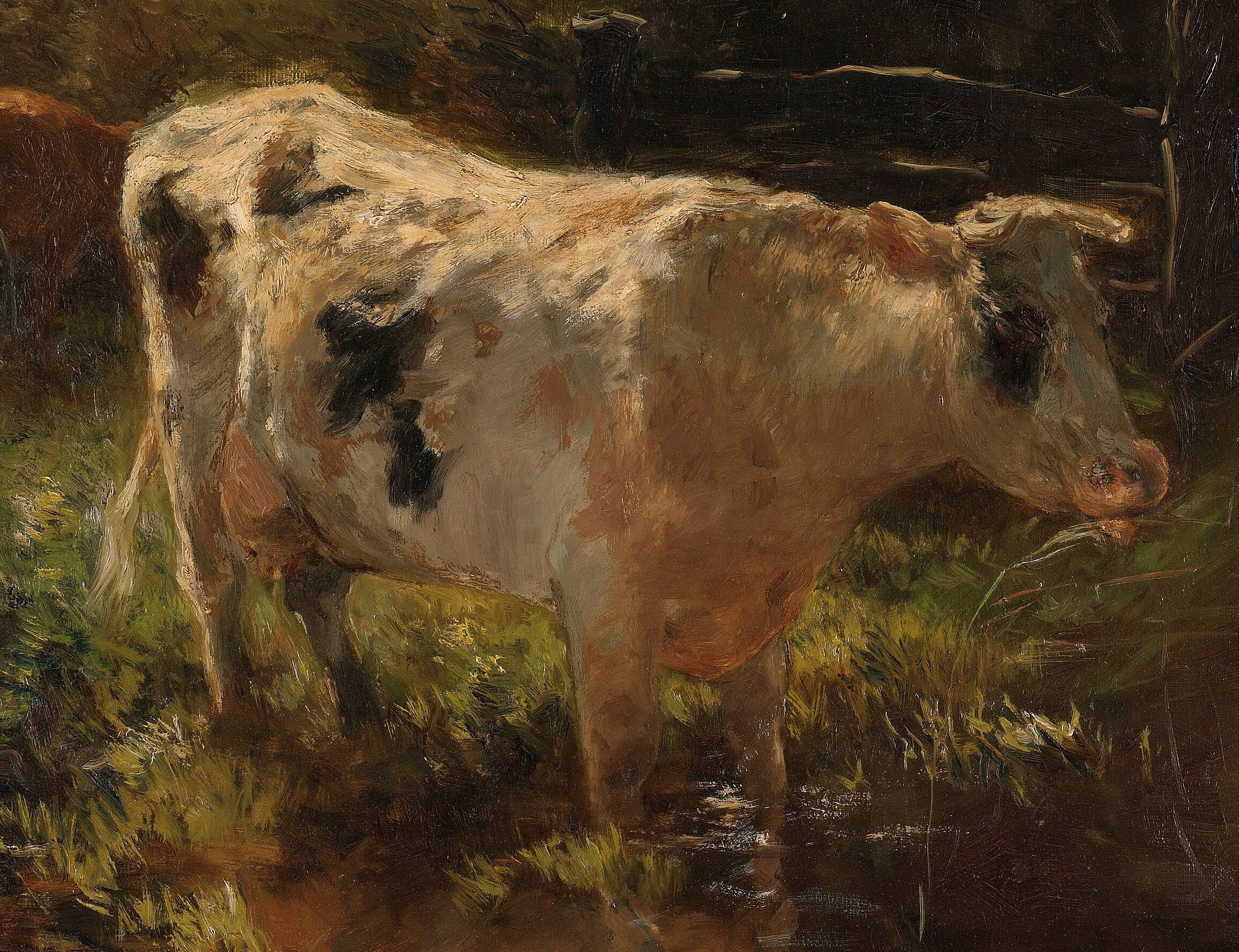
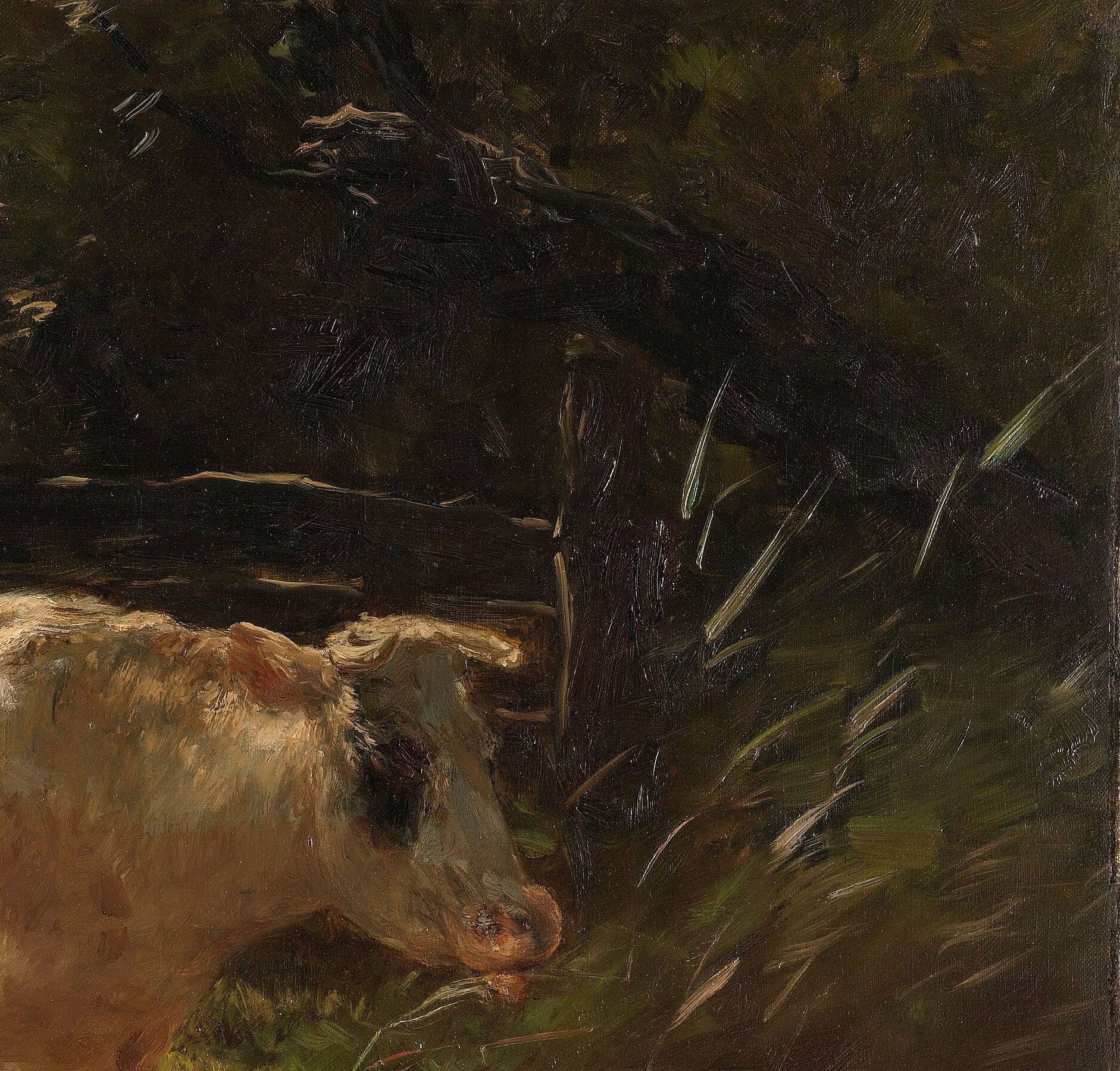
Cow beside a Ditch by Willem Maris
Willem Maris, a master of the Hague School, brought the Dutch countryside to life with his distinctive impasto technique. His painting, "Cow beside a Ditch," created around 1893 and held at the Rijksmuseum, is a prime example of his dedication to capturing the "atmosphere of light and truth."
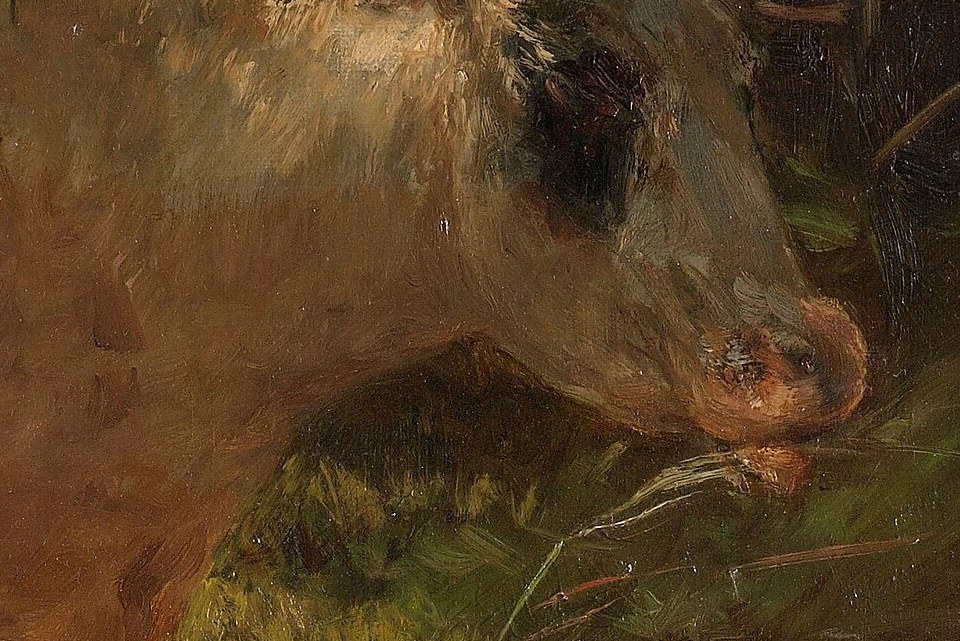
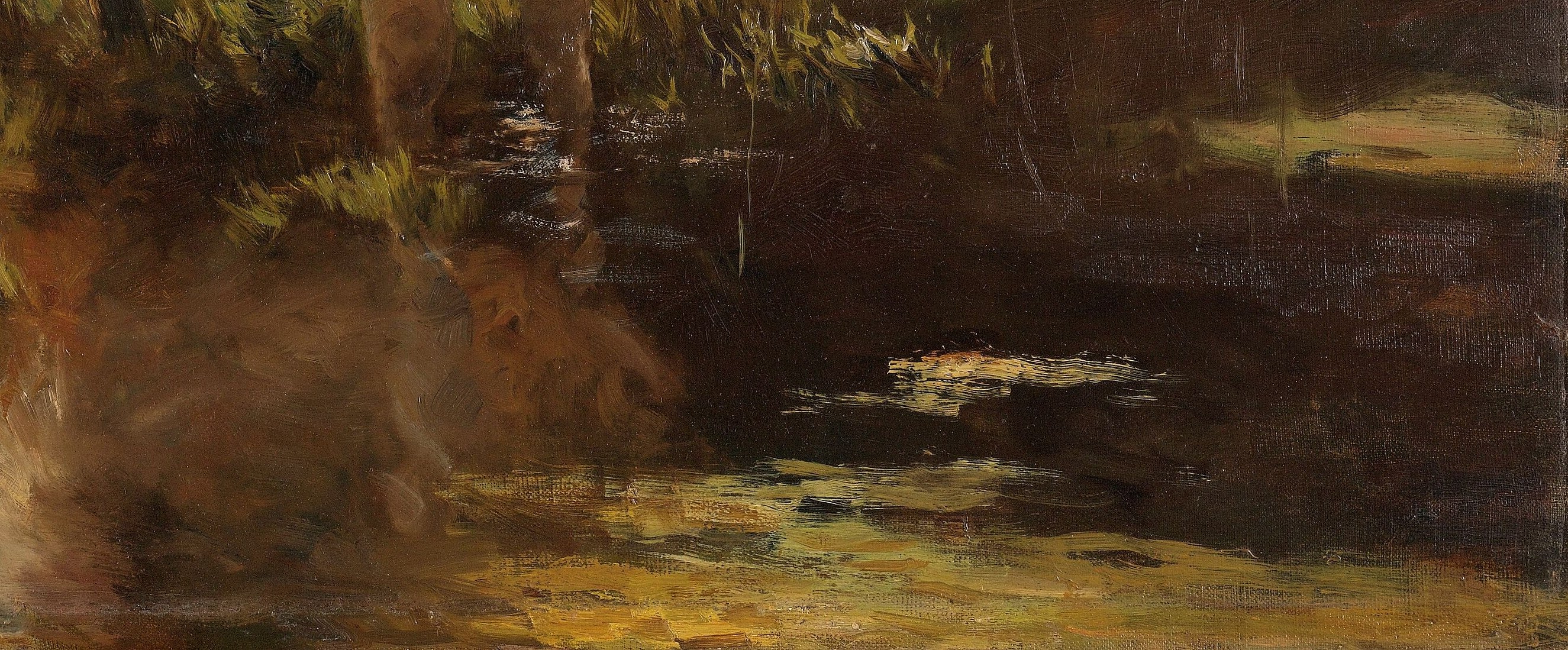
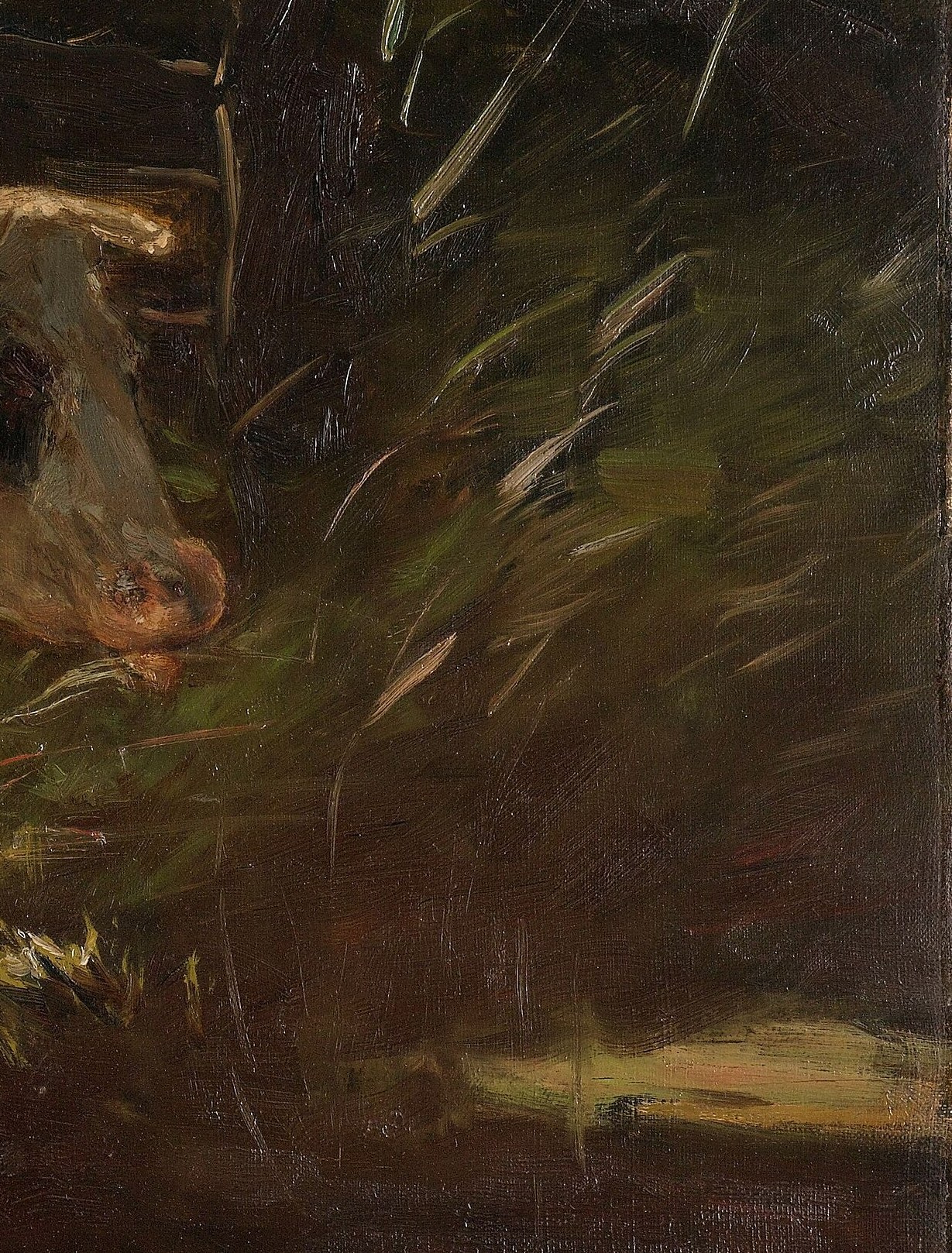
Look closely at the cow's fur and the surrounding landscape elements. Maris used thick, visible brushstrokes to give the painting a palpable texture, making the water, grass, and animal feel incredibly immediate and real.
This robust paint handling was a hallmark of Maris's style, allowing him to imbue his rural scenes with an unrefined, naturalistic quality that resonated deeply with viewers. He was celebrated for his ability to depict animals, particularly cows, with a profound sense of authenticity.
"Cow beside a Ditch" invites us to appreciate the beauty in everyday agricultural scenes, rendered with a technique that truly makes the paint itself sing.
Details
Transcript
This painter was known for his love of cows. He sought to capture the 'atmosphere of light and truth'. Notice the thick, visible brushstrokes on the cow's fur. This impasto technique gives the painting a robust, immediate feel. The texture makes the water and grass feel palpable and real. It shows his mastery of capturing the Dutch countryside.