The Kearsarge at Boulogne by Édouard Manet
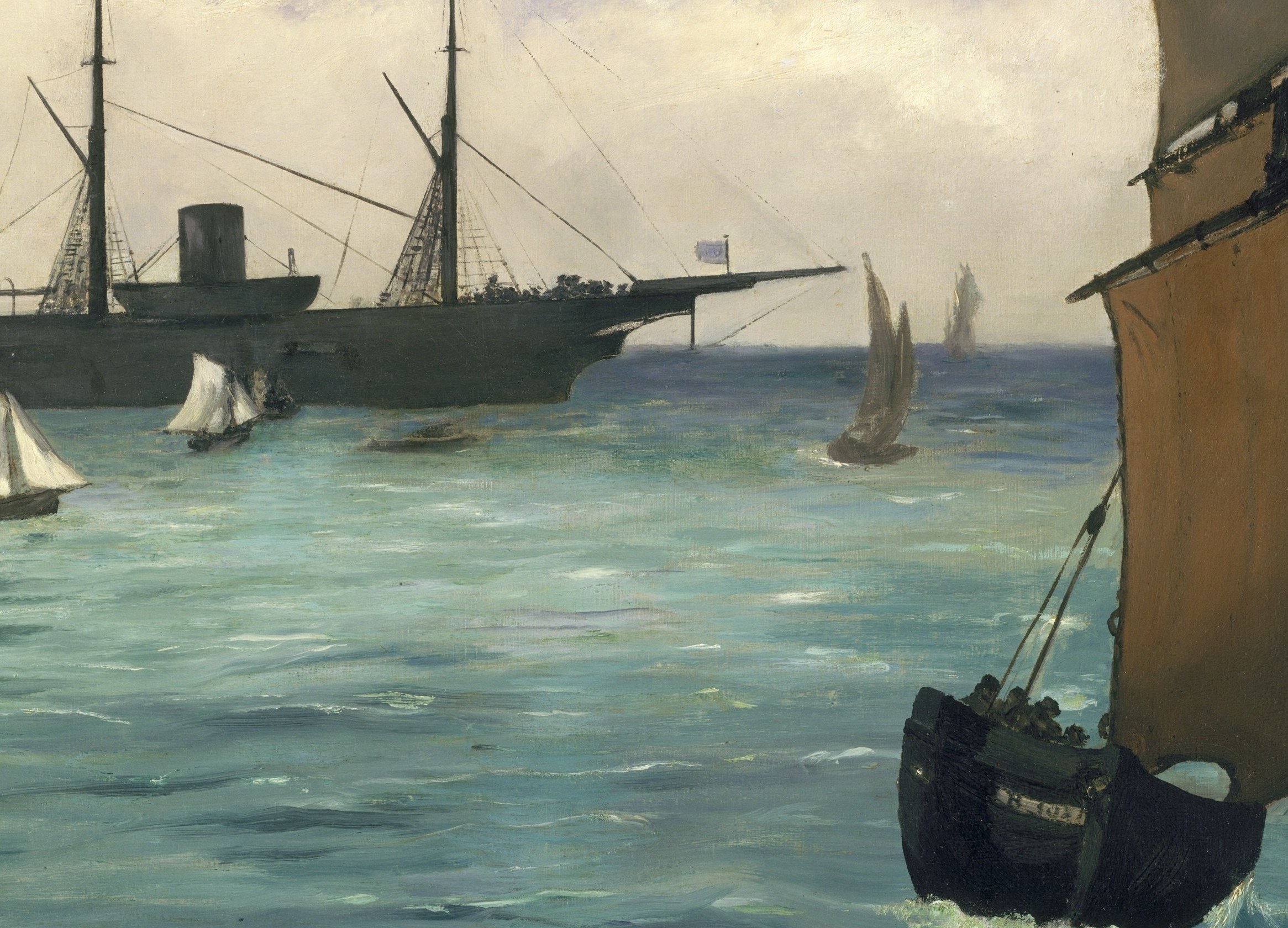
Édouard Manet's The Kearsarge at Boulogne (1864, private collection) isn't a battle painting. It shows the aftermath, the Union warship USS Kearsarge anchored off the French coast just weeks after sinking the CSS Alabama in a duel that made headlines on both sides of the Atlantic. The victory is stated quietly: the ship is at rest, its guns silent, a dark silhouette in a pale Channel light.
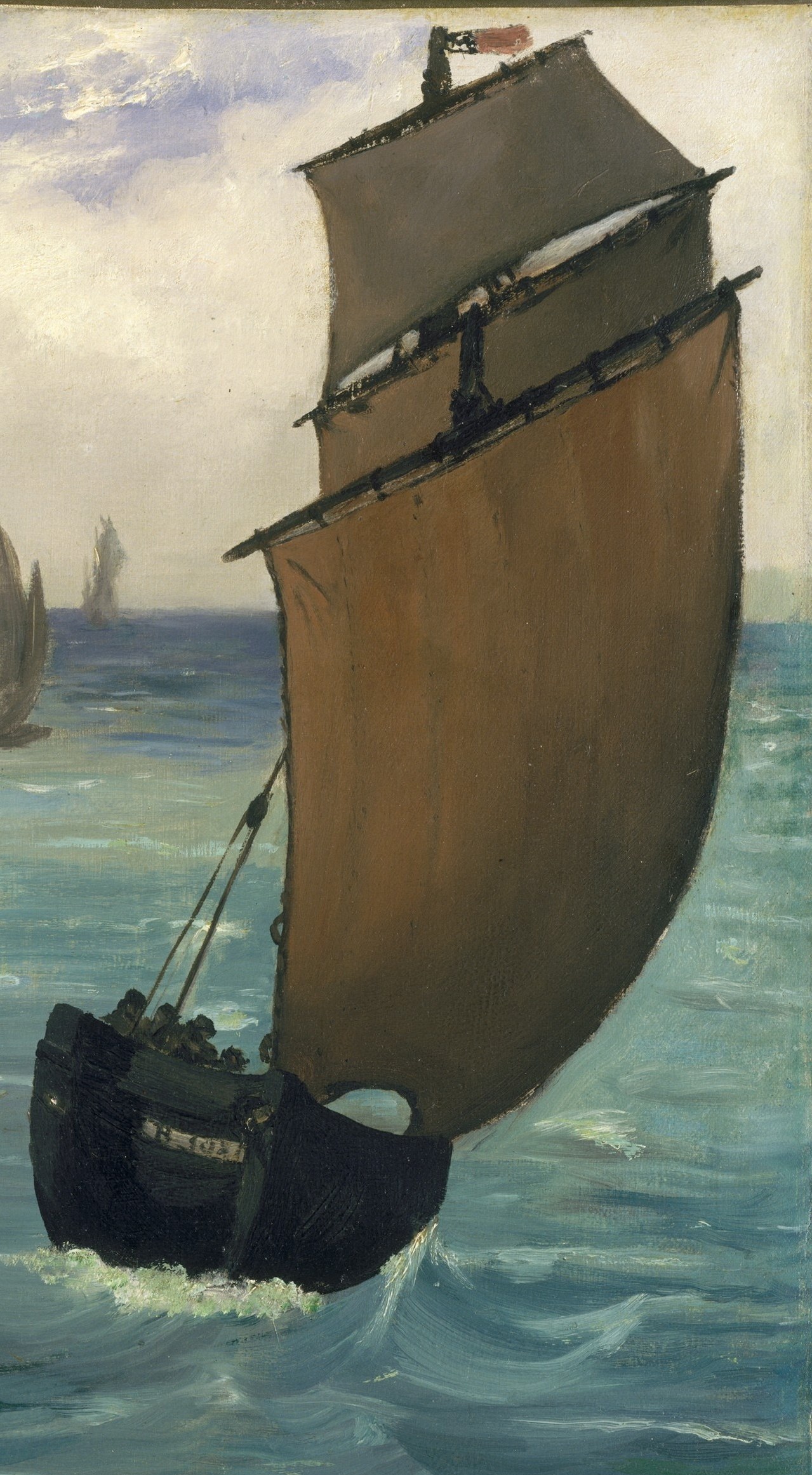
The first thing the eye lands on is the huge rust-brown sail of a fishing boat, cropped hard at the canvas edge. Manet pushes civilian life right into your face before letting your gaze travel out to the warship. The smokestack towering over the middle ground is the giveaway, this is a steam-powered vessel, not a sailing ship, a marker of a new technological age arriving in the middle of a working harbor.
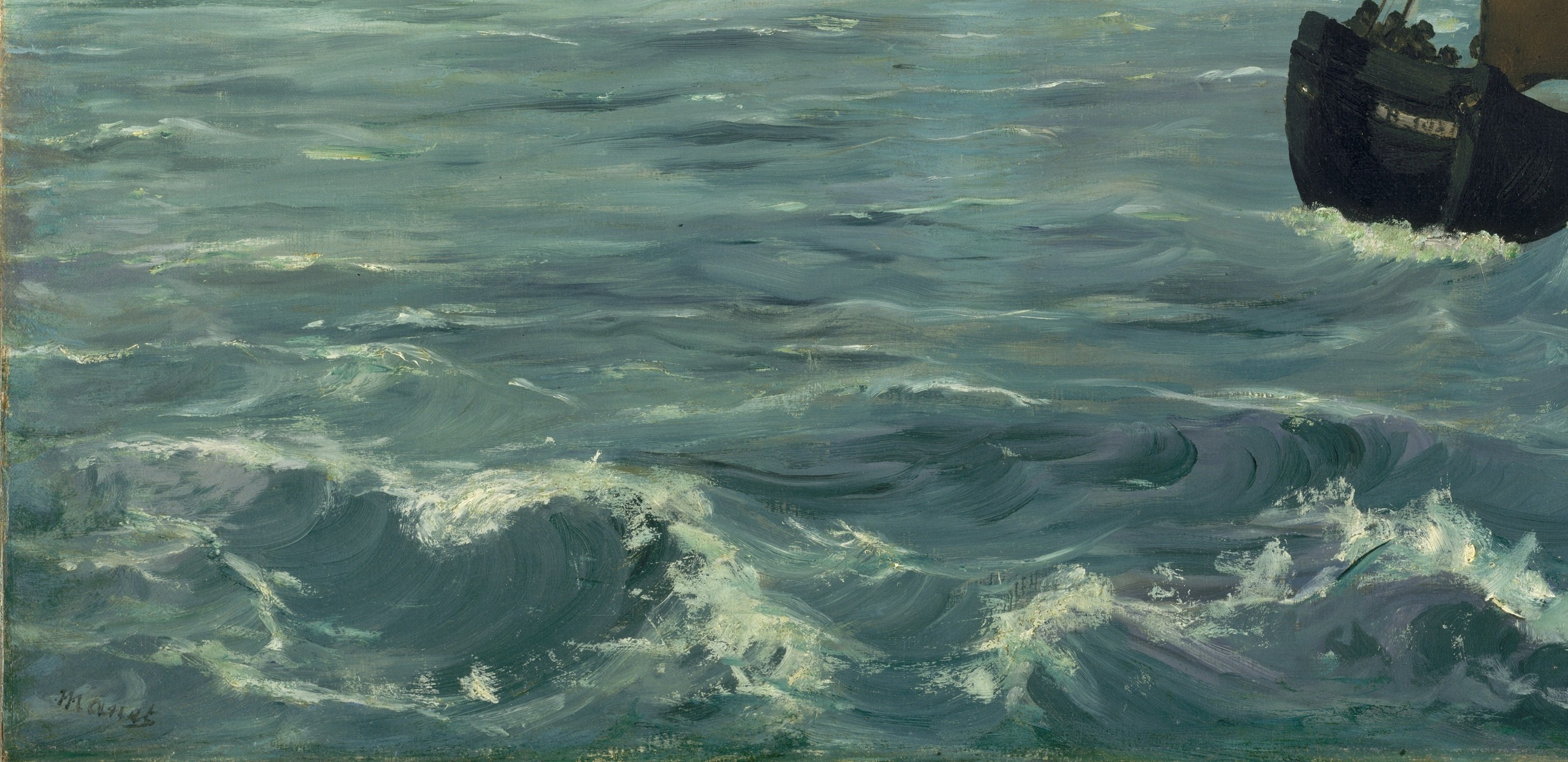
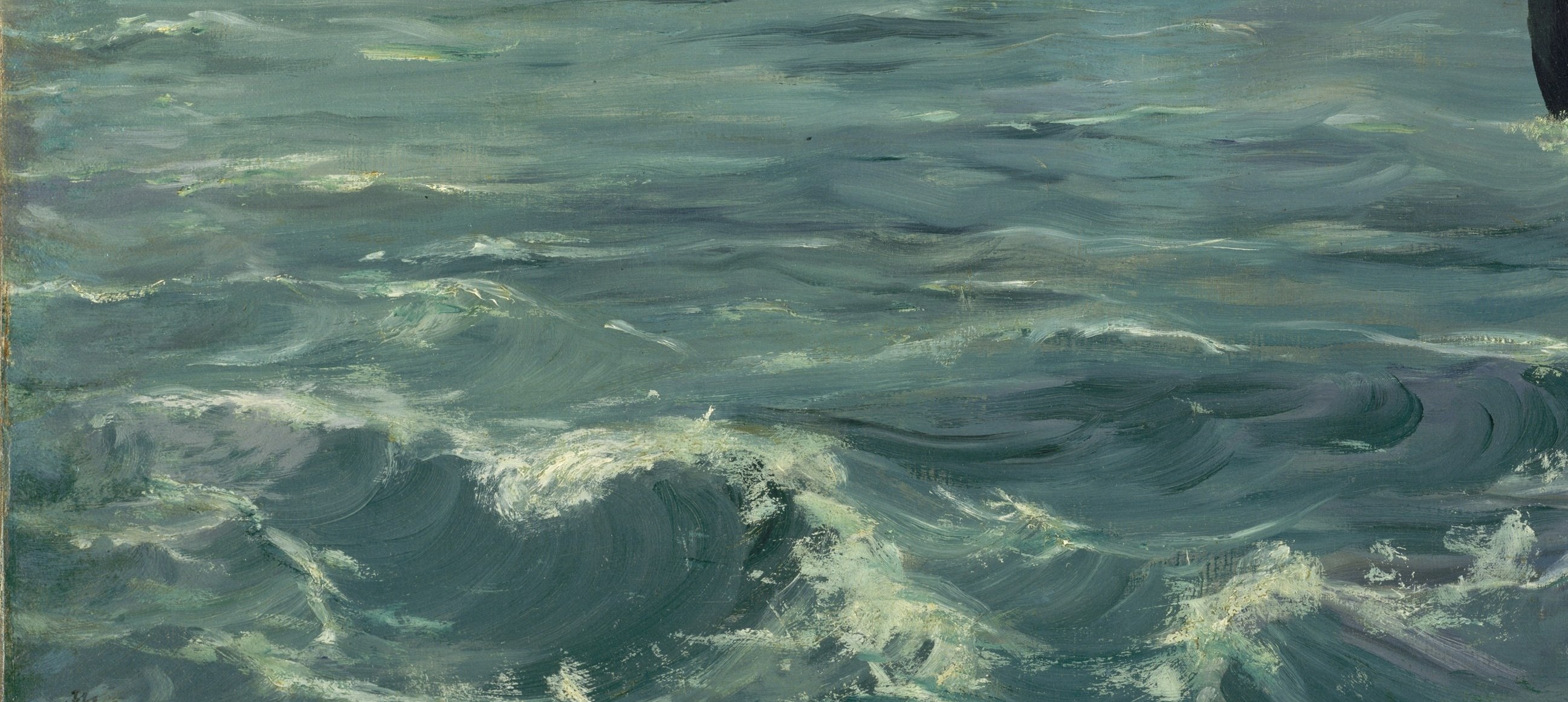
Most viewers miss the sea itself. Manet painted it with astonishing economy: bold turquoise strokes for the chop, scattered white slashes for foam, no labored detail. You can almost feel the wrist moving. This is an 1864 painting already thinking like Impressionism, capturing light, wind, and motion through speed rather than finish.
Manet called it simply The Sea: the Federal Ship Kearsarge off Boulogne-sur-Mer. The title he chose puts the sea first. Stare at the water a while, that's where the painter really was.
Details

Transcript
August, 1864. A warship anchors off Boulogne-sur-Mer. This is no background detail. The ship is the subject. Two months earlier, it sank the Confederate raider Alabama. That smokestack is the clue, steam, not sail. The new Navy. Now look how the sea is made. Not with a fine brush. Manet drags loaded strokes across the canvas. Just enough wind, just enough light. He painted modern life, and a modern sea, made fast and true.