The Satyr and the Peasant by Jacob Jordaens
Jacob Jordaens's "The Satyr and the Peasant," painted in 1622, brings to life one of Aesop's classic fables. This work, held at the State Hermitage Museum, explores themes of human nature and perception through a familiar mythological encounter.
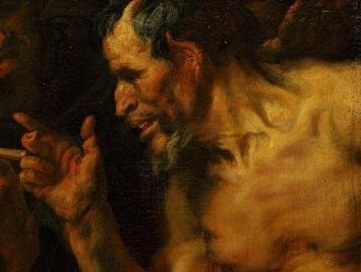
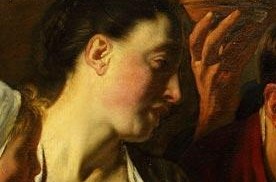
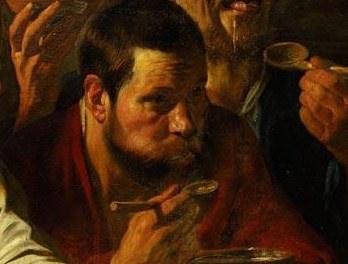
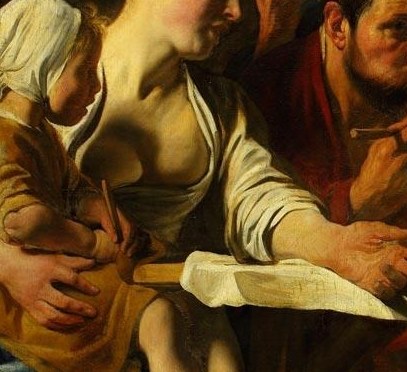
The painting depicts a satyr, a creature of the wild, interacting with a peasant family in their humble home. The satyr observes the peasant, who first blows on his hands to warm them, then on his soup to cool it. This seemingly simple act is central to the fable's moral.
In Aesop's tale, the satyr, accustomed to the straightforwardness of nature, finds the peasant's ability to produce both hot and cold from the same mouth deeply unsettling and untrustworthy. He cannot reconcile such duality, leading him to depart from the peasant's company. Jordaens, a leading Flemish Baroque painter, masterfully captures this moment of moral instruction and cultural clash.
Jordaens, who remained in Antwerp his entire life, was known for blending classical mythology with everyday life, creating works that were both grand and accessible. This painting is a wonderful example of how art can explore profound ideas using relatable, domestic scenes. What do you make of the satyr's reaction?
Details
Transcript
This painting illustrates an ancient fable by Aesop. A satyr, half-human and half-goat, visits a peasant family. The fable warns against people who say hot and cold from the same mouth. Here, the peasant blew on his hands to warm them. Then blew on his hot soup to cool it. The satyr, a creature of pure nature, cannot trust this duality. He leaves, unable to understand such shifting intentions.