The Fable of the Miller, His Son, and the Donkey by Elihu Vedder
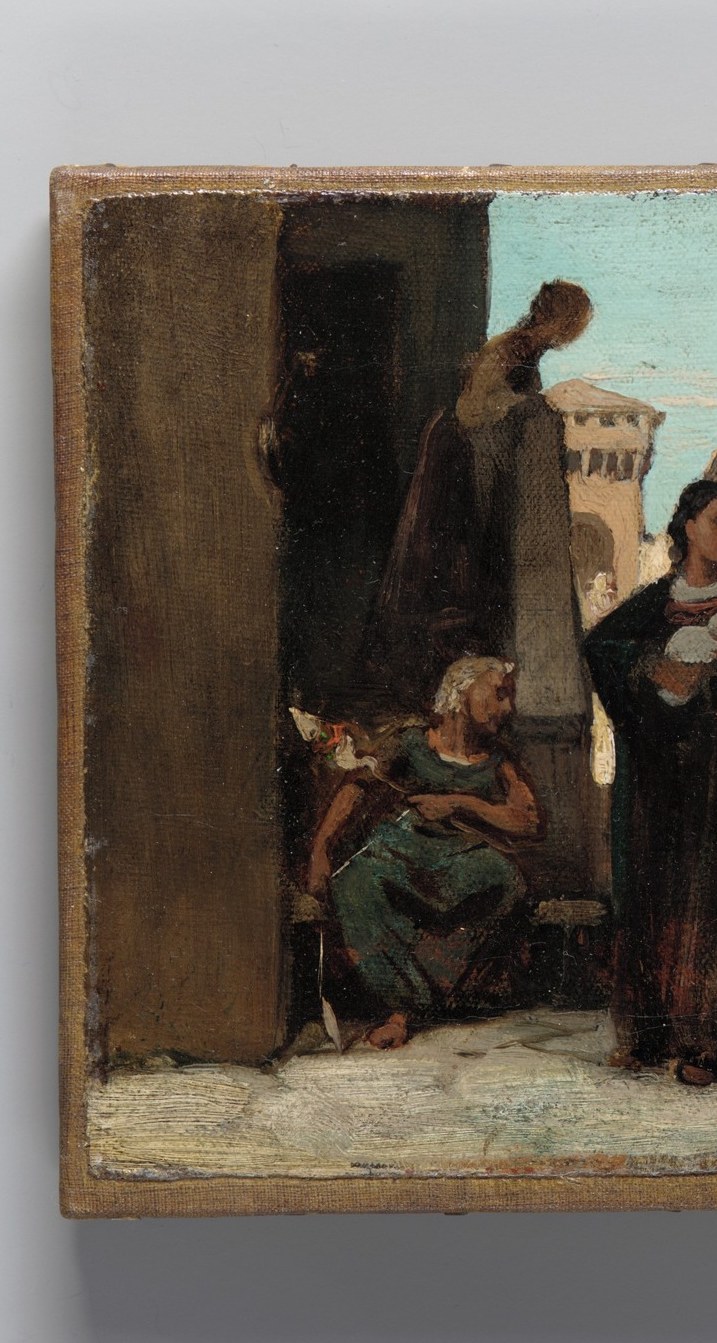
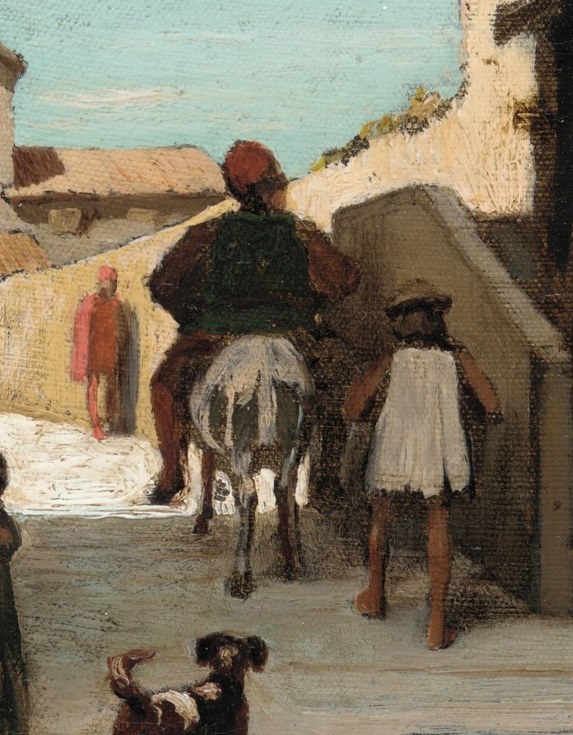
This is Elihu Vedder's "The Fable of the Miller, His Son, and the Donkey," painted in 1867 and now at The Metropolitan Museum of Art. The American artist sets an ancient Aesop's fable on a specific Italian street, recording the textures of a real place: the worn cobblestones, the campanile in the distance, the everyday traffic of donkeys and townspeople.
Look at the small group in the foreground. The miller stands beside a woman in dark robes, her body turned to shield an infant. Their faces are in shadow, while the donkey waits in full sun between them. Behind them, a scatter of background figures represents the advice-givers who drive the story's ironic moral about the impossibility of pleasing everyone.
Vedder painted this the year he turned 31, living and working in Italy. The country had only recently unified, and Vedder was part of a generation of American artists who made Rome their home. He would later become famous for his symbolist illustrations for "The Rubaiyat of Omar Khayyam," but here his realism anchors a moral tale in a world you can almost walk into.
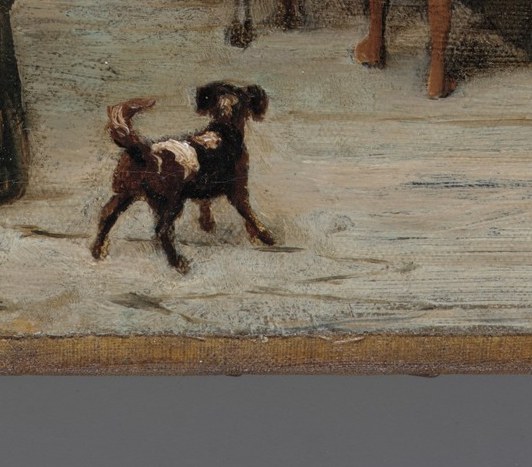
And the small dog in the foreground: indifferent, busy with its own business. It has no advice to give, and no interest in the miller's dilemma. Perhaps that is the real witness.
Details
Transcript
An old fable, told on an Italian street. The miller and his family, trapped by advice. The donkey at the center of the impossible problem. Vedder painted this in 1867, when Italy was still newly unified. The distant crowd keeps giving directions. A street dog, indifferent to human folly.