The Red Vine, Matinicus Island, Maine by George Bellows (American, 1882–1925)
In 1916, George Bellows was the most acclaimed American artist of his generation. He had built that reputation on paintings of New York City: crowded tenements, illegal boxing matches, the raw and chaotic energy of modern urban life.
So when he exhibited a quiet landscape of Matinicus Island, Maine, his critics turned on him. They called it a retreat from the real world, a betrayal of the American scene Bellows was supposed to document.
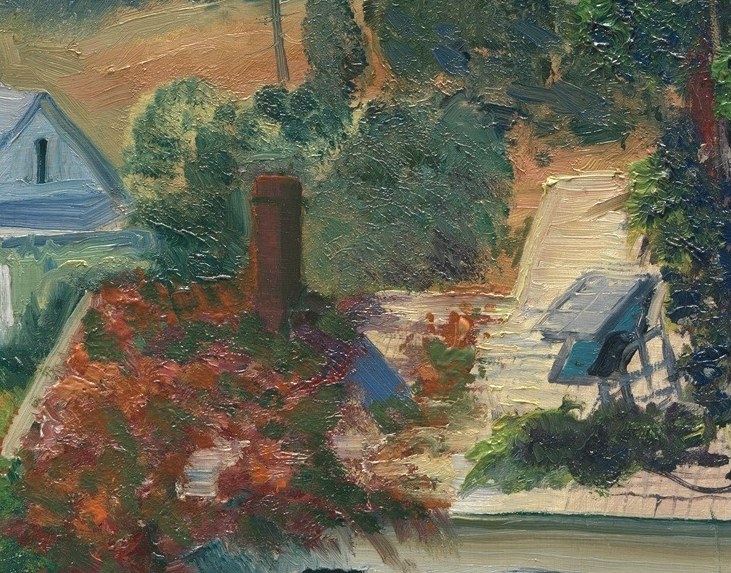
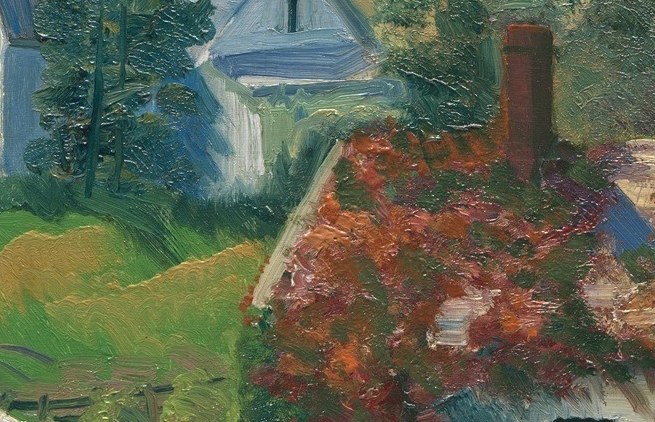
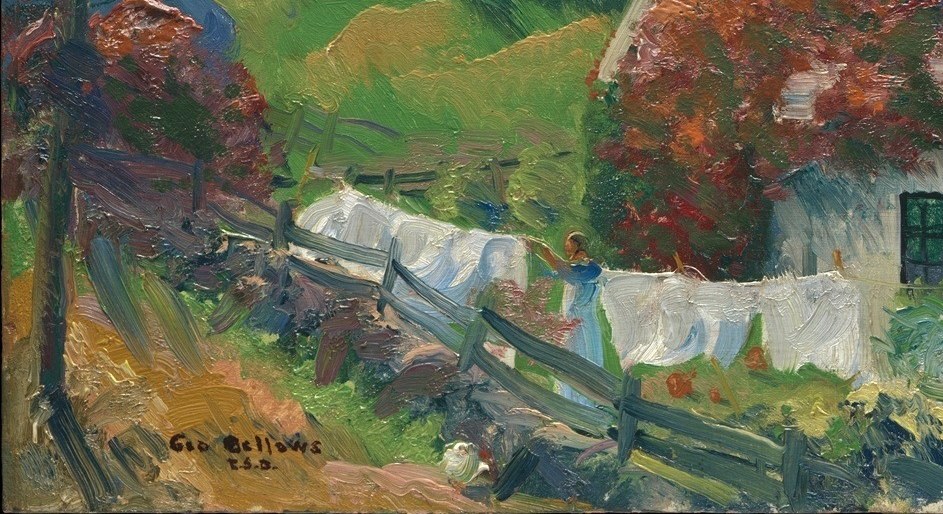
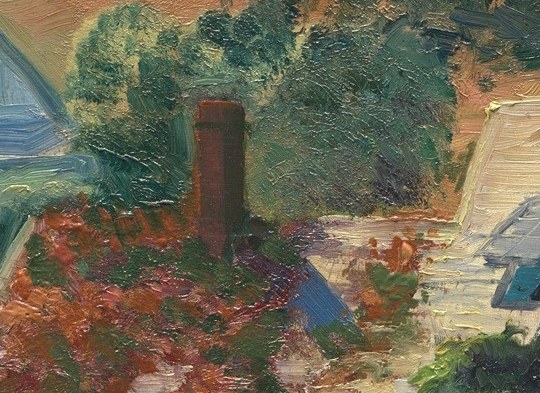
The painting centers on a white house with a red roof, laundry billowing on a line beside it. A vine with vivid red autumn foliage climbs near the structure, giving the work its title. In the background, a broad green hill rises toward an overcast sky, while bare trees at the right edge frame the composition.
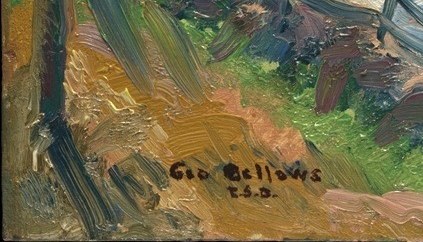
Bellows never saw it as a retreat. The same thick, urgent brushwork that electrified his city paintings fills this canvas. You can see it in the rough green scrub in the foreground, in the dense conifers at the upper left. He was painting an actual place, a real island community off the Maine coast, with the same commitment to truth he brought to the Lower East Side.
The painting is held by The Metropolitan Museum of Art. What do you see in it: an escape from modern life, or a different corner of the same real world?
Details
Transcript
By 1916, George Bellows was the most acclaimed American artist of his generation. His fame came from brutal, chaotic city scenes. Then he painted this quiet island. Critics called it a betrayal. A retreat from modern life. But look at the paint itself. The brush never stops moving. The same wild energy, just quieter. Matinicus Island, Maine.