Bladelin Triptych Nativity (central panel) by Rogier van der Weyden
The central panel of Rogier van der Weyden's Bladelin Triptych, painted in 1445, is a masterpiece of the Northern Renaissance, now housed in the Gemäldegalerie Berlin. It depicts a humble Nativity scene, yet holds subtle clues about its origins.
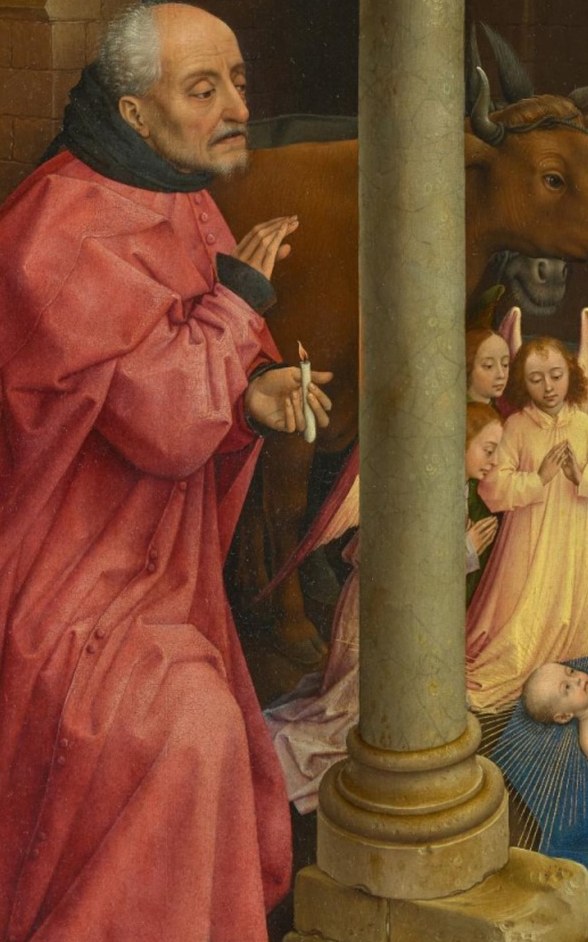
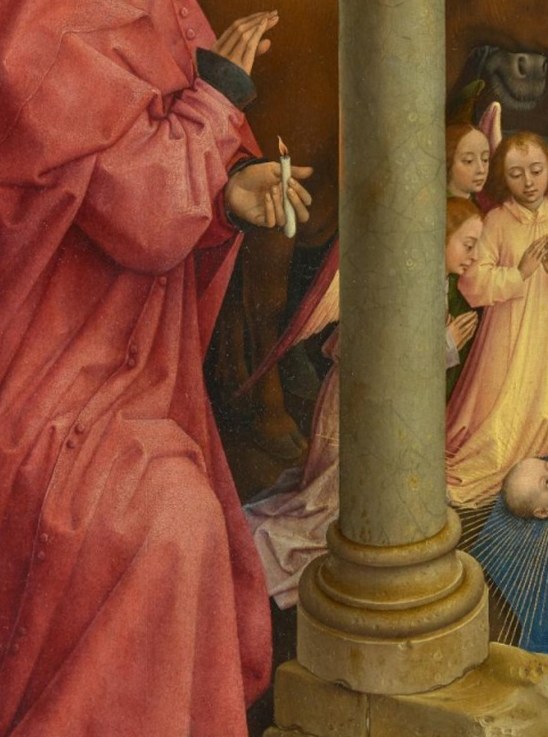
Notice the radiant infant Jesus, the focus of the painting, and Mary's devout posture. Then, look closely at Joseph in his vibrant red robe. The richness of his garment is a deliberate detail.
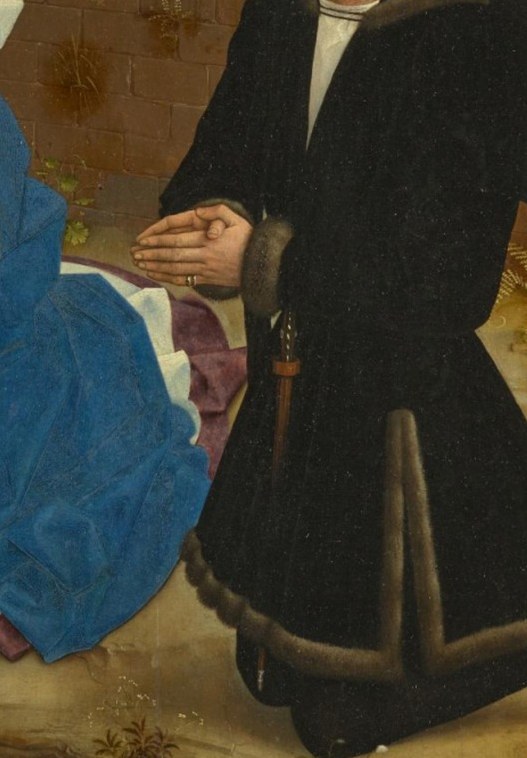
Rogier van der Weyden often included the painting's patrons within his religious works. Joseph's prominent and finely dressed figure here is believed to be a portrait of Pieter Bladelin, the man who commissioned this triptych, subtly integrated into the sacred narrative. This practice allowed patrons to visually participate in the divine story.
What other subtle details do you notice in the composition?
Details
Transcript
This Nativity scene by Rogier van der Weyden was painted in 1445. The painting centers on the infant Jesus, radiating light on the ground. Mary kneels, her hands humbly folded in devotion. But look closely at the figure in the red robe, Joseph. His opulent red fabric suggests a subtle hidden detail. Van der Weyden painted donors, like this one, into his sacred scenes.