The Annunciation by Giannicola di Paolo
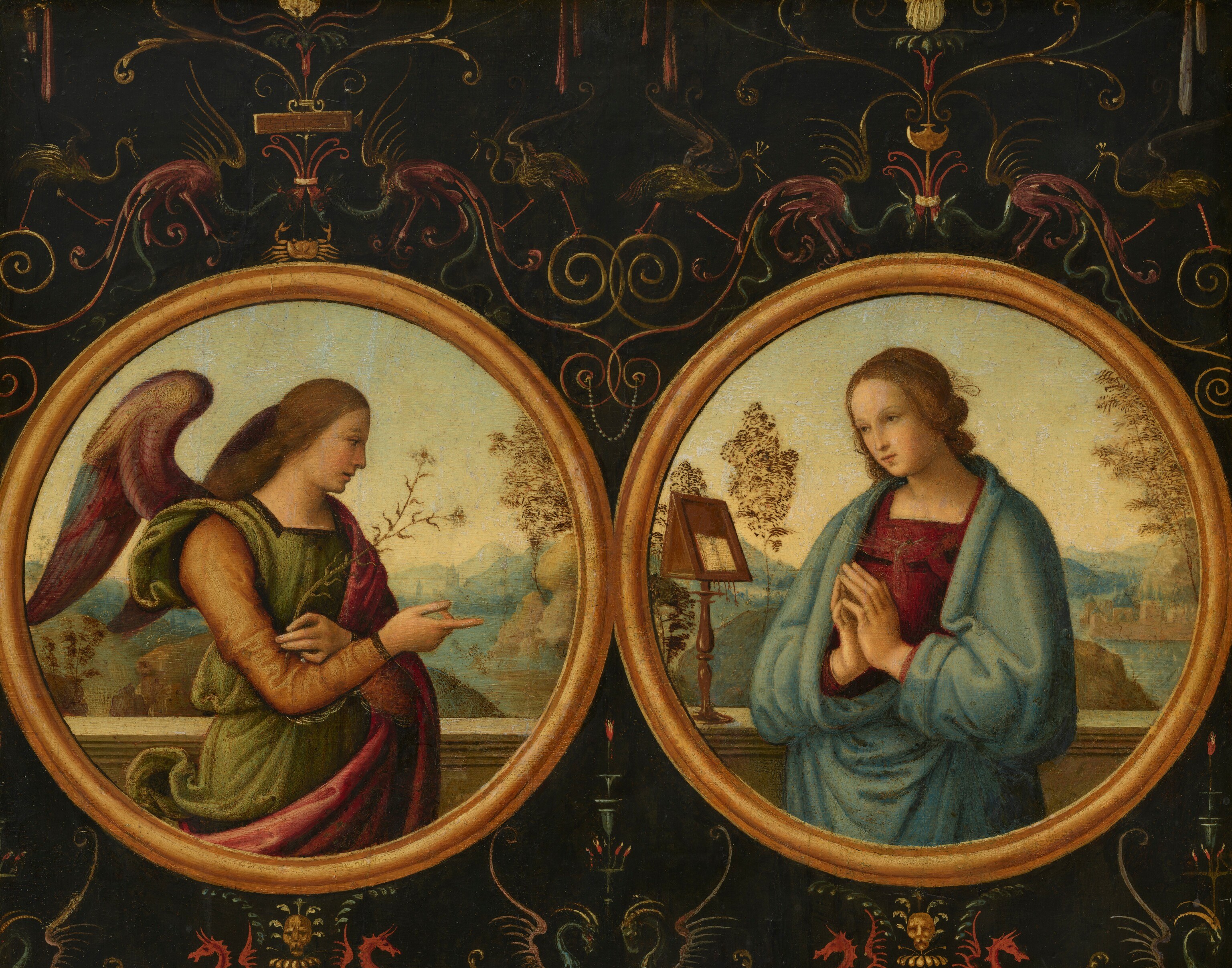
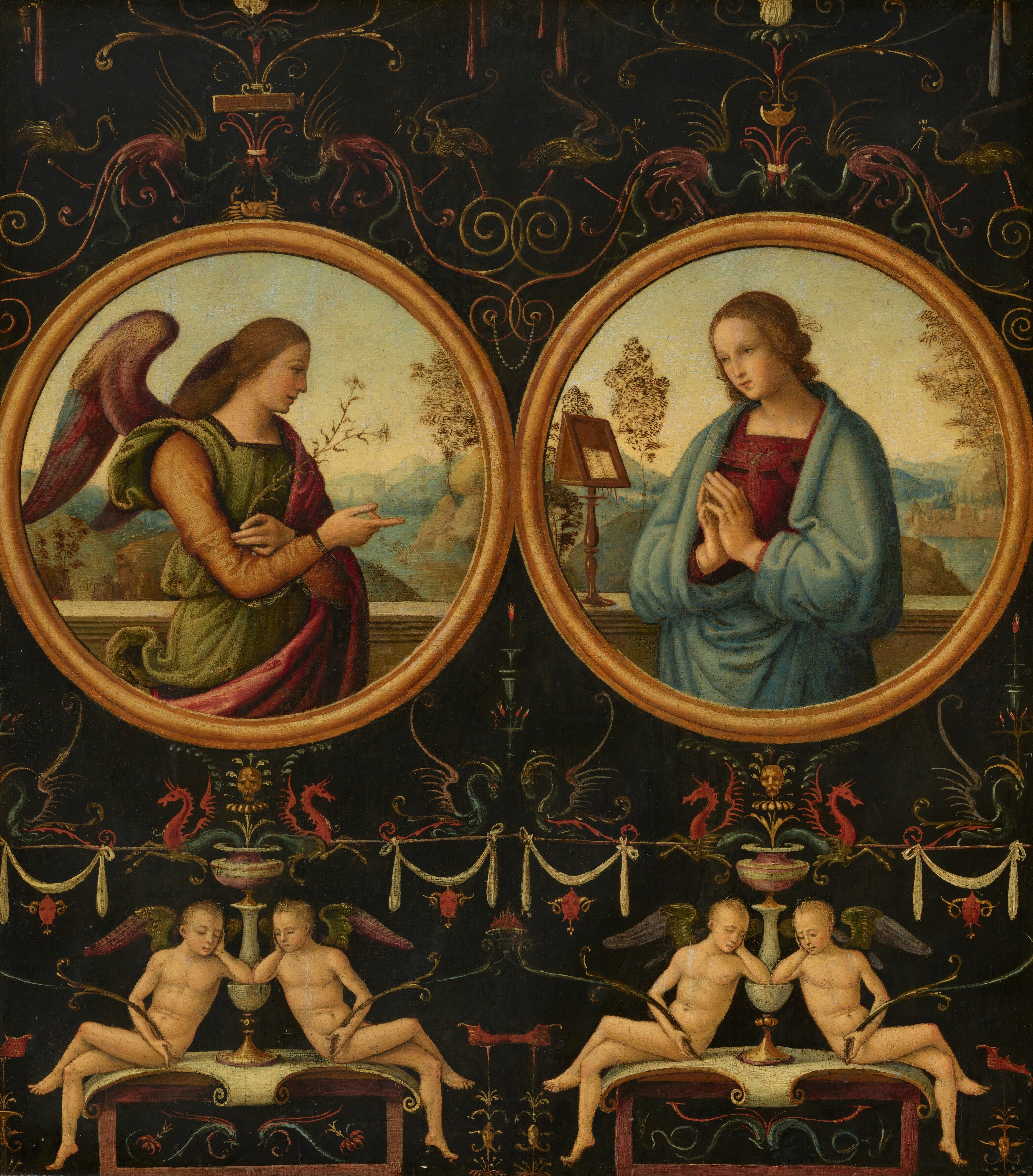
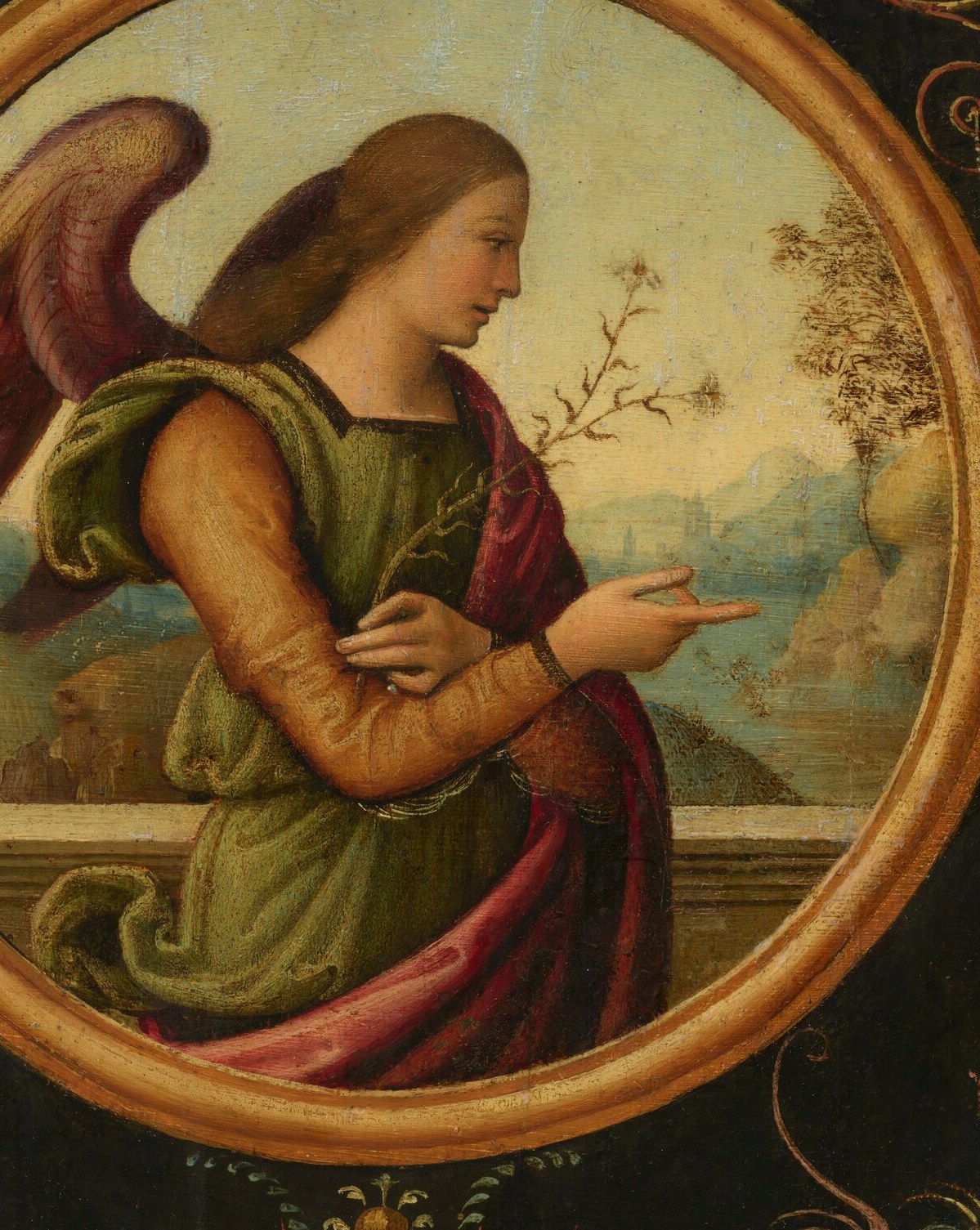
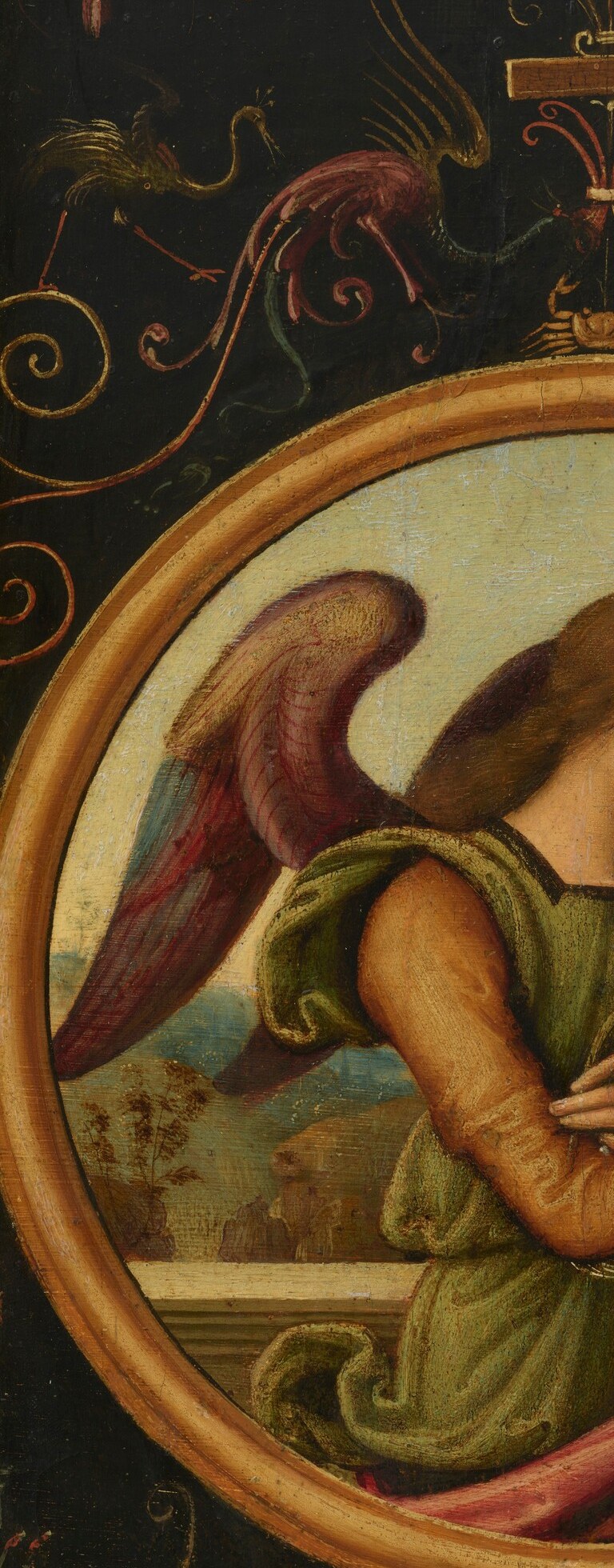
The Annunciation, by Giannicola di Paolo, painted around 1512, and the trick is the thing you don't notice first. This looks like two round devotional paintings mounted in an ornamental frame. It is not. The entire surface is a single flat panel of wood. The artist painted three distinct visual worlds, the angel's scene, Mary's scene, and the gilded grotesque background, into one continuous illusion.
Look at the dark ground between and around the two tondi. That's not a physical frame. Those gold arabesques, the hybrid faces tucked into the foliage, the small animal forms at the upper margin, all of it is oil paint, rendered with the same brush that modeled Gabriel's wings. The panel never stops being flat. Your eye just believes it does.
Giannicola di Paolo was active in Perugia in the early 1500s, in the orbit of Perugino. This Annunciation format, twin roundels on a decorated field, is unusual. Most painters gave Gabriel and Mary a single unified room or garden. Here they inhabit separate circles, two self-contained visions held apart by a painted wilderness of ornament. It is a sophisticated courtly conceit, probably made for a patron who wanted a painting as intellectually elegant as it was devout.
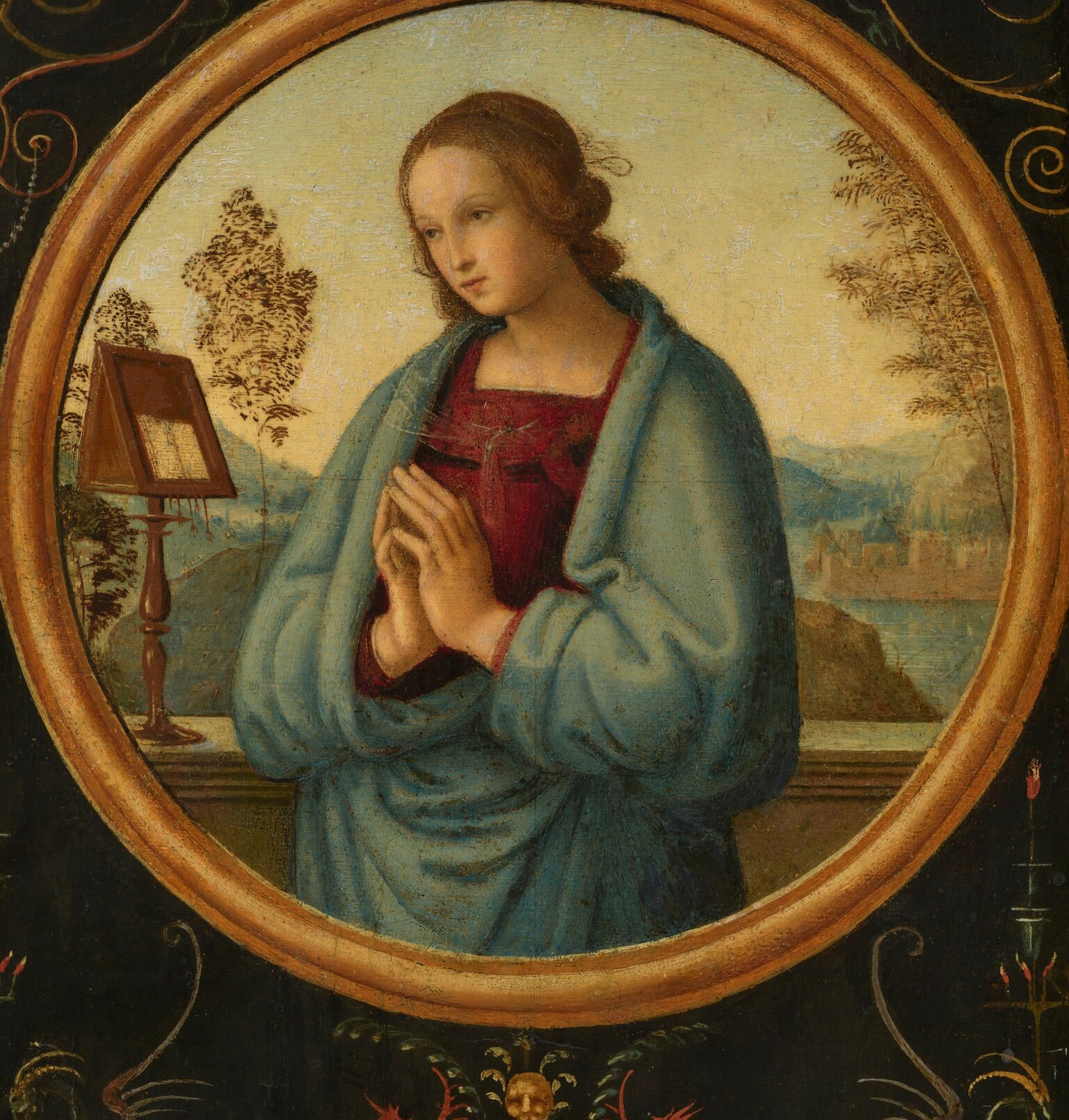
Mary's blue mantle is ultramarine, ground from lapis lazuli imported at staggering cost, a pigment often specified by contract for the Virgin alone. The painter deployed it knowing the patron would recognize the expense. Every choice here serves the same end: making oil on wood feel like three different realities sharing one surface. And after five hundred years, it still works.
Details
Transcript
It looks like two round paintings set in a frame. They glow like they're lit from within. But the dark background between them is also paint. Gold vines. Hybrid faces. A painting about paintings. The angel's green robe holds impossible folds. Mary's blue mantle is ground lapis lazuli, the costliest pigment there was. All three surfaces were painted at once, on a single flat panel.