Venice: The Rialto by http://www.wikidata.org/.well-known/genid/2236640b3007c0545f40989777fe16cb
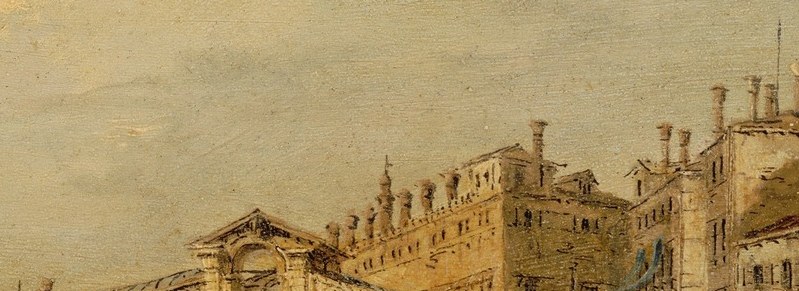
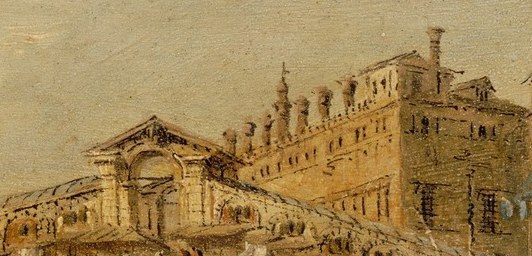
This is "Venice: The Rialto," painted by Giovanni Migliara in 1800. It is an eyewitness record of a city that was about to disappear.
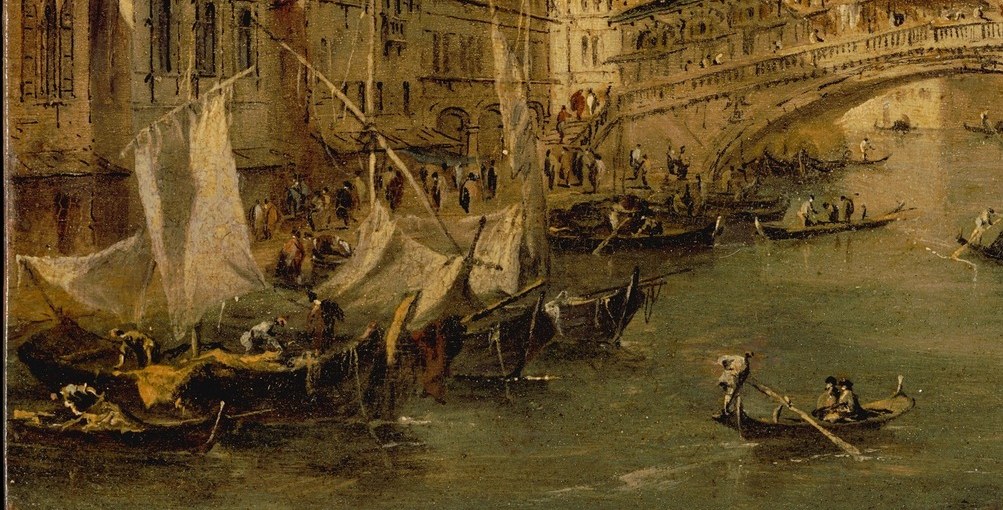
The Rialto Bridge was not a tourist spot. Look at the covered arcades along its spine, that was a luxury shopping arcade, the commercial nerve center of Europe. Spices, silks, and gold passed through those shops. The gondolas in the foreground were not pleasure boats. They were the taxis and delivery vans of a working maritime empire.
In 1800, Venice was still the capital of the Most Serene Republic, an independent state that had controlled Mediterranean trade for a thousand years. Migliara painted this cityscape as a document of ordinary Venetian life: the light, the water, the crowds, the commerce. He could not have known that Napoleon’s army was just five years away from ending that independence forever.
The title is modest, but the painting is a witness. It shows the exact moment before one of the world’s most enduring republics became a museum piece.
Details
Transcript
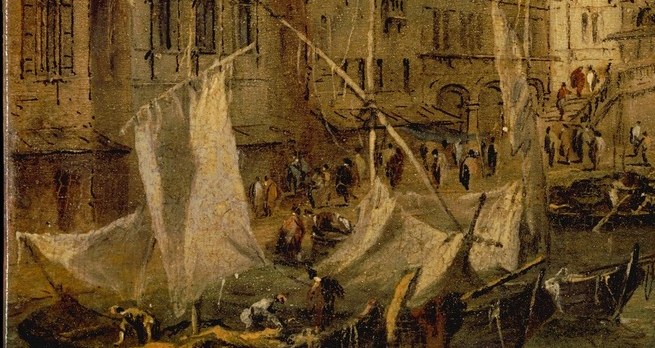
It looks like a postcard of Venice. But look at the bridge. It is a shopping mall. Those covered arcades held the richest market in Europe. Spices, silk, and gold changed hands inside those shops. Now look down at the water. Gondolas were not romantic. They were the commuter traffic of a working port. And beyond the arch: the working waterfront that kept a Republic alive. In 1800, Venice was still an independent republic. The painter recorded it like an eyewitness.