In Full Sunlight (En plein soleil) by James Tissot
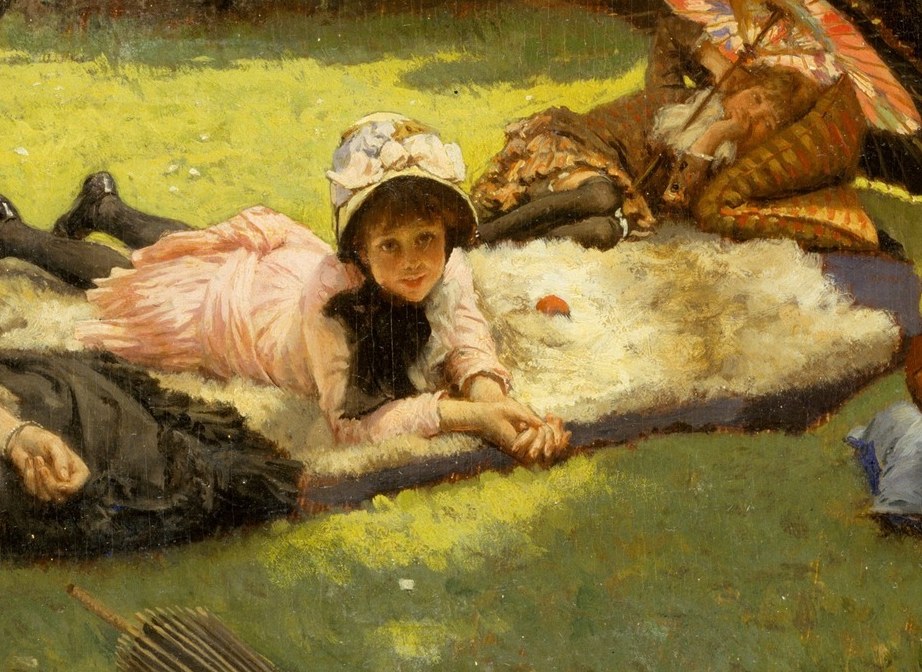
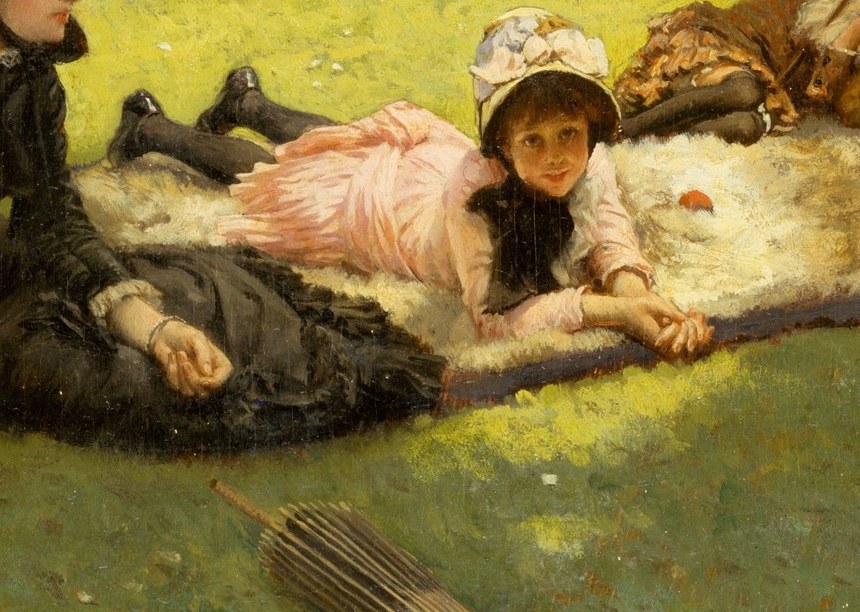
James Tissot’s ‘In Full Sunlight (En plein soleil)’ (c. 1881) is a masterclass in coded Victorian leisure. Painted during his London period, it looks like a simple garden scene, but every object is a social signal.
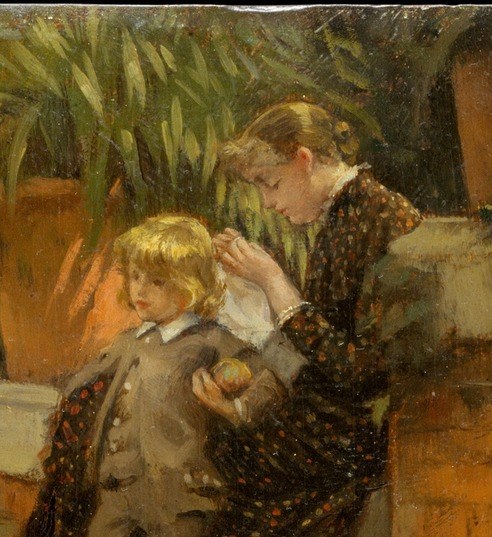
Look first at the two parasols. The orange-red one lies discarded on the grass, wide open and abandoned by the reclining girls. But the boy on the right holds his furled tight, upright and unused. A furled umbrella in blazing sunshine is pure Victorian propriety. He is prepared for weather that isn’t coming because a gentleman is always prepared.
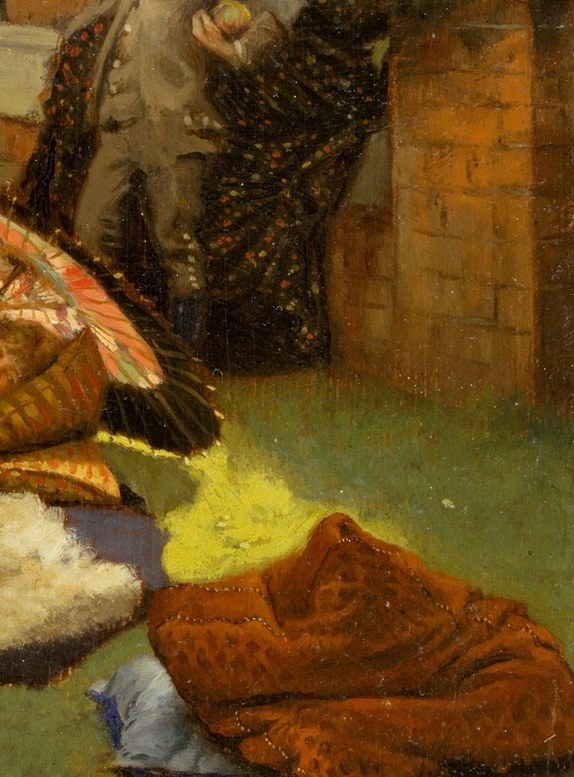
Tissot builds the scene inside a walled garden. The brick wall behind the foliage seals the space, and a second adult figure hides in the deep shade under a tree. These are the structural guards that let the girls collapse onto the white fur rug. Leisure here is not freedom. It is a bargain with protection.
Tissot himself was an expert observer of social performance. A Frenchman in London, a painter of fashion and manners, he understood that a parasol on the ground and an umbrella in the hand could tell the whole story.
Details

Transcript
They are collapsed in the grass, utterly undone by the heat. The open parasol, cast aside. But the boy on the right holds his umbrella tight as a rifle. Furled. Unused. A code: he is still on duty. An adult lurks in the deep shade, barely visible. This is not a park. A brick wall seals a private garden. These girls can abandon their sunshade because the wall and the watchers hold the world at bay.