Road in the Woods by Constant Troyon
Constant Troyon's "Road in the Woods," painted in 1845 and held at the Metropolitan Museum of Art, initially appears as a serene landscape, but hidden within are small details that tell a subtle story.
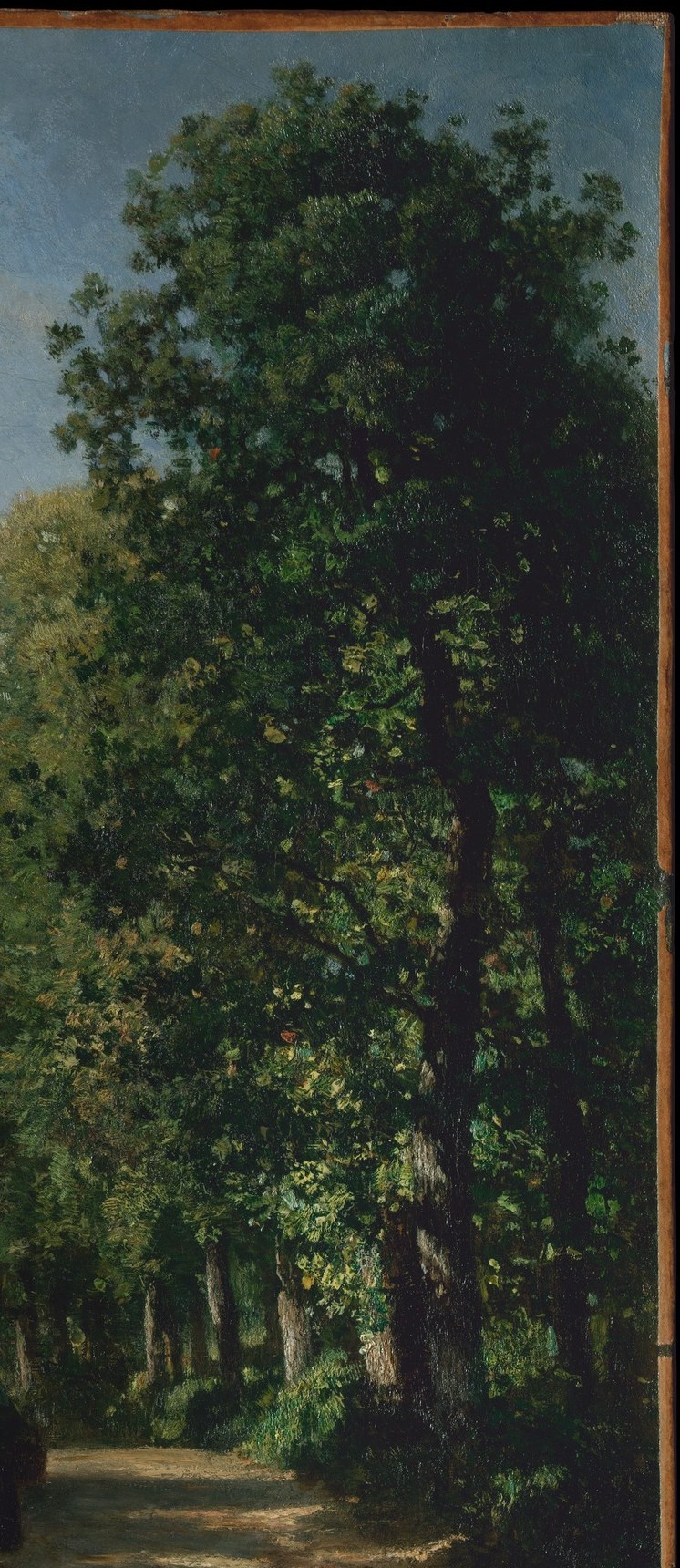
Troyon, a key member of the Barbizon school, focused on depicting the French countryside with realism. Notice how the light filters through the dense foliage, creating a tranquil atmosphere on the winding dirt paths. These details capture a sense of everyday life.
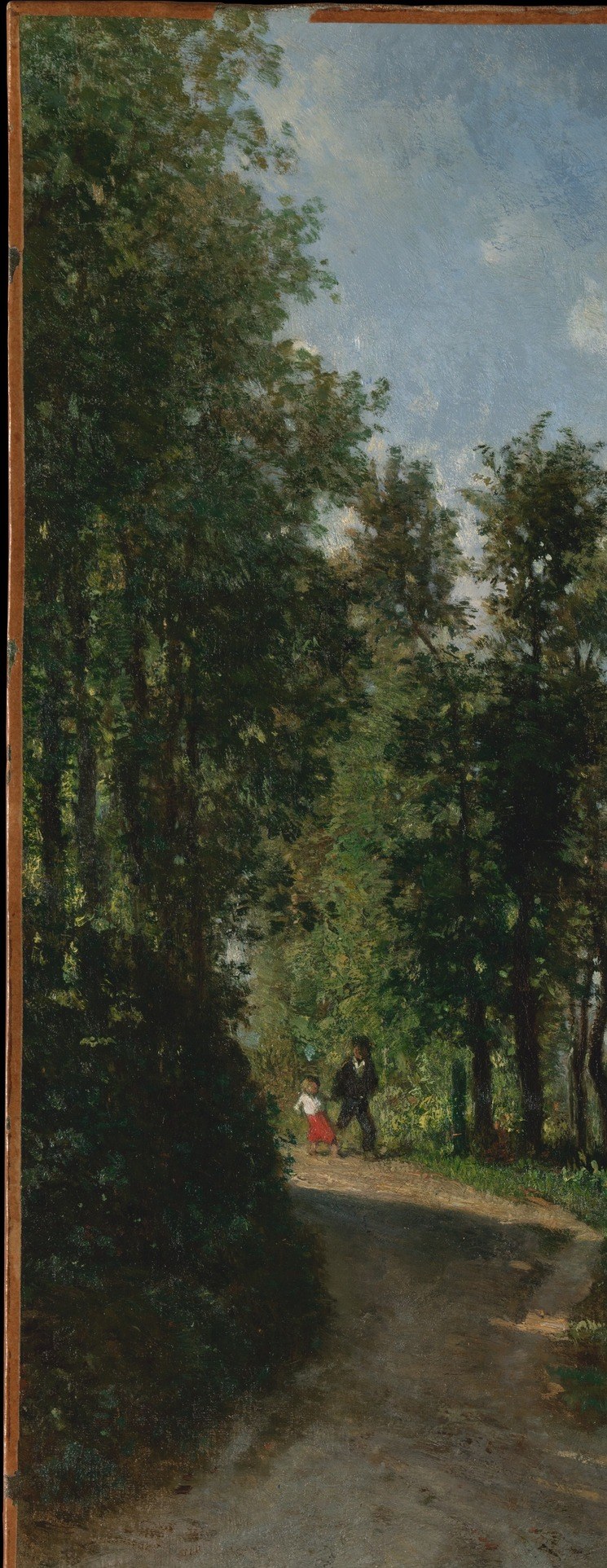
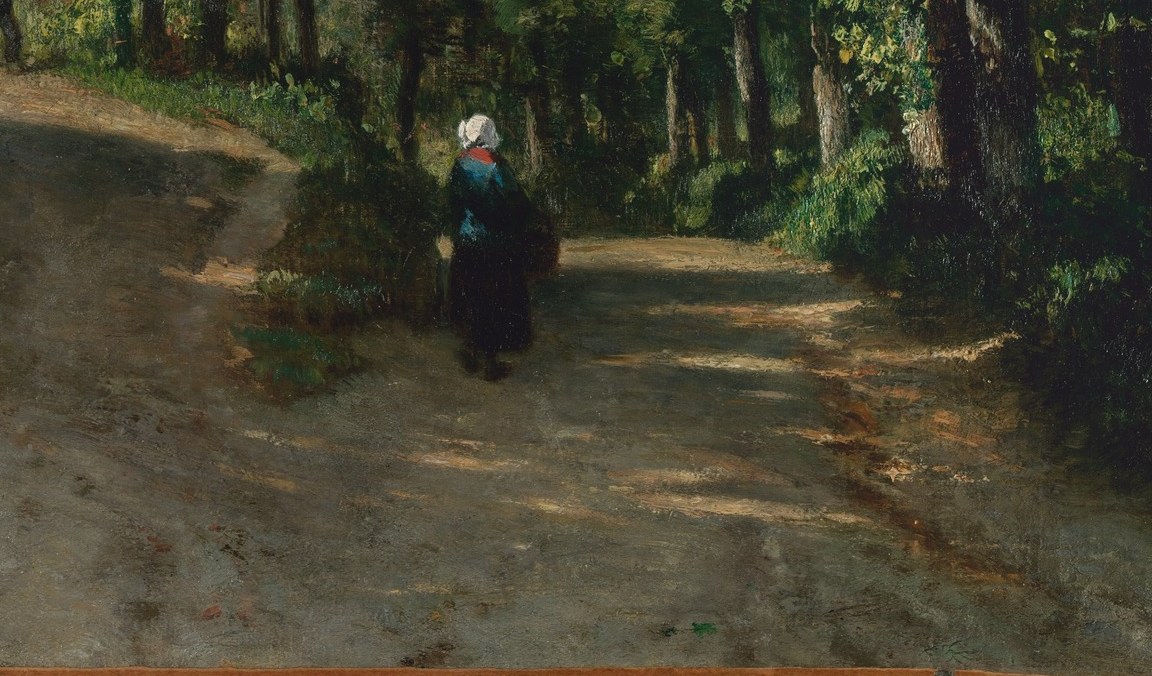
Look closely at the figures traversing the paths: a woman with a basket on one road, and a man and child on another. Their presence adds a human element, hinting at daily journeys and quiet companionship, emphasizing the painting's grounding in natural, unidealized scenes. Troyon drew inspiration from 17th-century Dutch landscape painters for his approach to these wooded environments.
These small figures remind us that even in grand landscapes, the human experience is often present, if we only take the time to look.
Details
Transcript
This peaceful road winds through a dense 19th-century forest. The painter, Constant Troyon, was part of the Barbizon school. They focused on capturing the French countryside with realism. But look closely at the dirt road in the distance. A woman with a basket walks with quiet purpose. And on the upper road, a man and child journey together.