A Woman Playing the Theorbo-Lute and a Cavalier by Gerard ter Borch
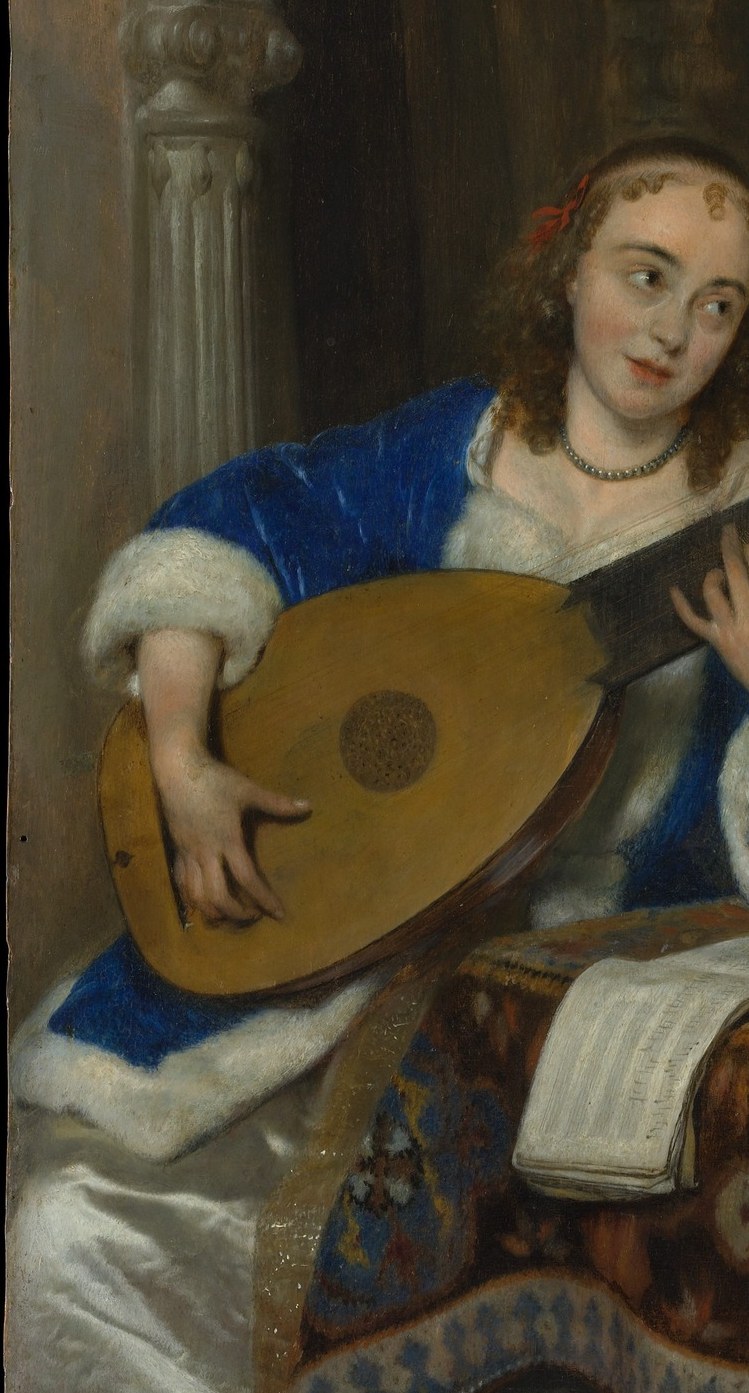
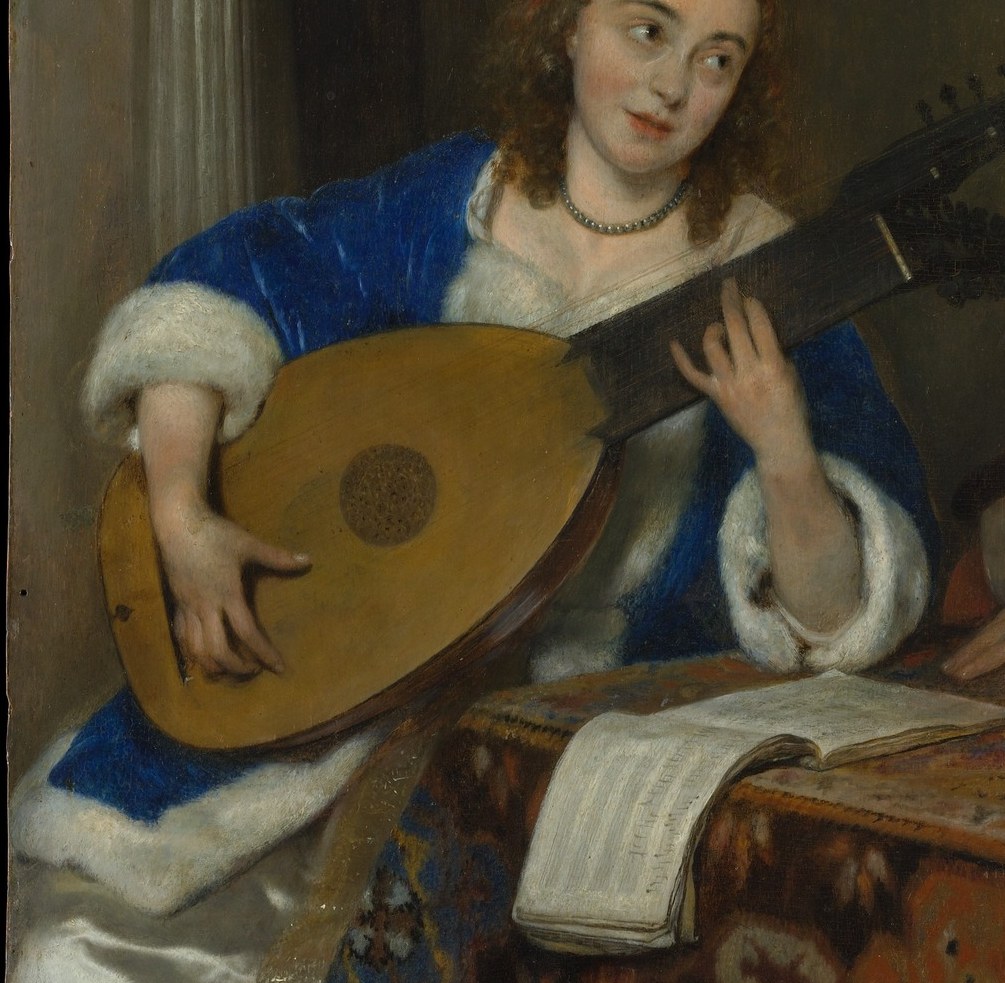
A Woman Playing the Theorbo-Lute and a Cavalier, painted by Gerard ter Borch around 1658, lives a quiet life now at the Metropolitan Museum of Art, but its history is anything but peaceful. Ter Borch was a master of the interior, a painter of private moments and the delicate textures that fill them. His satin is legendary, his faces are telescopes into thought, and this work is a perfect example of his restrained genius.
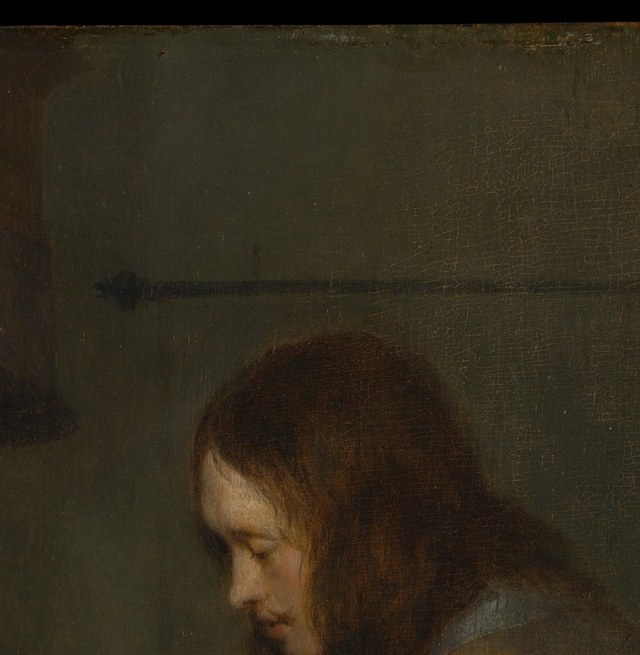
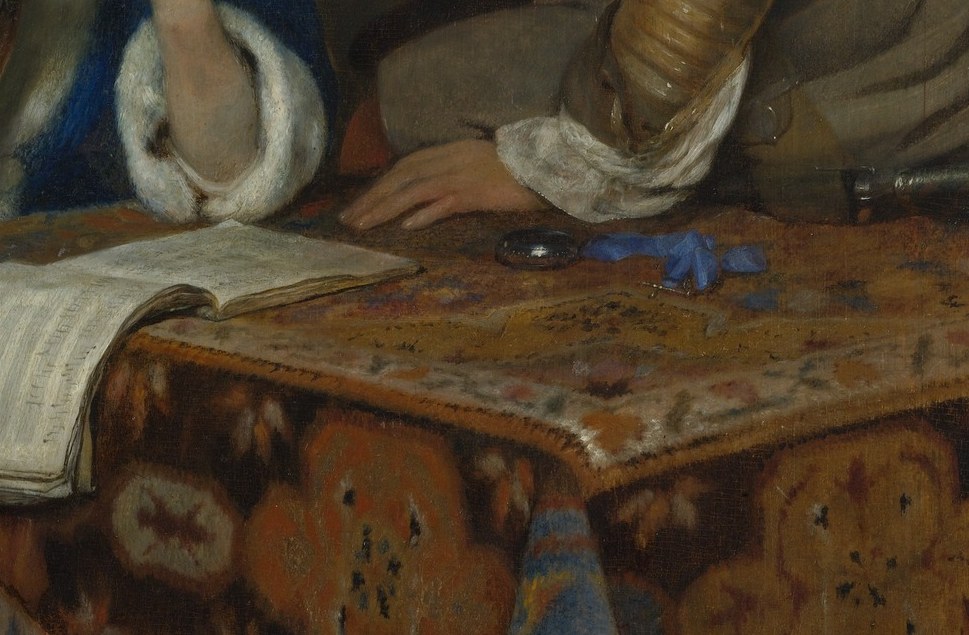
Look at the light on her blue dress. That specific, liquid sheen is Ter Borch’s signature, a technical feat that painters have studied for centuries. Then look at the young man’s face. His eyes are on the sheet music, not her face, which changes the scene entirely. Is he a suitor, a teacher, or simply a fellow musician lost in the same piece? The open score on the table might hold the answer, its notation a recoverable clue to the invisible music in the room.
In 1979, a thief slipped into the museum after hours and cut this panel right out of its frame. But the crime didn't go as planned. The painting’s fame rendered it radioactive on the black market; no fence would risk handling such a recognizable masterpiece. Faced with a priceless object they could neither sell nor display, the thieves eventually returned it. The museum recovered the work, and the criminals learned a strange lesson about the cage that renown can build around a piece of art.
What do you do with a treasure you can’t keep and can’t sell? The music in this room never stopped.
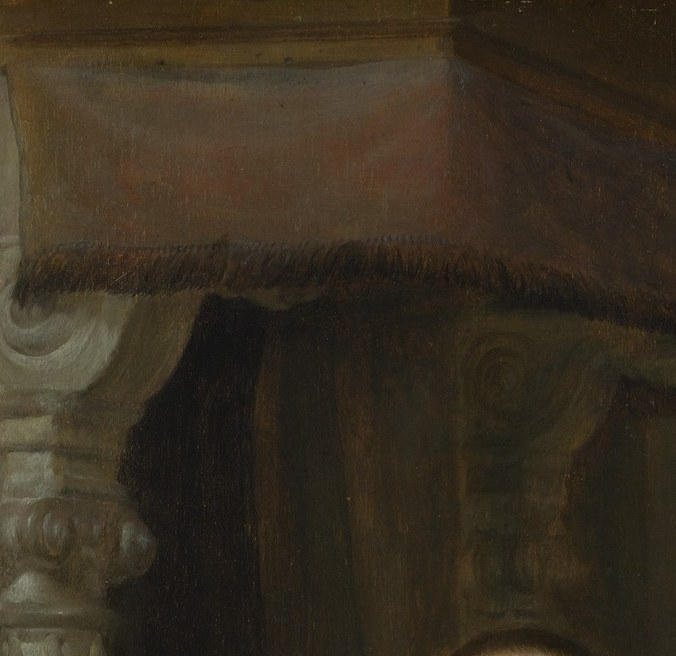
Details
Transcript
This quiet scene holds more than music. She plays for him, or perhaps with him. His eyes fall on the score, not on her. Ter Borch made the blue satin ache with light. In 1979, thieves sliced it from its frame in the dead of night. The museum had no payment. The thieves had no patience. They gave it back. Free. Because no fence would touch it. It was too famous to sell, and too beautiful to burn.