Olive Trees by Vincent van Gogh
Vincent van Gogh painted 'Olive Trees' in November 1889, six months after voluntarily entering the asylum of Saint-Paul-de-Mausole in Saint-Rémy-de-Provence. It hangs today at The Metropolitan Museum of Art, one of a series of at least fifteen olive grove paintings he made that fall, working in the open air under supervision during periods of relative calm.
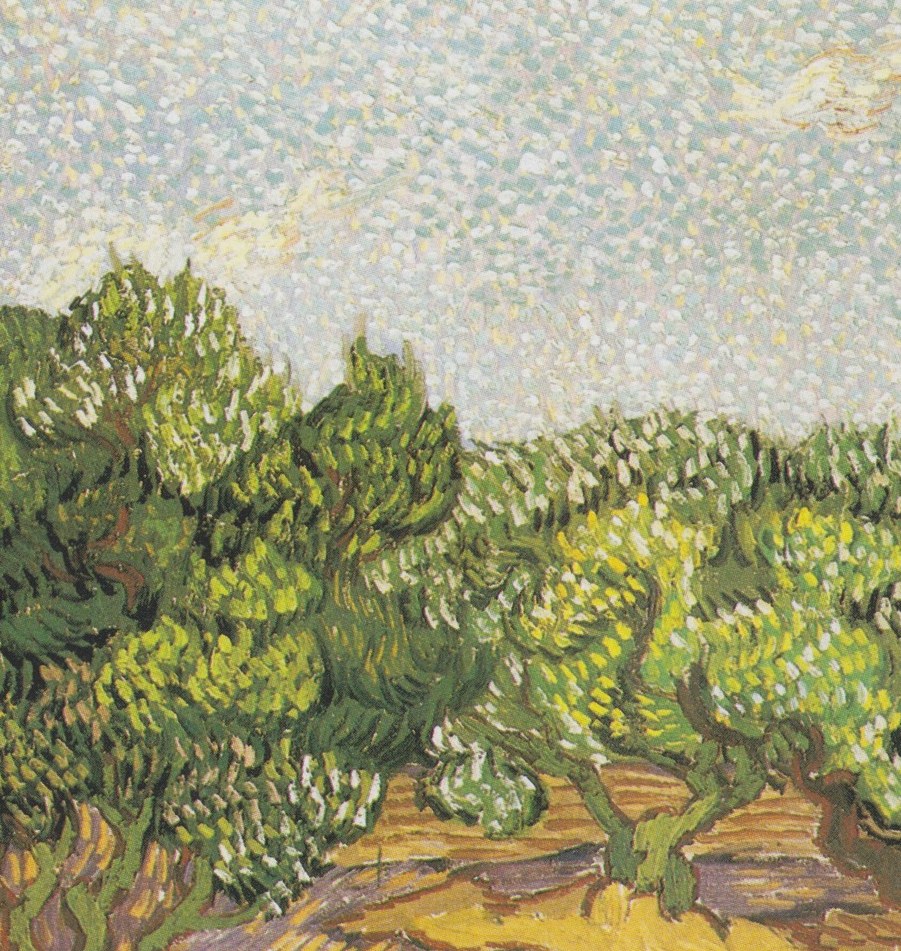
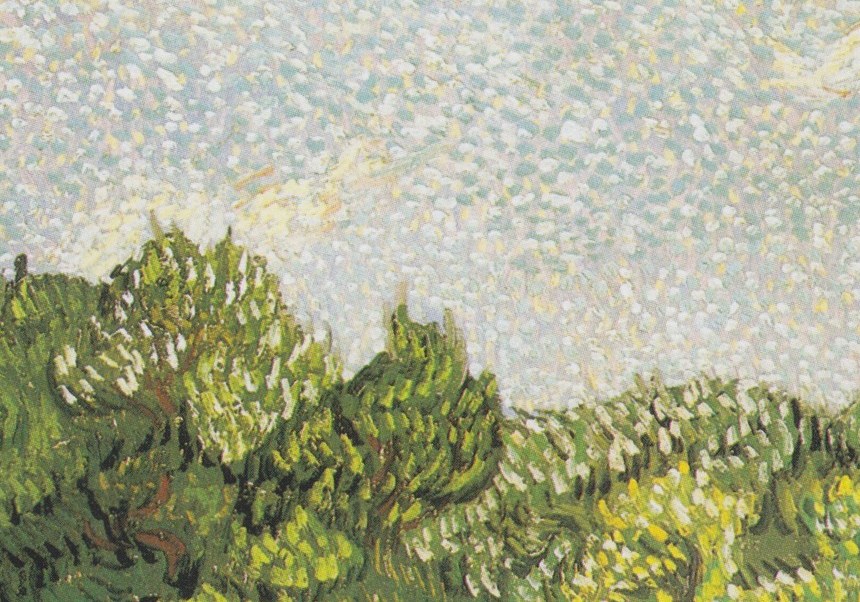
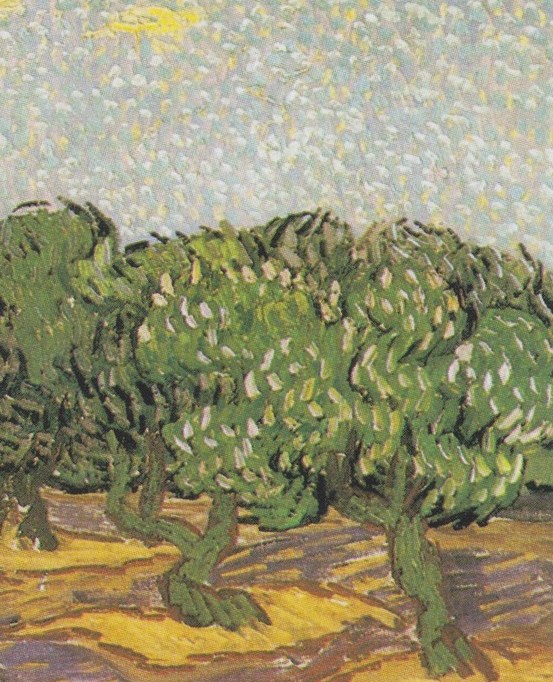
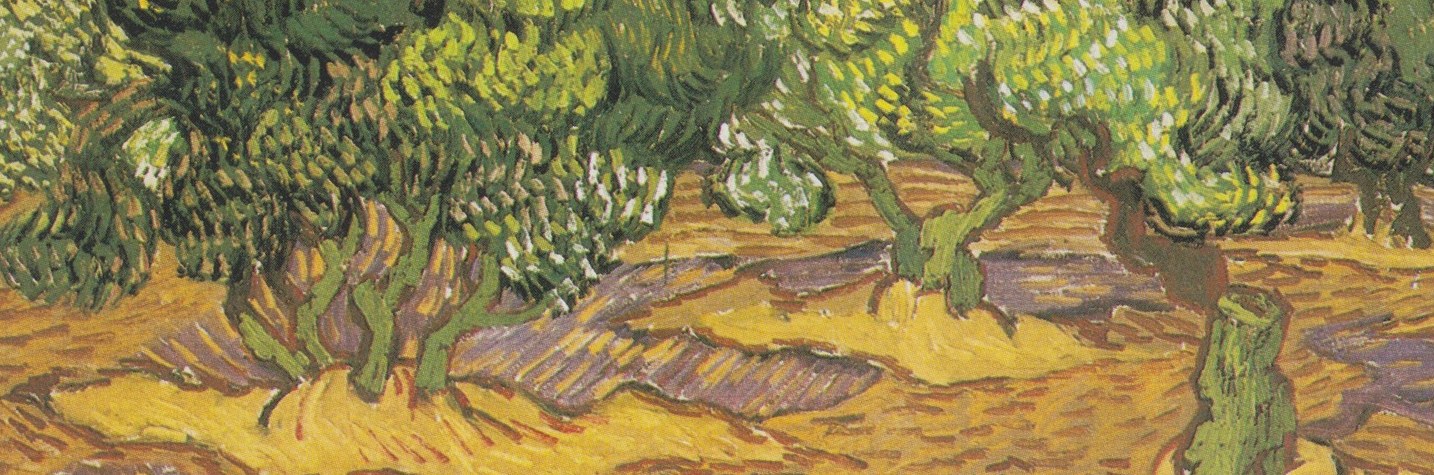
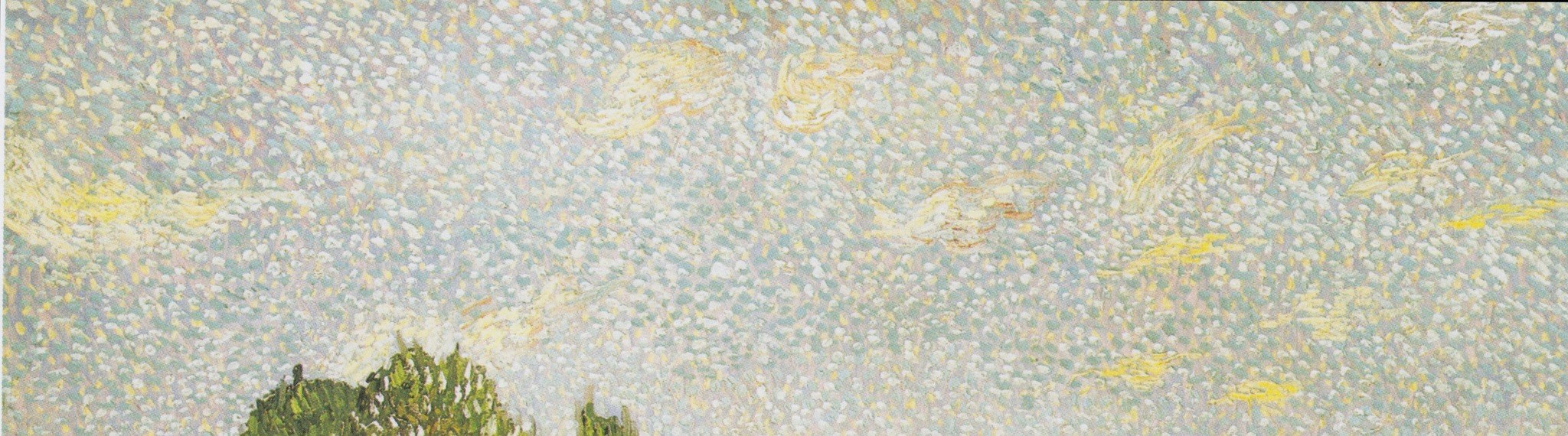
Look at the sky, where short directional strokes in pale blue, yellow and green create a rhythmic vibration that a still, blended Academic sky would never risk. Drop to the trunk bases meeting the golden field: the near-black against saturated yellow is the most charged boundary in the painting. Van Gogh refuses to soften that collision. Across the foliage, paint is laid on so thickly in discrete dabs of yellow-green, dark green and grey-green that the ridges still catch light.
The olive groves gave Van Gogh a subject he thought sacred, but the paintings nearly broke his fragile standing among the avant-garde. In January 1890, he sent six works to Brussels for the annual exhibition of Les XX, the progressive group that had invited him. At the opening dinner, a shouting match erupted over his canvases. The painter Henri de Groux called them laughable and refused to show his own work beside them; Henry de Groux stormed out and resigned from the society. The critic Octave Maus defended Van Gogh so fiercely that the row escalated toward a duel. Toulouse-Lautrec, present that night, had to be talked down from challenging de Groux himself.
Van Gogh was not there. He received the news at Saint-Rémy in a letter from his brother Theo, who described the ugliness. The painter who had made this grove with such care learned that his work could break friendships and nearly draw blood. What do you think drove that explosion: the paint, or what people feared the paint meant?
Details
Transcript
1889. A painter checks himself into an asylum in Saint-Rémy. His window looks out on the walled garden and the olive groves beyond. He paints this there. He calls it 'exaggerated' but true. A few months later, he sends a batch of olive paintings to Brussels. The avant-garde group Les XX invites him to exhibit. At the opening, a debate over his work turns into a screaming match. One member resigns. Another challenges a critic to a duel. Van Gogh watches his friends tear each other apart over paint on canvas.