New York Harbor with Pilot Boat "George Washington" by Chambers, Thomas
View the artwork: New York Harbor with Pilot Boat "George Washington" →
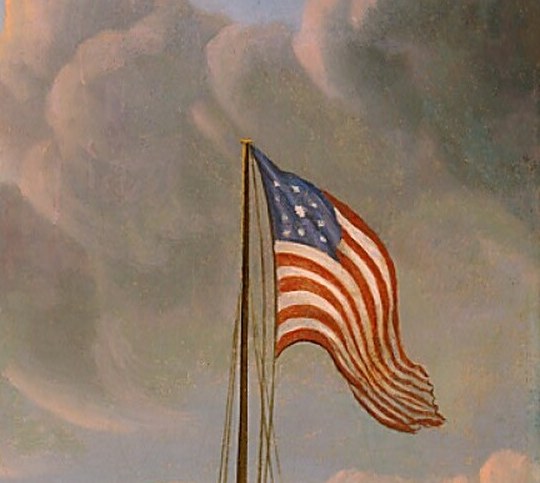
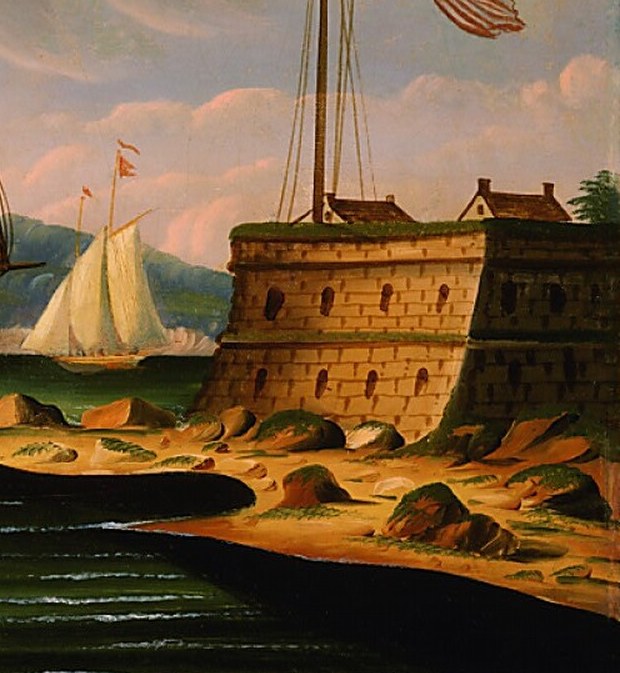
This is Thomas Chambers' "New York Harbor with Pilot Boat 'George Washington'," a mid-19th-century oil on canvas now in the National Gallery of Art. It hung on loan in the offices of White House chiefs of staff and cabinet secretaries from 1985 to 2008, a working harbor scene steps from the Oval Office.
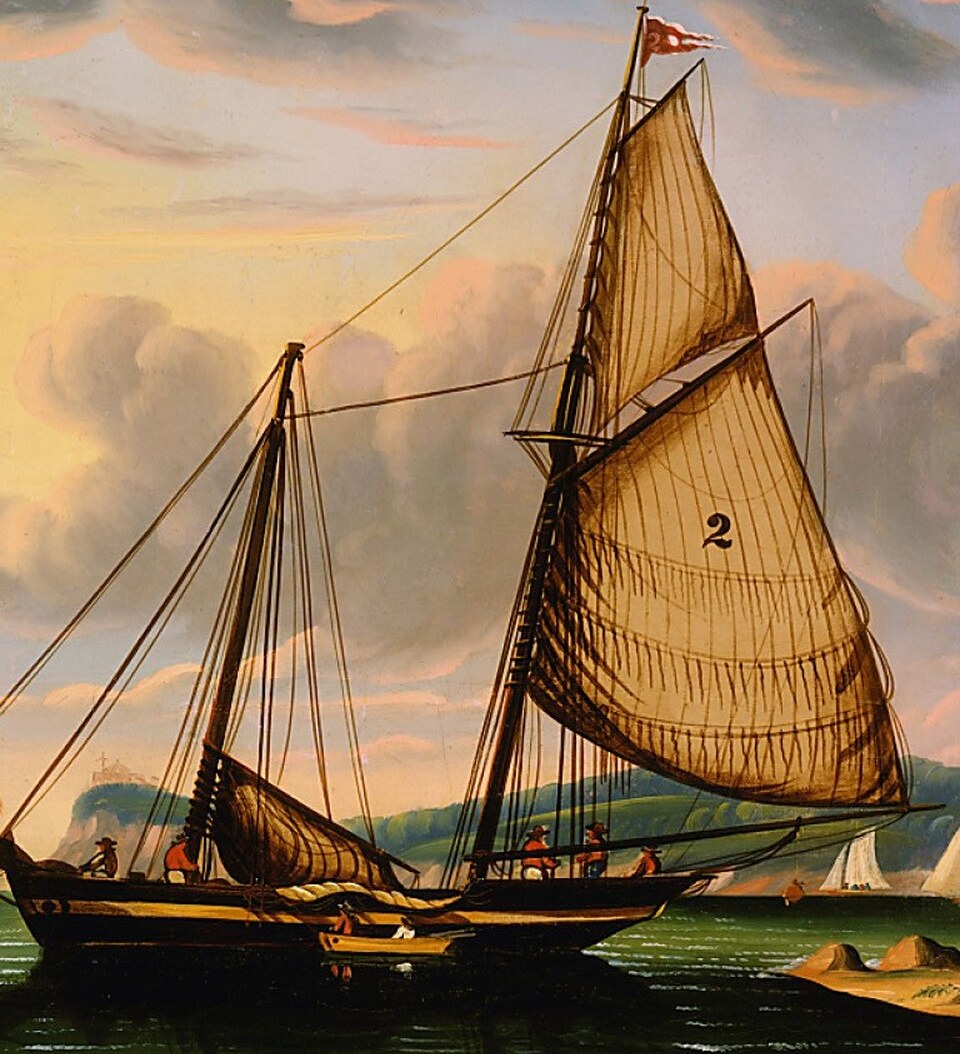
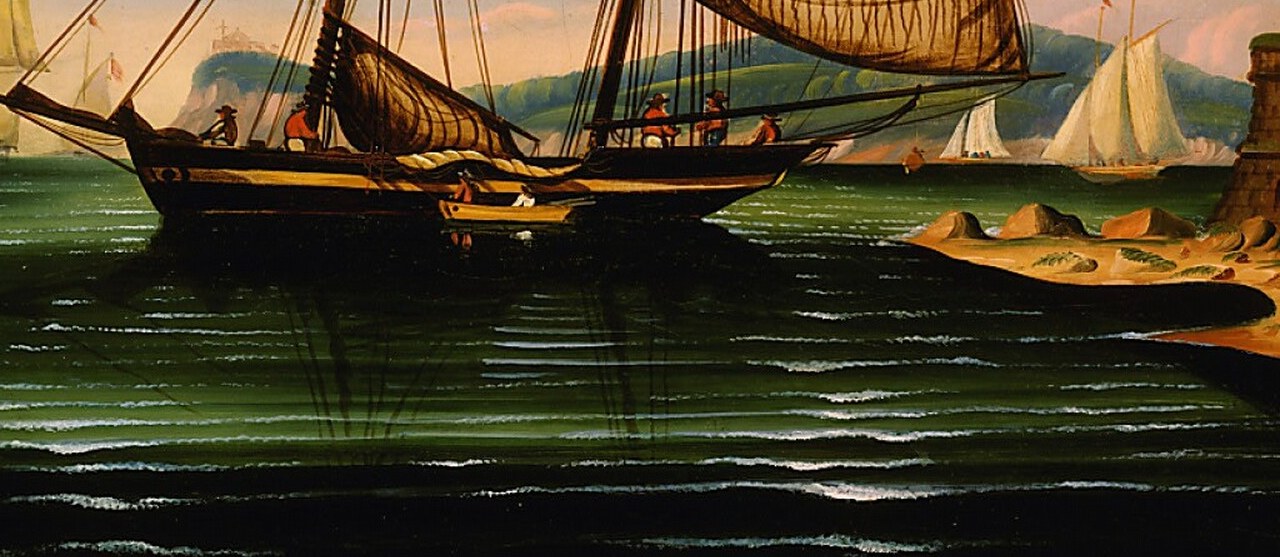
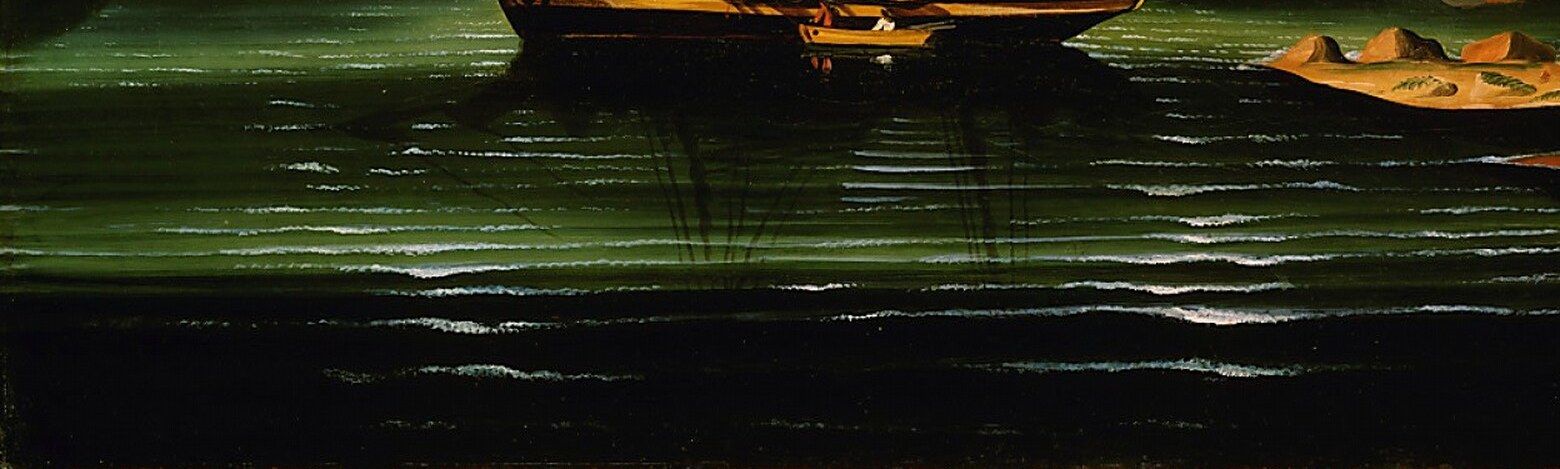
Look first at the sail and the small red pennant at the masthead. Both carry the numeral 2, marking this as a specific, licensed pilot boat rushing out to guide an incoming vessel. Chambers paints the water in repeating, rhythmic S-curves and the sky with operatic, underlit clouds. Nothing here obeys academic marine painting. The rigging is simplified, the color applied in broad, flat passages.
Chambers was born in Whitby, England in 1808 to a merchant sailor and a laundress. He likely learned to paint from his older brother George, a self-taught marine artist. After emigrating to the United States in 1832, he worked in New York, Boston, and Albany entirely outside academic circles, drawing freely from popular prints to make bold, decorative pictures that middle-class buyers wanted for their homes.
Forgotten after his death, his work was rediscovered in 1942 and he was hailed as 'America's first modern', a painter who saw flat color, strong outline, and vivid contrast not as crude, but as a complete visual language. What do you see in his waves?
#arthistory #americanart #marinepainting
Details
Transcript
It hung in the White House for over twenty years. A working pilot boat, racing out to meet an incoming ship. The pennant and the sail both bear the numeral 2. The painter was a sailor's son from England. He had no formal training. Critics ignored him. He painted anyway, flat and bold, from popular prints. Look at the waves: repeated curves, pure decoration. Nothing academic about them. A century after he died, they called him America's first modern painter.