Artwork
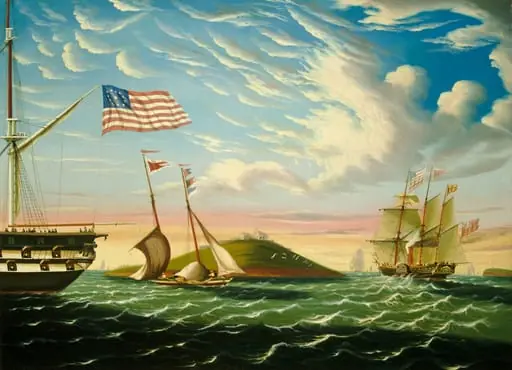
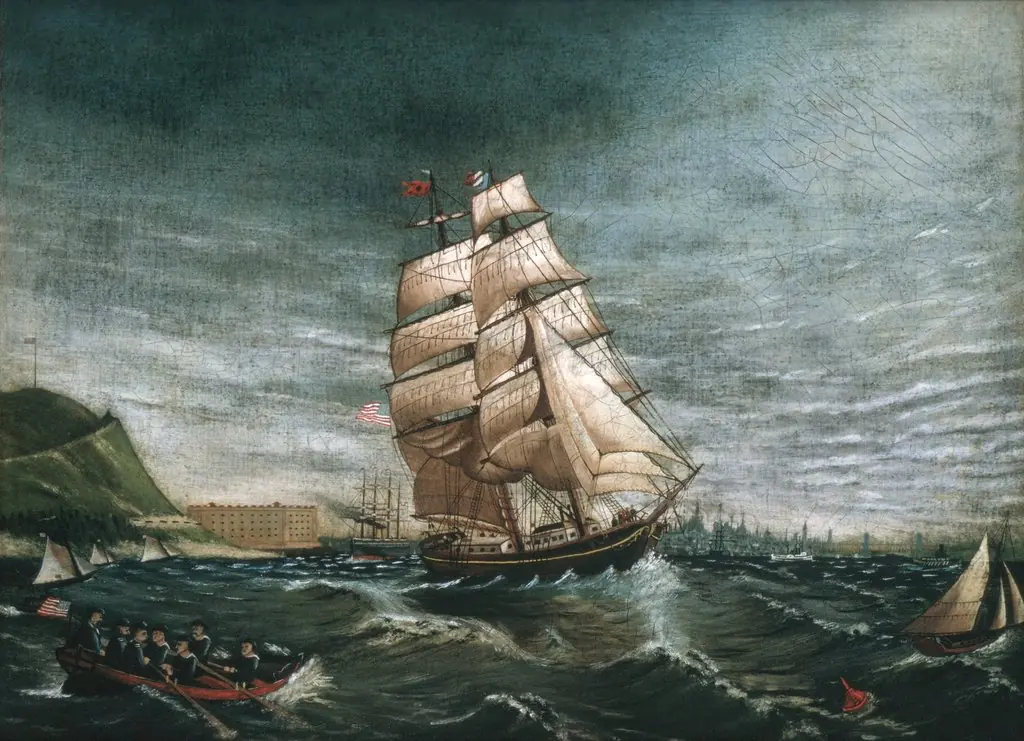
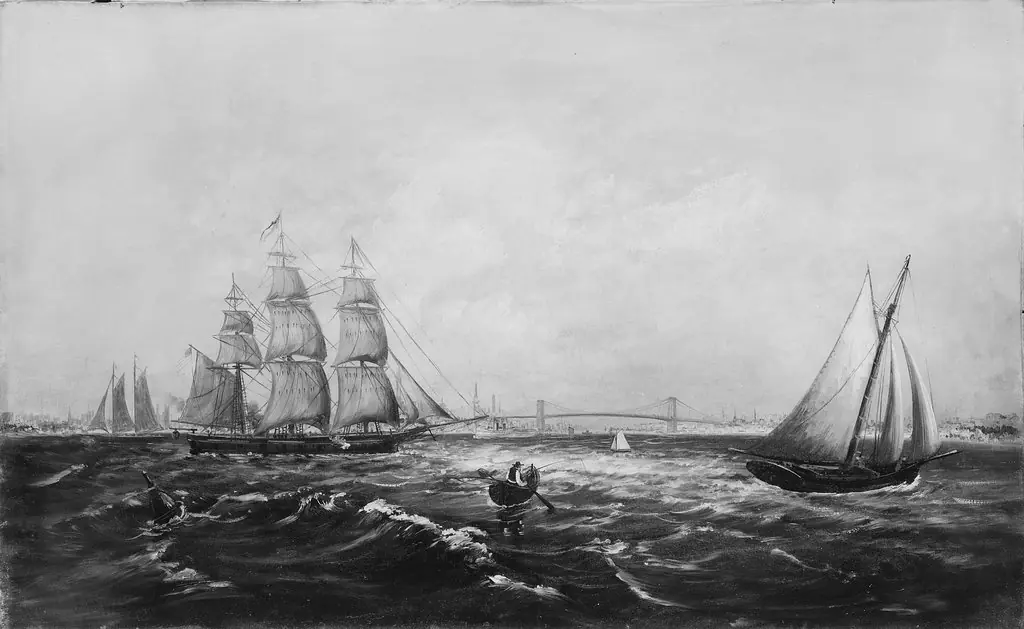
New York Harbor with Pilot Boat "George Washington"
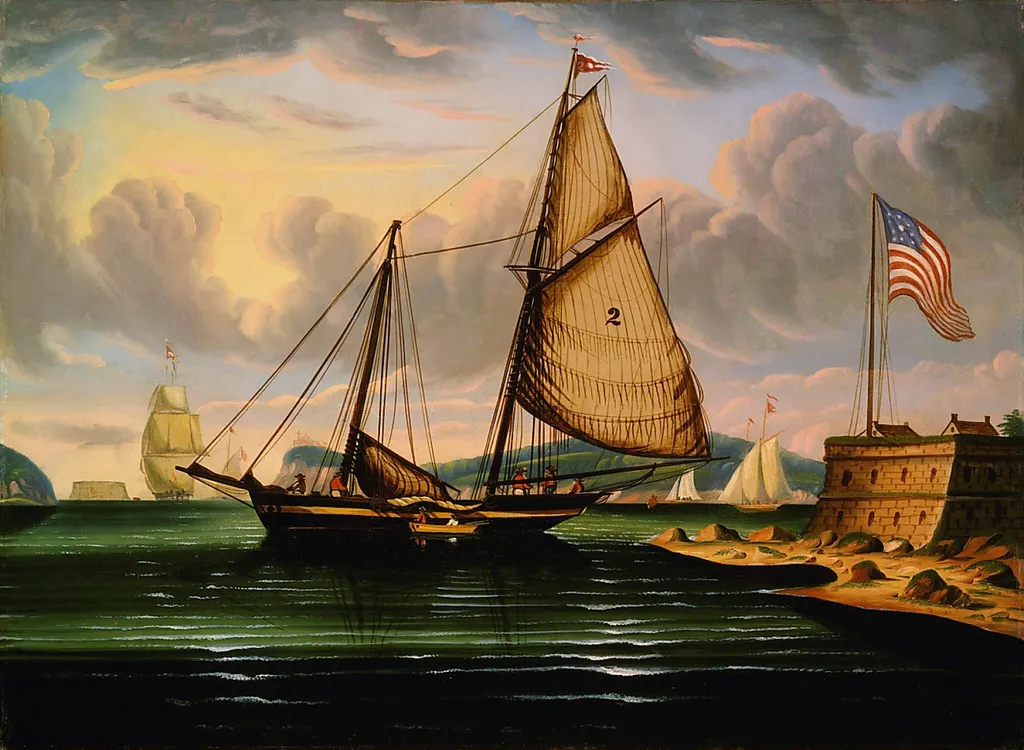
New York Harbor with Pilot Boat "George Washington" is an oil painting by the American Folk Art artist Thomas Chambers. It dates from 1850 and is held in the collection of the National Gallery of Art.
- Inscription
- Inscribed:on pennant: 2; on sail: 2
About this work
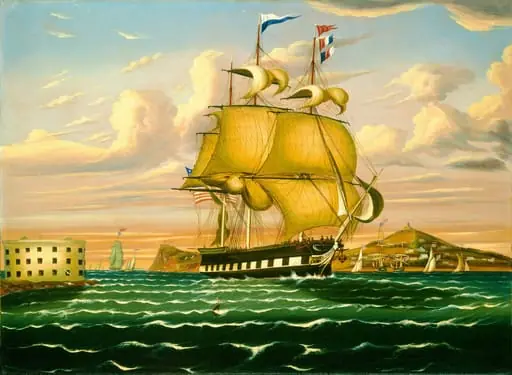
A pilot boat named for the first president cuts through New York Harbor under a turbulent sky, its sail marked with the numeral 2.
A pilot boat named for the first president cuts through New York Harbor under a turbulent sky, its sail marked with the numeral 2. Thomas Chambers, an English-born painter who emigrated in 1832, worked in oil on canvas with the bold contours and flat color fields that made his marine pictures popular with middle-class patrons. Measuring roughly 22 by 30 inches, it carries inscriptions on the pennant and sail that nod to maritime signaling of the era.
Subject & Meaning
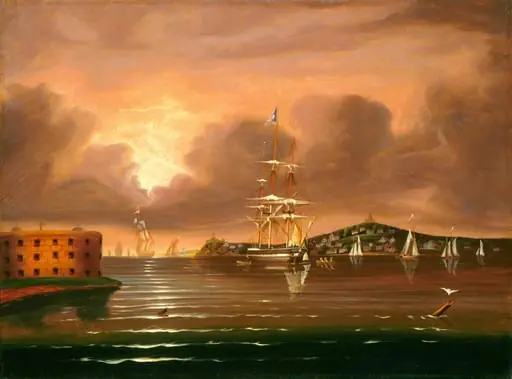
The painting depicts New York Harbor with a focus on the pilot boat 'George Washington,' named after the first U.S. president. The scene includes a sailing ship, sailors, the U.S. flag, and various shoreline elements. The pilot boat symbolizes safe navigation and the broader maritime commerce that fueled New York's growth in the mid-19th century. The inclusion of national symbols ties the harbor's activity to American identity and expansion.
Technique & Style
Executed in oil on canvas, this marine painting measures 56 x 76.3 cm. The medium and support, oil paints on a woven canvas, are typical of 19th-century American painting. The work belongs to the marine genre, characterized by its depiction of New York Harbor with a pilot boat, sailing ships, and coastal elements. The handling of the paint and formal qualities are not detailed in available sources, but the choice of a horizontal format and the inclusion of atmospheric features such as clouds and waves suggest a conventional compositional approach for maritime subjects of the period.
History & Provenance
Dated to 1850 based on artist records. The painting's provenance begins in Massachusetts, where it was recorded. In 1953, it was sold by Kenneth E. Snow of Newburyport, Massachusetts, to Edgar William and Bernice Chrysler Garbisch.
The Garbisches subsequently gifted the work to the National Gallery of Art in 1978, where it remains in the collection. No commission information is documented.
Overview
Thomas Chambers's painting, "New York Harbor with Pilot Boat 'George Washington'," captures a named vessel navigating the bustling waters of New York Harbor. Executed in oil on canvas, this work exemplifies Chambers's characteristic approach, featuring bold forms and vibrant hues. Its directness and decorative quality resonated with middle-class patrons during the nineteenth century, establishing its place within American maritime art.
Context
Thomas Chambers, born in Whitby, England, in 1808 to a merchant sailor, likely gained his initial artistic training from his older brother, George, a marine painter. After immigrating to the United States in 1832, Chambers established himself in major East Coast cities like New York, Boston, and Albany. He specialized in marine, landscape, and genre scenes, cultivating a unique vision apart from the prevailing academic conventions of his time.
Legacy
Chambers's distinctive style remained largely overlooked until his rediscovery in 1942, when critics retrospectively dubbed him "America's first modern" for his innovative approach to form and color. The painting's later exhibition history underscores its perceived importance, including extended loans to high-level government offices from 1985 to 2008, reflecting its enduring status as a visual representation of national maritime heritage.
Own this work as a print
Artist & collection