The Coronation of the Virgin by Master of the Washington Coronation (Italian, active c. 1300–30)
This early 14th-century painting, "The Coronation of the Virgin," by the Master of the Washington Coronation, is a striking example of Byzantine iconography. Created around 1324 in Venice, this tempera on poplar panel work now resides in the National Gallery of Art in Washington, D.C.
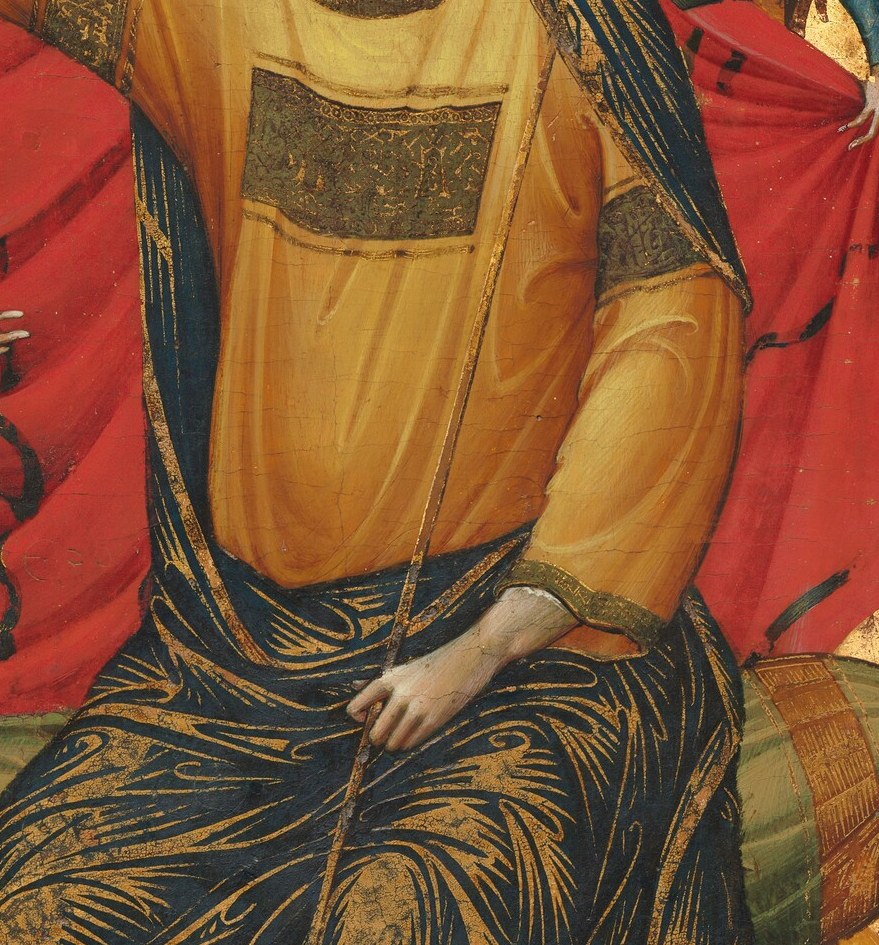
Look closely at the expressions and gestures. The Virgin Mary's downcast eyes and open hands convey humility, as Christ gently places the crown upon her head, signifying her role as Queen of Heaven. The vibrant colors, particularly the rich reds and blues, are characteristic of tempera painting.
The artist behind this work remains a mystery, known only as the Master of the Washington Coronation. This attribution emerged after scholars distinguished his style from that of Paolo Veneziano, to whom it was once attributed. Some even suggest it could be Marco di Martino da Venezia, Paolo's brother.
Despite the anonymity, the painting beautifully captures a pivotal moment of divine grace, reflecting the artistic and religious conventions of its time. What do you find most compelling in this scene?
Details
Transcript
This painting, from 1324, shows a divine coronation. Mary is crowned as Queen of Heaven. Her downcast eyes convey humility. Christ’s hand places the crown gently upon her head. It was painted using tempera on a poplar wood panel. A moment of grace, captured by an unknown Italian master.